 Save
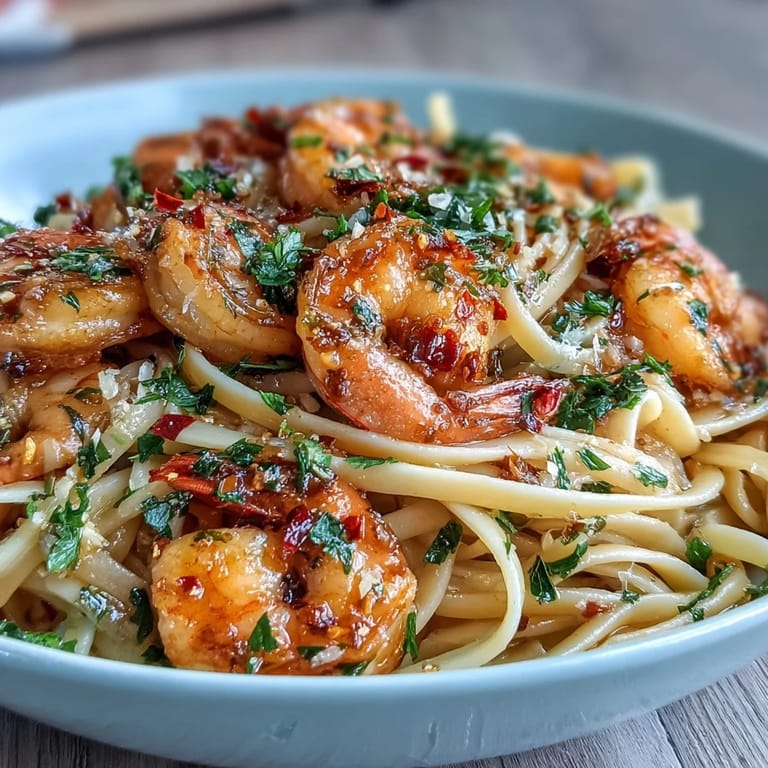
Save There's something almost magical about the moment garlic and chili hit hot oil—that sudden, intense perfume that fills your kitchen and makes you pause whatever you're doing. I discovered this shrimp linguine on a random Tuesday when I had guests coming in an hour and found myself staring at a bag of frozen shrimp and a half-empty pantry. The simplicity of it caught me off guard; just a few aromatics, quality olive oil, and fresh pasta doing the heavy lifting. It became the dish I make when I want to feel like I've done something impressive without the stress.
I made this for my neighbor who always complained about eating the same rotation of weeknight meals, and watching her face light up when she tasted it made me realize how much impact a really good, properly executed simple dish can have. She asked for the recipe three times that evening, each time discovering a new flavor she'd missed before—the lemon zest, the way the oil clings to the pasta, the heat that sneaks up on you. That's when I knew this wasn't just dinner; it was the kind of meal that reminded people why they loved cooking in the first place.
Ingredients
- Large shrimp, peeled and deveined (400 g): Size matters here—large shrimp cook evenly and stay tender, while smaller ones can turn rubbery if you're not careful with timing.
- Linguine (350 g): The flat shape catches the oil beautifully; don't skip the reserved pasta water, it's your secret to a silky sauce.
- Garlic, thinly sliced (5 cloves): Slicing instead of mincing gives you those tender, caramelized pieces that almost melt on your tongue.
- Red chili peppers, thinly sliced (1-2) or red pepper flakes (1 tsp): Fresh chilis give you color and adjustable heat; flakes are faster but less nuanced.
- Fresh flat-leaf parsley, chopped (1 small bunch): Add this at the end to keep it bright and fresh; cooked parsley turns muddy.
- Lemon zest and juice: The zest goes in with the shrimp, the juice finishes everything; this acidity is what makes the whole dish sing.
- Extra-virgin olive oil (3 tbsp): Quality oil is non-negotiable here since it's the foundation of your sauce; don't use anything you wouldn't drink.
- Dry white wine (2 tbsp, optional): The deglazing step adds depth and prevents the pan from feeling too greasy.
- Salt and freshly ground black pepper: Season aggressively at each stage, not just at the end.
Tired of Takeout? 🥡
Get 10 meals you can make faster than delivery arrives. Seriously.
One email. No spam. Unsubscribe anytime.
Instructions
- Get your water going:
- Fill a large pot with salted water—it should taste like the sea—and bring it to a rolling boil before adding the linguine. While it cooks, you're preparing everything else, so by the time the pasta is done, your shrimp and oil are ready to meet.
- Build your flavor base:
- Heat olive oil in a skillet over medium heat until it shimmers but doesn't smoke. Add your garlic and chili slices, watching them carefully for 1–2 minutes until they turn golden and fragrant; this is the moment you'll smell why this dish works.
- Cook the shrimp gently:
- Once the aromatics are ready, slide in your shrimp with a generous pinch of salt and pepper. After 2–3 minutes, they'll turn pink and opaque—this is your cue to stop, not a suggestion to cook longer.
- Add brightness and depth:
- Stir in the lemon zest so it releases its oils into the warm pan. If you're using wine, pour it in now and let it bubble for 30 seconds, creating a slightly more luxurious sauce.
- Bring it all together:
- Drain your linguine (reserving that pasta water like it's liquid gold), then toss it into the skillet with the shrimp. Add pasta water a splash at a time until the sauce coats everything in a silky sheen that isn't drowning.
- Finish with care:
- Pull the pan off the heat, fold in your fresh parsley, squeeze lemon juice over everything, and taste. Adjust salt and pepper if needed, then serve immediately while the heat is still lifting the aromas off the plates.
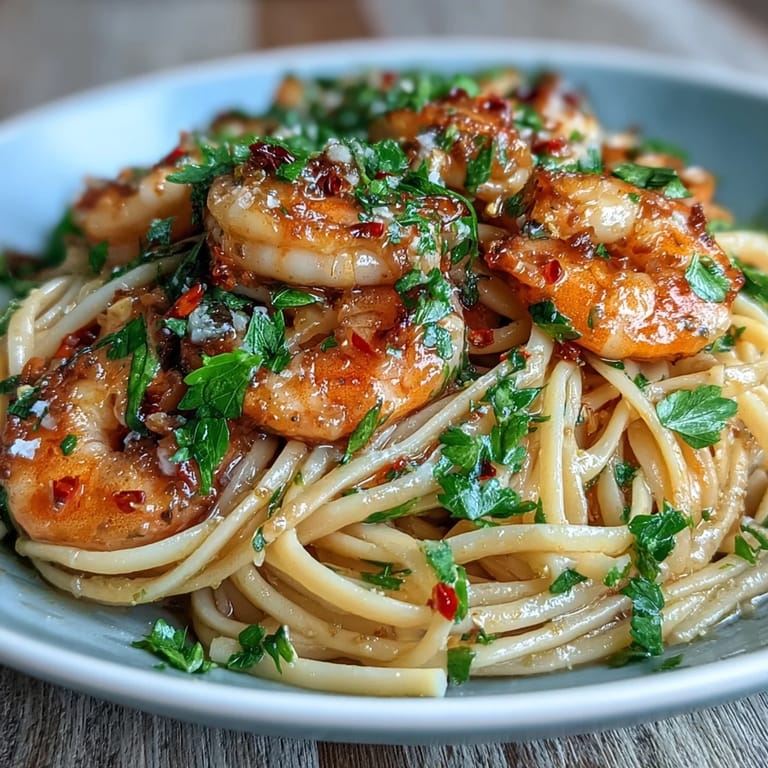 Save
Save There was one evening when I made this for a friend who'd been going through a rough time, and she sat at my kitchen counter while I cooked, just watching the transformation happen. The quiet bubbling, the smell of garlic and chili mixing with lemon, the way the shrimp blushed pink—it seemed to settle something in her that a longer conversation hadn't touched. Food isn't always just sustenance; sometimes it's a small, edible reminder that someone cares enough to get the details right.
Why This Works as a Weeknight Dinner
The genius of this dish is that it respects your time while refusing to taste rushed. Everything happens in one skillet after the pasta water boils, meaning you're not juggling multiple pans or complicated timing. The aromatic oil does all the heavy lifting—garlic and chili infuse the oil, that oil coats the pasta, and the reserved pasta water brings it all together into something that tastes far more complex than the ingredient list suggests.
The Secret to Shrimp That Actually Stays Tender
The difference between shrimp that delights and shrimp that disappoints often comes down to one overlooked detail: not crowding the pan and not walking away once they hit the skillet. Medium heat is your friend here; it gives the shrimp time to develop flavor and color without the exterior cooking before the inside is done. I learned this the hard way after overcooking an entire batch trying to get a nice sear, only to end up with rubbery discs that no amount of lemon juice could save.
Building Layers of Heat and Flavor
This is where the dish becomes personal to your palate and preferences. Some people want a gentle warmth that builds slowly; others want immediate heat that catches in the back of your throat and lingers. Fresh chilis give you color and a more nuanced spice, while flakes dissolve into the oil for a more aggressive, even distribution. The beauty is that you're not locked into one approach—you can taste as you go and adjust.
- Fresh chilis add sweetness and texture alongside the heat; slice them thin so they cook evenly with the garlic.
- Red pepper flakes are consistent and easier, dissolving into the oil to create an even spice throughout every bite.
- Start conservative with heat and taste before serving; it's always easier to add more than to cool things down.
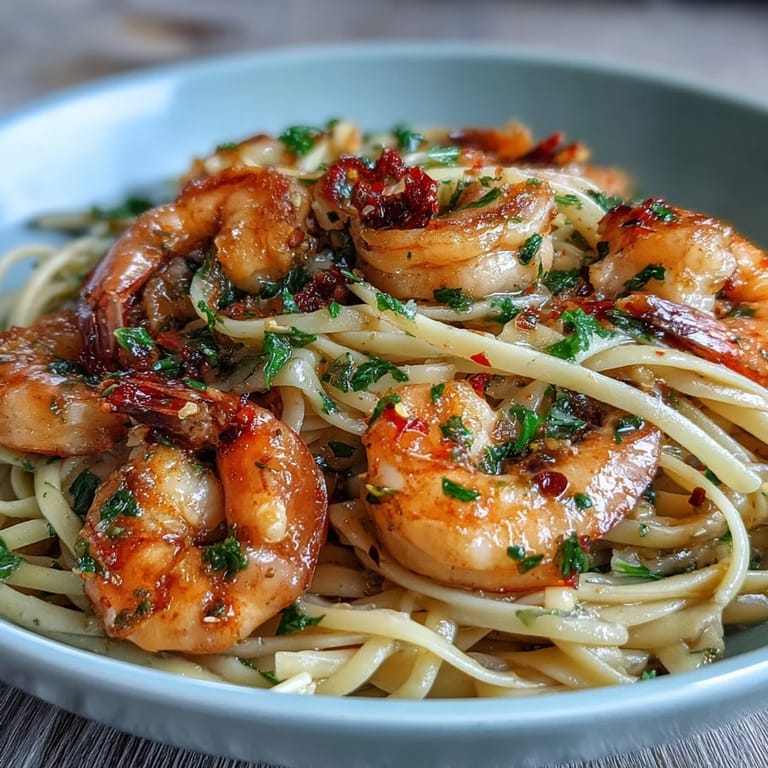 Save
Save This dish has taught me that sometimes the most satisfying meals come from understanding a few simple ingredients and knowing how to coax flavor out of them with patience and attention. It's the kind of food that reminds you why cooking for yourself and others matters.
Recipe FAQ
- → How should I cook the shrimp for best results?
Cook shrimp in hot oil for 2–3 minutes until they turn pink and opaque, ensuring they remain tender and juicy.
- → Can I adjust the spice level?
Yes, increase or decrease chili peppers or flakes to suit your preferred heat intensity.
- → What pasta alternatives can I use?
Spaghetti or fettuccine work well as substitutes if linguine is unavailable.
- → What is the purpose of reserving pasta water?
Reserved pasta water helps loosen the sauce and ties the ingredients together for a silky finish.
- → Is white wine necessary in the dish?
White wine adds depth and acidity but can be omitted if preferred or avoided.