 Save
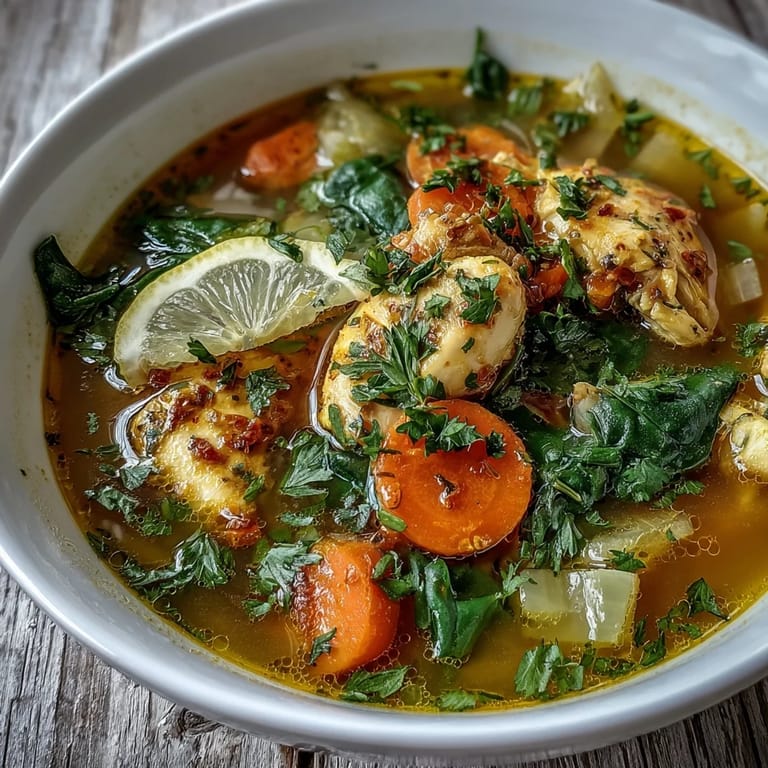
Save There's something about watching turmeric stain your cutting board golden that makes you feel like you're cooking with intention. My neighbor brought over a small jar of her grandmother's turmeric blend one rainy afternoon, and we ended up simmering this soup together while rain drummed against the kitchen window. The kitchen filled with this warm, peppery-sweet smell that somehow felt both exotic and deeply comforting. By the time we ladled it into bowls, I understood why she kept coming back to this recipe whenever someone needed healing.
I made this soup for my partner when he came home with a scratchy throat, and he asked for seconds before even finishing the first bowl. That's when I realized this wasn't just another recipe to file away—it was something that actually nourished people, body and spirit. Now it's what I reach for when someone needs care in edible form, or when I need to feel grounded myself.
Ingredients
- Boneless, skinless chicken thighs or breasts (500 g): Thighs stay juicier if you're not careful with timing, though breasts work fine if that's what you have—just don't oversimmer them or they'll turn stringy.
- Onion, carrots, and celery (1 medium onion, 2 medium carrots, 2 stalks): This holy trinity is the flavor foundation, and taking five minutes to sauté them properly makes all the difference in depth.
- Garlic and fresh ginger (3 cloves, 2.5 cm piece): Fresh ginger is non-negotiable here—the powdered version will make it taste dusty and flat by comparison.
- Baby spinach or kale (150 g): Spinach wilts quickly and disappears into the broth, while kale holds its shape and adds a slight mineral note if you prefer texture.
- Low-sodium chicken broth (1.5 liters): Use the good stuff or make your own if you can—it's the vehicle for everything else, so it deserves respect.
- Olive oil (1 tbsp): Just enough to build flavor without making the soup greasy.
- Ground turmeric (1½ tsp): This is the star, so don't skimp on quality and definitely check the expiration date because stale turmeric tastes like sadness.
- Ground cumin, black pepper, and sea salt (½ tsp each, plus ½ tsp salt): These support the turmeric rather than compete with it, creating a warm, layered spice profile.
- Crushed red pepper flakes (¼ tsp, optional): Add this if you want a whisper of heat at the end, or skip it if you're cooking for someone sensitive.
- Fresh lemon juice (1 lemon): This brightens everything at the last minute and prevents the soup from tasting heavy.
- Fresh parsley or cilantro (2 tbsp): Cilantro if you want bright and herbal, parsley if you prefer something gentler—both work, so choose what speaks to you.
Tired of Takeout? 🥡
Get 10 meals you can make faster than delivery arrives. Seriously.
One email. No spam. Unsubscribe anytime.
Instructions
- Heat your oil and start the soften:
- Warm olive oil in a large soup pot over medium heat, then add your chopped onion, carrots, and celery. Let them soften for about 5 minutes, stirring occasionally—you're not trying to brown them, just wake them up and let them release their sweetness into the oil.
- Bloom the aromatics:
- Once the vegetables have softened, add your minced garlic and grated ginger, stirring for about a minute until the kitchen smells alive and peppery. This brief moment is crucial because it mellows out the raw harshness of both.
- Coax out the spice flavors:
- Sprinkle in the turmeric, cumin, black pepper, and salt, stirring constantly for just 30 seconds. You'll see the spices darken slightly and smell a shift in the aroma—that's the signal that they're releasing their essential oils and deepening in flavor.
- Cook the chicken gently:
- Add your bite-sized chicken pieces and stir for 2 to 3 minutes until the outside turns opaque and pale. You're not cooking it through yet, just sealing it so it stays tender.
- Add the broth and simmer:
- Pour in your chicken broth and bring everything to a boil, then immediately drop the heat to a gentle simmer and cover the pot. Let it cook undisturbed for 20 minutes—the broth will turn a beautiful golden color as the turmeric infuses.
- Finish with greens:
- Add your spinach or kale and simmer for another 5 minutes until it's wilted and the chicken is cooked through. If you pull a piece of chicken apart with a spoon, there should be no pink inside.
- Brighten with citrus:
- Stir in the lemon juice and taste as you go, adjusting salt or heat to your preference. The acidity transforms the soup from pleasant to luminous.
- Serve with intention:
- Ladle into bowls and shower each one with fresh parsley or cilantro, letting people see what they're about to eat. Serve it hot, maybe with warm bread alongside.
 Save
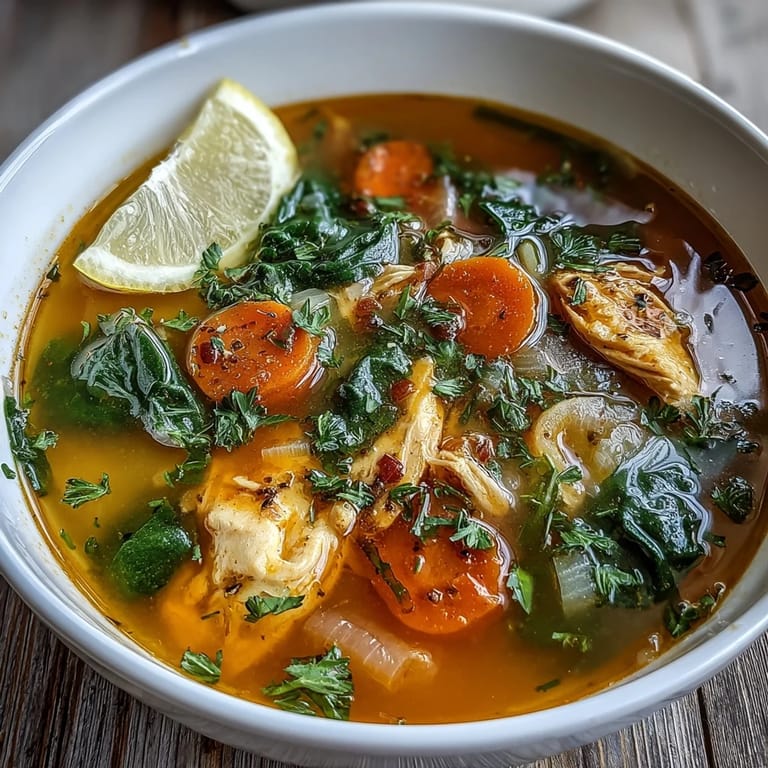
Save My grandmother used to say that yellow foods heal yellow feelings, and while I'm not sure that's scientifically true, I believe it emotionally. This soup has shown up in my life during transitions, sick days, and quiet moments when I needed something warm and honest—and it never fails to deliver exactly that.
When to Make This Soup
This isn't a soup that waits for an occasion—it's a soup you make on Tuesday because someone needs it, or because you need it. It's perfect for meal prep since it tastes better the next day, and it freezes beautifully for three months if you portion it into containers. I've learned to make a double batch whenever I'm making one batch, because the golden color in the fridge somehow makes difficult weeks look a little brighter.
How to Customize Without Losing the Soul
The beauty of this soup is that it holds its center while welcoming variation. You can add 100 grams of cooked rice or quinoa in the final minutes for substance, or swap the chicken for chickpeas and vegetable broth to make it vegetarian without losing any of the healing quality. Some people add a cinnamon stick or star anise during the simmer for extra warmth—just remember to fish those out before serving. The turmeric, ginger, and lemon are the non-negotiables; everything else can bend to what you have or what you need.
Storing and Reheating for Best Results
This soup keeps in the refrigerator for up to four days in an airtight container, and it actually deepens in flavor as the spices continue to marry with the broth. When you reheat it, do so gently over medium-low heat rather than blasting it on high, which can make the chicken tough and lose some of the soup's delicate warmth. If it thickens in the fridge, just add a splash of broth or water when reheating to bring it back to the consistency you love.
- Freeze it in individual portions for nights when cooking feels impossible but nourishment matters.
- Double the recipe and you'll have gift soup ready for anyone who needs it.
- Trust that leftovers taste even better than the night you made it, which is rare magic in the soup world.
 Save
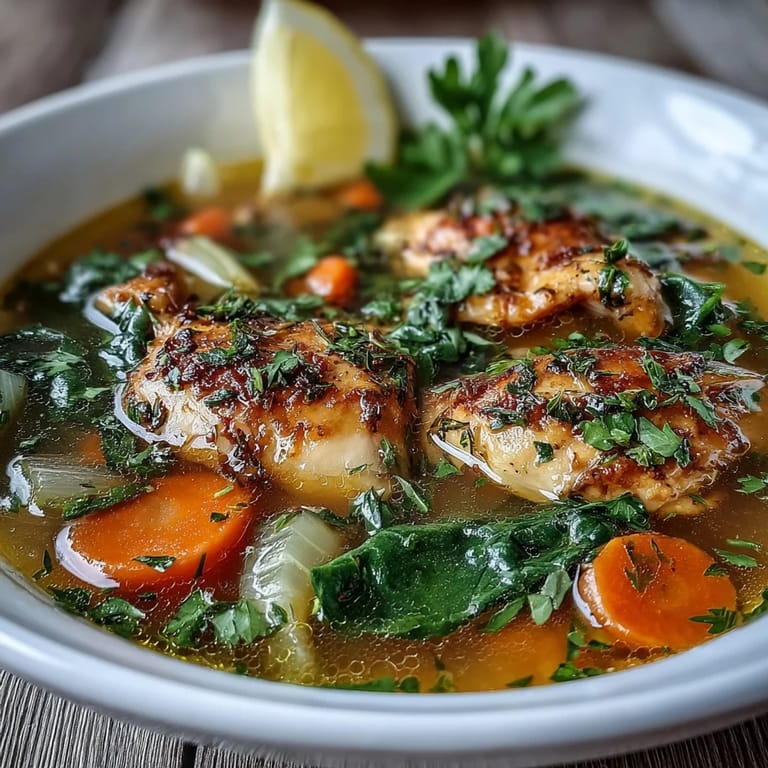
Save This is the kind of soup that asks very little and gives generously in return. Make it when you can, share it when you're able, and let it remind you that the simplest meals are often the ones that matter most.
Recipe FAQ
- → What makes turmeric chicken soup healthy?
Turmeric contains curcumin, a compound with powerful anti-inflammatory and antioxidant properties. This soup also provides lean protein from chicken, vitamins from vegetables, and immune-boosting ginger and garlic.
- → Can I make this soup vegetarian?
Yes, substitute chicken with chickpeas and use vegetable broth instead of chicken broth. The spices and vegetables create the same flavorful base.
- → How do I store leftover turmeric soup?
Store in an airtight container in the refrigerator for up to 4 days. The flavors often develop and improve after a day. Freeze for up to 3 months.
- → What can I serve with this soup?
Warm crusty bread, naan, or crackers pair perfectly. Add a side salad for a complete meal. For extra heartiness, add cooked rice or quinoa directly to the soup.
- → Is this soup spicy?
The soup is mildly warming from turmeric, cumin, and black pepper, but not spicy. The optional red pepper flakes add gentle heat if desired.
- → Can I use ground ginger instead of fresh?
Fresh ginger provides brighter flavor, but you can substitute ½ teaspoon ground ginger. Add it with the other spices in step 3.