 Save
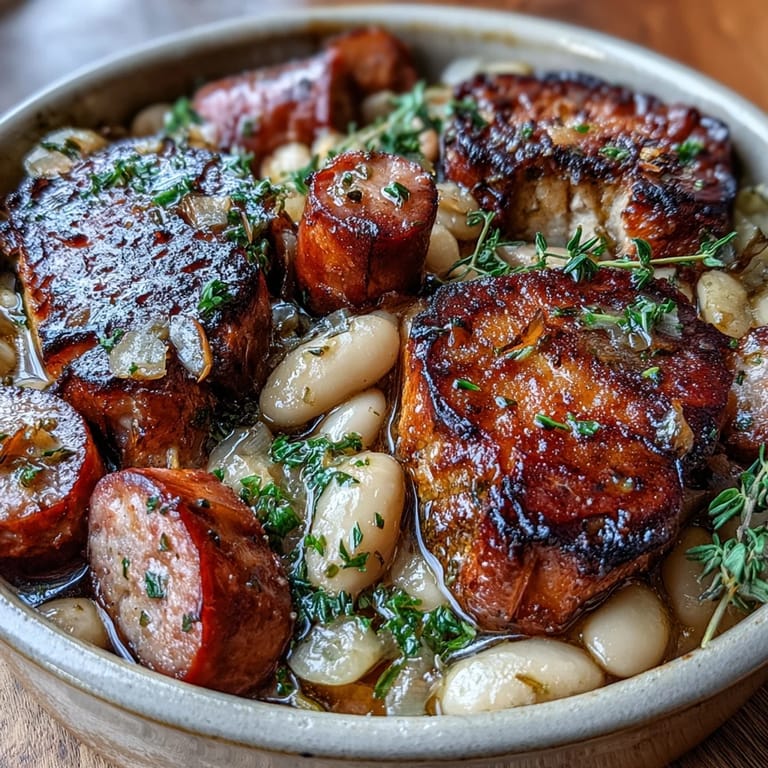
Save There's something about the smell of a cassoulet bubbling away in the oven that makes a kitchen feel like home, even if you've never been to France. My first attempt at this dish came on a particularly cold November evening when I was determined to prove that slow cooking wasn't just patience, it was magic. The combination of smoky ham, tender beans, and herbs simmering together for nearly two hours transformed my humble kitchen into something that felt deeply intentional and warm. What started as a recipe I found tucked in an old cookbook became the meal I now make whenever someone needs comfort on a plate.
I made this for my neighbor last winter after she mentioned missing her grandmother's cooking, and watching her face light up at the first spoonful reminded me why I love to cook. That cassoulet sat on her kitchen counter for three days as she kept reheating small portions, saying it tasted better each time. It became the kind of meal people don't forget, the kind that gets requested again and again.
Ingredients
- Smoked ham: Use a good quality smoked ham or splurge on a ham bone if you want depth that'll make people ask what your secret is.
- Pork sausage: Pick sausage with real flavor, none of the bland stuff, and slice it thick so it holds its shape during the long cook.
- Bacon or pancetta: The rendered fat becomes liquid gold for sautéing your vegetables, so don't skip this step even if it seems indulgent.
- Dried white beans: Soak them overnight without fail, as this cuts cooking time and ensures creamy, tender beans that won't fall apart.
- Carrots, celery, and onion: This holy trinity builds the flavor foundation, so take time to dice them evenly for consistent cooking.
- Garlic: Fresh garlic matters here, as it adds brightness that rounds out all the smoky richness.
- Diced tomatoes: Drain them well to avoid a watery cassoulet, and use canned if fresh aren't in season.
- Chicken stock: Use something you'd actually taste on its own, because it's not just filler but a key flavor player.
- Tomato paste: This little tablespoon pack is your umami bomb, building savory depth without making anything taste like tomato soup.
- Olive oil: Keep it simple and good quality, nothing fancy needed.
- Bay leaf and thyme: These herbs are the reason the whole dish smells like a French farmhouse kitchen, so use fresh thyme if you can.
- Smoked paprika: Don't reach for the regular stuff, the smokiness matters and it's what makes people ask for your recipe.
- Breadcrumbs: Optional but worth it, especially if you want that golden crust that shatters when you spoon into it.
Tired of Takeout? 🥡
Get 10 meals you can make faster than delivery arrives. Seriously.
One email. No spam. Unsubscribe anytime.
Instructions
- Get your oven and pot ready:
- Preheat your oven to 160°C (325°F) and set out your largest Dutch oven or heavy casserole, the kind that can go from stovetop to oven without complaint.
- Render the pork fat:
- Heat olive oil in your pot over medium heat and add the bacon or pancetta, letting it cook until it's golden and crisp, about 5 minutes. This step is worth every second because you're building flavor and getting beautiful rendered fat to cook in.
- Soften your vegetables:
- Toss in the diced onion, carrots, and celery, and let them cook for 5 to 7 minutes, stirring occasionally, until they've softened and begun to caramelize slightly at the edges. You're looking for that moment when the kitchen smells sweet and savory at once.
- Wake up the garlic:
- Add your minced garlic and cook for just one minute, stirring constantly so it doesn't burn and turn bitter. One minute is all it needs to release its fragrance into the pot.
- Brown the meats:
- Add the diced ham and sliced sausage, stirring often until everything is lightly browned, about 5 minutes. Don't rush this, as the browning adds richness that simmering alone can't achieve.
- Build umami with tomato:
- Stir in the tomato paste and smoked paprika, then add your drained tomatoes, and cook the whole mixture for 2 minutes so the paste loses its raw edge. The paprika will bloom in the heat and coat everything with color and smoke.
- Add your beans and broth:
- Pour in your soaked and drained beans along with the chicken stock, bay leaf, and thyme sprigs, then season with salt and pepper. Taste the broth before you seal it up, as it's your last chance to adjust seasoning before the slow cook.
- Simmer and braise:
- Bring the mixture just to a simmer on the stovetop, then cover the pot and slide it into the oven for 1 hour and 30 minutes. Stir it once or twice if you remember, but the oven is doing the real work now, transforming everything into something deeply savory and tender.
- Optional crust step:
- If you want that golden breadcrumb crown, sprinkle fresh breadcrumbs evenly over the top in the last 15 minutes and bake uncovered until they're golden brown and crisp. Watch them carefully so they brown without burning.
- Final touches:
- Remove the bay leaf and thyme sprigs, taste and adjust seasoning if needed, then garnish with chopped fresh parsley right before serving. The green brightens all that richness and makes it look like you spent hours on presentation.
 Save
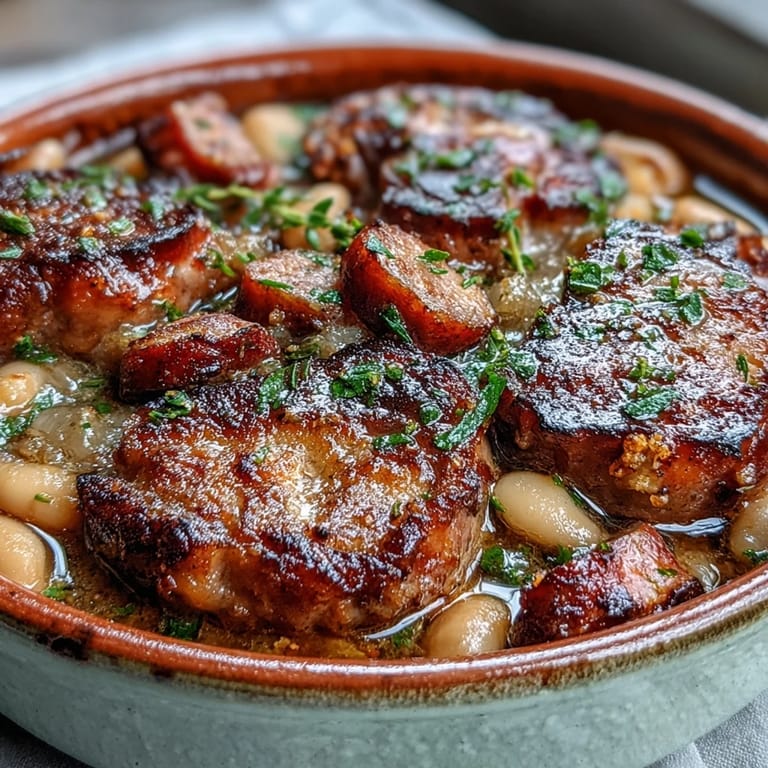
Save I've learned that cassoulet is one of those dishes that teaches you patience, because good things really do take time. Every time I make it, I'm reminded that cooking for others is an act of care, and somehow the people you feed know the difference.
Why This Dish Works
The magic of cassoulet is in how all these humble ingredients become something greater than their parts when left alone in a warm oven. Beans absorb the savory stock and rendered pork fat, vegetables dissolve into the background, and herbs infuse everything with subtle warmth. The long, slow cook allows flavors to deepen and meld, creating a dish that tastes like it's been simmering for centuries in a French cottage kitchen.
Serving and Pairing Suggestions
Cassoulet is best served in wide, shallow bowls so you get a good ratio of beans, meat, and broth in every spoonful. A thick slice of crusty bread is essential, not optional, for soaking up every last bit of that precious liquid gold at the bottom of the bowl. Pair it with a robust red wine like Cahors or Côtes du Rhône, something with enough body and tannin to stand up to all the richness and smoke, or simply serve it with a simple green salad to cut through the heaviness.
Making It Your Own
This recipe is flexible enough to bend to what you have on hand or what your kitchen preferences demand. I've made versions with different beans, replaced ham with pork shoulder for a deeper braise, and even created a vegetarian version by doubling the paprika and adding mushrooms for umami depth. The bones of the dish remain strong enough that you can play with it and still end up with something warm and deeply satisfying.
- For a richer, more complex flavor, seek out a ham bone or pork shoulder instead of diced ham and let it cook the full time to release its essence.
- Make this dish a day or even two days ahead, as the flavors improve dramatically as they sit and deepen in the fridge.
- Check your sausage label for gluten and allergens, and use gluten-free breadcrumbs if you need to keep this dish completely free of gluten.
 Save
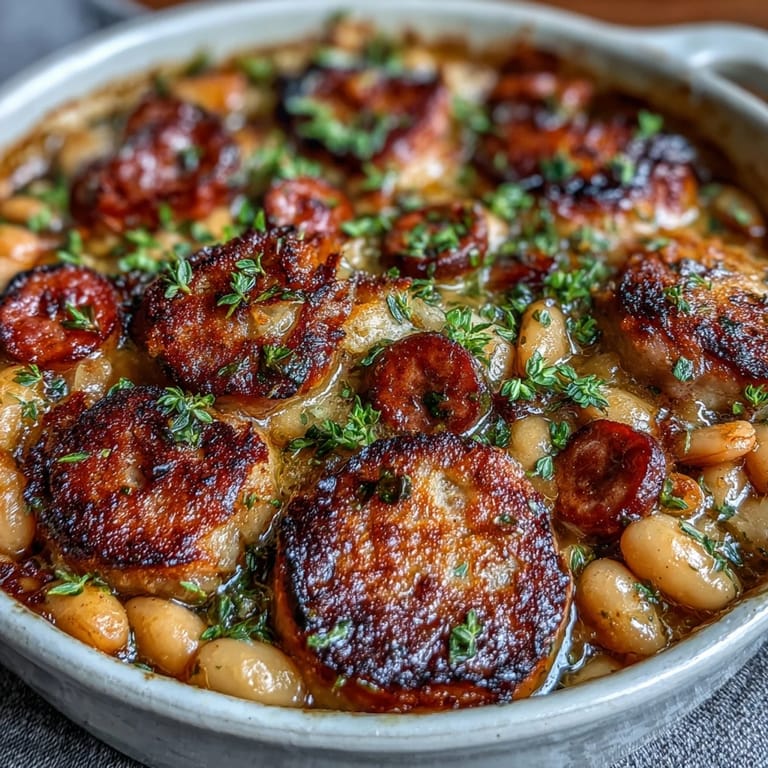
Save Make this cassoulet when you want to give someone a meal that stays with them, a bowl of history and comfort that tastes like it matters. It's the kind of dish that fills more than just your belly.
Recipe FAQ
- → What type of beans is best for this dish?
Dried white beans such as cannellini or Great Northern soaked overnight produce a tender and creamy texture essential for this dish.
- → Can I prepare this dish ahead of time?
Yes, allowing it to rest overnight improves the melding of flavors and enhances the overall richness.
- → What cooking equipment is recommended?
A Dutch oven or large heavy casserole is ideal for even heat distribution during the slow cooking process.
- → How do the herbs influence the flavor?
Fresh thyme, bay leaf, and smoked paprika add aromatic, earthy, and smoky notes that deepen the savory profile.
- → Is there a vegetarian adaptation?
Omitting the meats and emphasizing smoked paprika provides depth, offering a flavorful plant-based alternative.