 Save
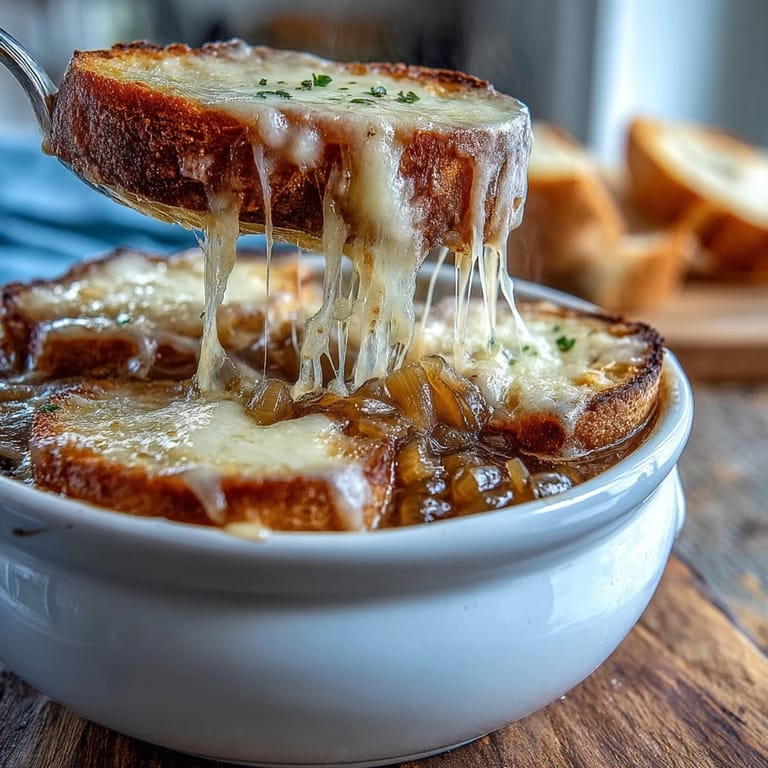
Save My neighbor stopped by on a cold November evening with a bottle of wine and stories about a bistro in Lyon where she'd had the most transcendent bowl of French onion soup. She described the way the cheese stretched in golden threads, how the broth tasted like hours of patience, and I found myself nodding along while mentally cataloging what I'd need to recreate it. That night, I pulled out my Dutch oven and committed to the slow caramelization she'd described, and what emerged was nothing short of kitchen magic, the kind that fills your home with such an intoxicating aroma that everyone who walks through the door immediately asks what you're making.
I made this for my dad's birthday dinner last winter, ladling it into these old ceramic bowls my mother had collected, and watching him close his eyes after that first spoonful told me everything. The combination of the wine's subtle tang cutting through the richness, the thyme notes lingering on his palate, and the way he actually set down his phone—rare for him—reminded me that sometimes the simplest dishes carry the most weight.
Ingredients
- Yellow onions (5 large, thinly sliced): The backbone of this soup, and their natural sweetness deepens dramatically during the long caramelization, so don't rush this part or skip the sugar that helps them along.
- Unsalted butter and olive oil (3 tablespoons and 2 tablespoons): Together they create the perfect medium for browning without burning, the butter lending richness while the oil keeps things from sticking.
- Garlic cloves (2, minced): A brief moment in the pan is all it needs; too long and it turns bitter, so add it only after the onions have softened completely.
- Beef broth (8 cups): This is where depth lives, so use a quality broth you'd actually taste on its own, not one that tastes like salt water.
- Dry white wine (1/2 cup): It cuts through richness and adds complexity that you absolutely notice when it's missing, so don't skip it thinking water will do.
- Fresh thyme (2 teaspoons) and bay leaves (2): Dried thyme works but fresh is noticeably brighter, and the bay leaves quietly anchor all those flavors together.
- Worcestershire sauce (1 tablespoon): Just enough to add umami depth without announcing itself, though skip it if you're going vegetarian.
- Gruyère cheese (2 cups, grated): Its nuttiness is irreplaceable when melted, so splurge on decent Gruyère rather than whatever's cheapest—it's the final flourish that makes this soup transcendent.
- Baguette (1, sliced into 1/2-inch rounds): The slices should be sturdy enough to hold the weight of cheese and broth without immediately disintegrating.
Tired of Takeout? 🥡
Get 10 meals you can make faster than delivery arrives. Seriously.
One email. No spam. Unsubscribe anytime.
Instructions
- Melt butter and oil, then commit to caramelizing:
- In your Dutch oven over medium heat, watch the butter foam and the oil shimmer together, then add those onions with the sugar and start stirring. You're looking at 40 to 45 minutes of fairly constant attention here, pushing them around the pot as they release their moisture, then slowly brown into deep amber—this is not something you can rush or multitask away from.
- Add garlic and create aromatics:
- Once your onions look like caramelized silk, add that minced garlic and let it bloom for just a minute until the kitchen smells almost unbearably good, then immediately move to the next step before it darkens.
- Deglaze with wine and let it reduce:
- Pour in the white wine and use your wooden spoon to scrape up all those flavorful browned bits stuck to the bottom—this is called deglazing and it's where so much flavor hides. Let it simmer for a couple minutes until the raw wine smell mellows out.
- Build the broth base:
- Add your beef broth along with the thyme, bay leaves, and Worcestershire sauce, then bring everything to a gentle simmer and let it bubble quietly for 20 to 30 minutes. This low and slow approach lets all those flavors marry and deepen while you finish other details.
- Toast your baguette slices until they're golden:
- While the soup simmers, arrange those baguette rounds on a baking sheet and slide them under the broiler for about a minute per side until they're crispy and light golden brown. Don't walk away—broilers have moods, and these can go from perfect to charred in about thirty seconds.
- Assemble and broil your masterpiece:
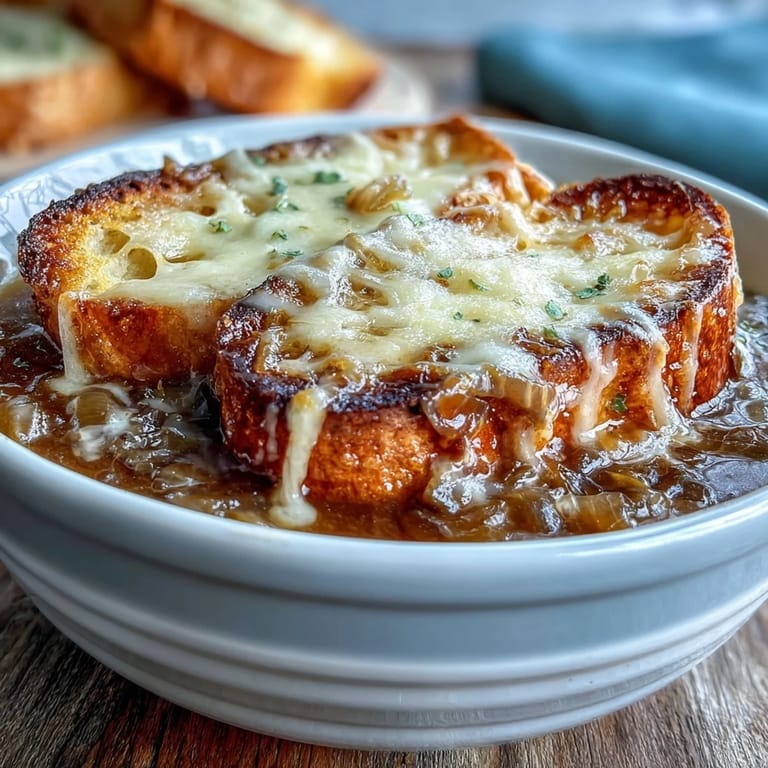
- Ladle soup into your oven-safe bowls, top each with a toasted baguette slice, then heap on a generous amount of grated Gruyère—don't be shy here, the cheese is what makes this feel like an occasion. Set the bowls on a baking sheet and broil for 2 to 4 minutes until the cheese is bubbling and just starting to brown at the edges.
- Serve immediately while magic is happening:
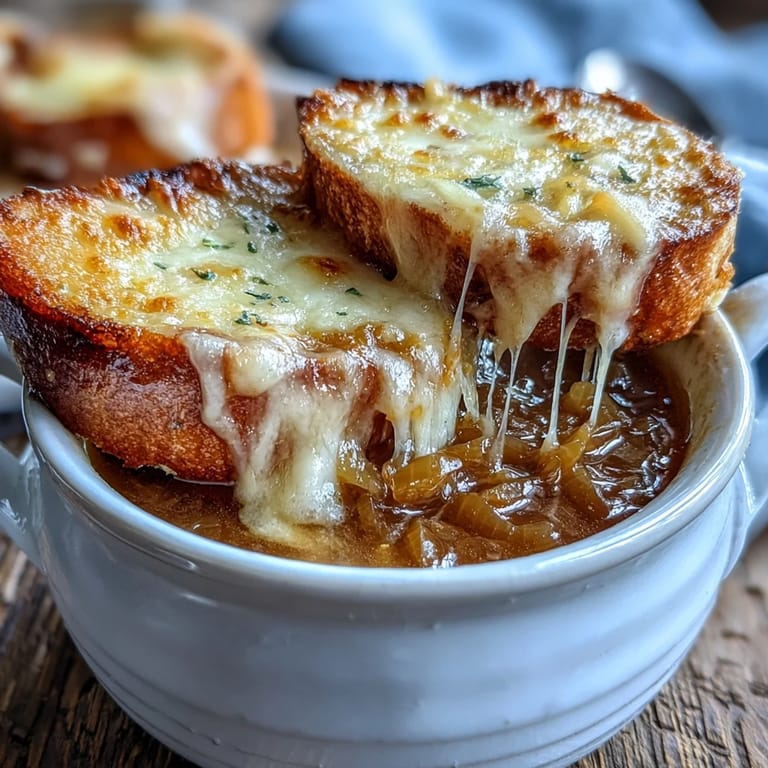
- Pull these beauties out of the oven and get them to the table right away, steam rising, cheese still moving, because this soup is at its very best in those first few minutes when everything is molten and alive.
 Save
Save Years ago I made this for a dinner party where I was nervous about impressing someone's new partner, and somewhere between the second bowl and the third, they loosened their tie and admitted they'd never felt that kind of comfort in soup before. That's when I understood that good food isn't about complexity or showing off—it's about making people feel cared for through the medium of warmth and flavor.
The Art of Caramelization
Caramelizing onions is honestly a meditation, a practice in accepting slowness in a world that demands speed. You'll watch them go from translucent to soft to golden to this deep mahogany color, and each stage teaches you something about how heat and time work together to transform even the simplest ingredient into something profound. The sugar helps this process along by encouraging browning, but it's really just the onions' natural sugars concentrating and reacting with heat, so resist the urge to crank up the temperature—you want a patient, steady flame that creates depth without bitterness.
Why Quality Broth Actually Matters Here
Because onion soup is minimalist by nature, every single ingredient has nowhere to hide, which means that tinny, salty, sad broth will ruin the whole experience despite your perfect caramelization. Spend a few extra dollars on real beef broth where you can actually taste beef, or better yet, make your own the day before if you have the time and inclination. Your future self will taste the difference immediately, and guests will wonder what your secret is even though it's really just quality ingredients and respect for the process.
The Final Broiling Step and Beyond
This is where theater meets technique, that moment when you slide bubbling bowls out from under the broiler and set them on the table, steam curling up, cheese still melting. The cheese needs to actually bubble and darken just slightly at the edges, developing a slight crust that adds textural contrast to the silky soup and tender broth-soaked bread underneath.
- Keep your oven-safe bowls within arm's reach before you even start cooking, because you'll need them the moment the soup is ready.
- If your bowls aren't oven-safe, ladle the soup into oven-safe ramekins instead—this isn't a shortcut situation where regular bowls will do.
- Serve immediately on a trivet or hot plate because these bowls are lava-temperature and will stay that way for a surprisingly long time.
 Save
Save There's something about sharing a bowl of French onion soup that feels like sharing a moment of genuine comfort, like you've given someone permission to slow down and savor. Every time I make it, I'm reminded that the best food is often the simplest, made with attention and intention and just enough time to let the ingredients become themselves.
Recipe FAQ
- → Why does caramelizing onions take so long?
Caramelization is a chemical transformation that occurs gradually as onions release their natural sugars and brown. Cooking them slowly over medium heat for 40-45 minutes develops deep, complex flavors that quick-cooking cannot achieve. Patience during this step is what separates an ordinary version from an exceptional one.
- → Can I make this vegetarian?
Absolutely. Simply substitute vegetable broth for the beef broth and either omit the Worcestershire sauce or use a vegetarian-friendly alternative. The rest of the method remains exactly the same, and you'll still achieve that rich, savory depth of flavor.
- → What cheese works best for the topping?
Gruyère is the traditional choice because it melts beautifully and adds a nutty, slightly salty flavor. Swiss or Emmental make excellent substitutes with similar melting properties. Adding Parmesan creates an extra savory punch, but it's purely optional.
- → Can I freeze this soup?
The soup base freezes wonderfully for up to 3 months. Just skip the bread and cheese topping before freezing. When ready to serve, thaw and reheat gently, then add fresh toasted baguette and cheese under the broiler. The texture and flavor will remain intact.
- → Why use a Dutch oven instead of a regular pot?
Dutch ovens provide excellent heat retention and even distribution, which helps onions caramelize uniformly without burning. The heavy lid also traps moisture during simmering, keeping the broth flavorful and reducing evaporation. Their oven-safe design means you can transition seamlessly from stovetop to broiler.