 Save
Save My neighbor Maria taught me that minestrone isn't about perfection, it's about generosity. She'd throw open her kitchen door on gray afternoons and start chopping vegetables with the kind of rhythm that made it look easy, humming Italian songs I couldn't quite place. The first time she let me help, I realized the soup wasn't a recipe she followed, it was a conversation between her hands and whatever was in season. Now whenever I make it, I hear that humming and feel a little less alone in the kitchen.
I made this soup for my friend during her first winter in the city, when she was homesick and exhausted from a new job. She sat at my table in her coat, too tired to take it off, and after two bowls she actually smiled. Later she told me it wasn't fancy enough to be memorable, but that's exactly what made it matter, because it felt like permission to be exactly as tired and ordinary as she was. That's when I understood minestrone isn't a showoff soup, it's a sit-with-you soup.
Ingredients
- Olive oil: Use a good one you actually like tasting, not the cheapest bottle, because this is where the flavor conversation starts.
- Onion, celery, and carrots: This trio is the backbone that every Italian cook knows by heart, building sweetness and depth in those first few minutes.
- Garlic: Mince it fresh and add it after the softer vegetables so it doesn't burn and turn bitter on you.
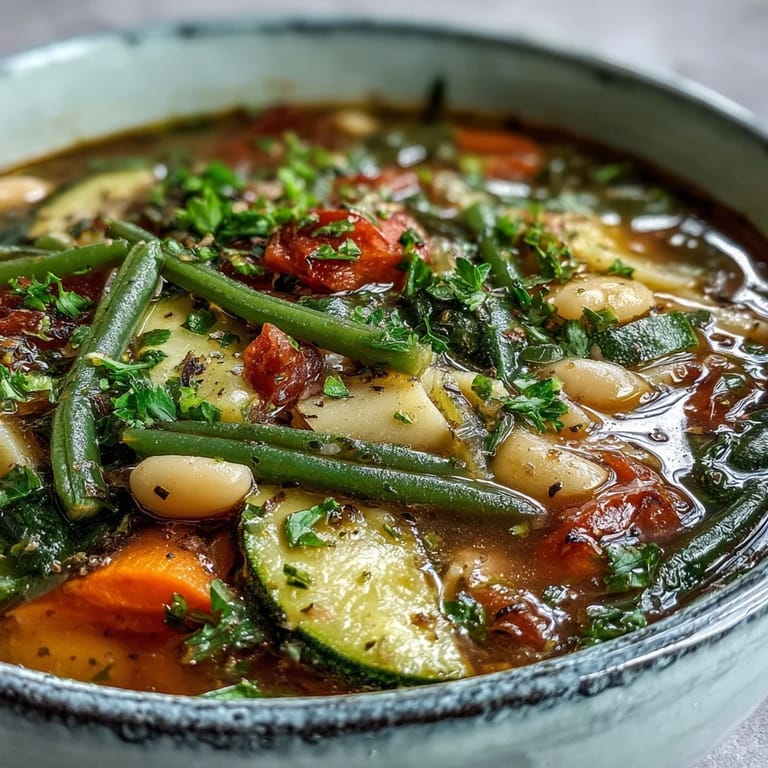
- Zucchini and green beans: These keep the soup bright and fresh, adding texture that pasta alone can't give you.
- Baby spinach or kale: Stir it in at the end so it stays vibrant and doesn't turn into an unrecognizable dark heap.
- Diced tomatoes and tomato paste: The tomato paste is the secret that makes people ask what restaurant you ordered from, so don't skip it.
- Vegetable broth: This is your liquid gold, choose one with ingredients you recognize and can actually pronounce.
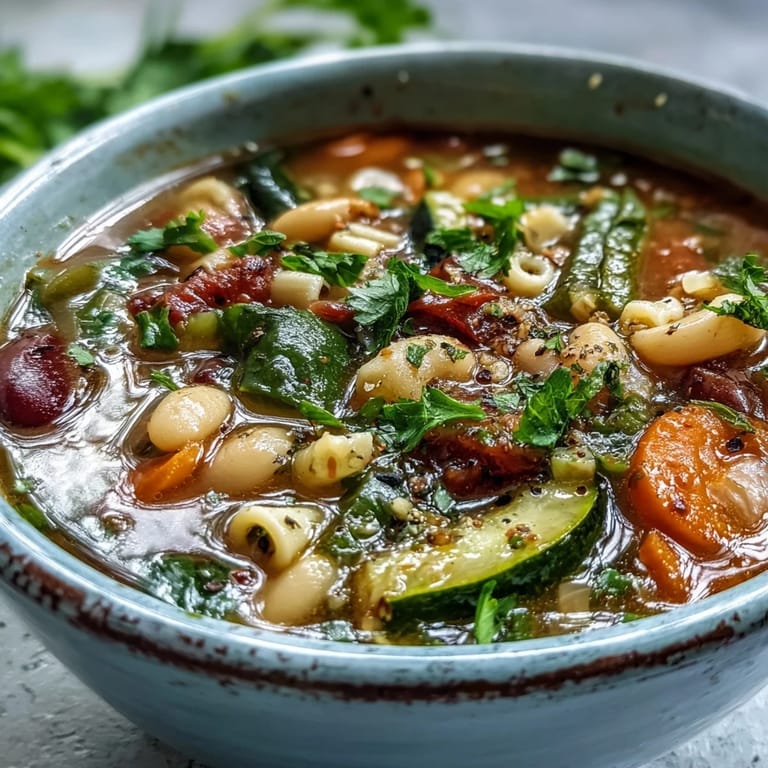
- Small pasta: Ditalini and elbow pasta are traditional because they're small enough to stay on your spoon without making you chase them around the bowl.
- Cannellini or kidney beans: Rinse them well because the canned liquid can make the soup taste metallic if you're not paying attention.
- Dried oregano, basil, and thyme: These three herbs are the Italian holy trinity for soup, but don't use stale ones hiding in the back of your cabinet.
- Bay leaf: It's subtle and essential, like a good friend who doesn't need to be loud to be important, so remember to fish it out before serving.
- Fresh parsley: Save this for the very end as a bright green garnish that makes the whole bowl look like someone who knows what they're doing made it.
Tired of Takeout? 🥡
Get 10 meals you can make faster than delivery arrives. Seriously.
One email. No spam. Unsubscribe anytime.
Instructions
- Build the foundation with aromatics:
- Heat your olive oil over medium heat and let it shimmer slightly before adding the onion, celery, and carrots. You'll know they're ready to go in when the oil is fragrant and feels warm under your hand. Sauté for about five minutes, stirring occasionally, until the onions become translucent and the whole pot starts smelling like a real kitchen.
- Welcome in the fresh vegetables:
- Stir in the minced garlic, diced zucchini, and green bean pieces, letting them soften for three to four minutes. The garlic will go from raw and sharp smelling to mellow and nutty, which is your signal that things are progressing beautifully.
- Create the soul of the soup:
- Add the diced tomatoes, tomato paste, vegetable broth, and all your dried herbs along with the bay leaf. Bring everything to a boil so you see active bubbling, then turn the heat down to let it simmer gently for fifteen minutes, which gives the herbs time to release their oils and flavor the broth.
- Introduce pasta and beans:
- Stir in your small pasta and the drained beans, then let them cook for about ten minutes until the pasta reaches that perfect al dente texture where it's tender but still has a slight resistance when you bite it. Taste the broth as it cooks because this is when you can adjust the seasonings if needed.
- Finish with brightness:
- Add the spinach or kale and fresh parsley in the final few minutes, stirring gently until the greens wilt into tender ribbons. The fresh herbs will add a final burst of brightness that makes people realize why this soup is worth making again.
- Season and serve:
- Remove the bay leaf, then taste and add salt and pepper until it tastes like comfort in a bowl. Ladle it into bowls, top with extra parsley, and serve hot with something crusty to dunk.
 Save
Save One afternoon I made minestrone and my eight year old nephew asked for seconds before finishing his first bowl, which he'd never done with anything except pizza. He said it tasted like what his stomach wanted but couldn't explain. That moment taught me that simple food made with attention speaks a language kids understand in their bones.
The Gift of Flexibility
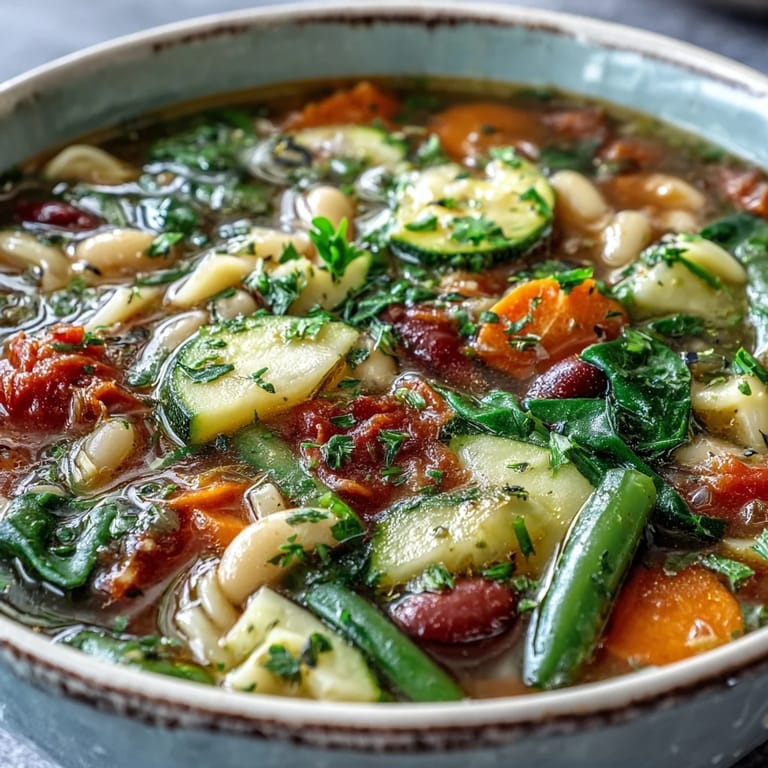
This soup is genuinely flexible in a way that feels generous rather than haphazard. Spring calls for fresh peas and tender new potatoes, summer brings zucchini and tomatoes that taste like they're glowing, fall invites kale and mushrooms, and winter is all about root vegetables that become almost sweet as they soften. The beauty is that minestrone works with what's honest in your kitchen right now, and the soup adjusts its personality to match.
Building Layers of Flavor
The secret that nobody really talks about is that this soup gets better the next day, when all those flavors have stopped being individual ingredients and have started becoming a single thing. The herbs continue to deepen, the vegetables soften further, and somehow the broth tastes more itself. If you make it with intention, you're not really cooking soup for today, you're cooking soup for the days ahead when you'll need comfort and won't have time to make it.
Making It Your Own
Once you understand how minestrone works, you can make it without even thinking, which is when it becomes yours instead of just a recipe you followed. The structure stays the same, the confidence grows, and soon you're adding things because you trust your own judgment. This is how food becomes memory instead of just nutrition.
- Try adding a rind of Parmesan cheese while it simmers for extra umami and richness that people won't be able to name but will absolutely notice.
- If you have leftover vegetables that are on their way out, minestrone is the soup that welcomes them like they were planned all along.
- Serve it with a good olive oil drizzle and crusty bread, because the bread is where half the pleasure actually lives.
 Save
Save Minestrone is the soup that reminds you that feeding people doesn't require complicated techniques or impossible ingredients, just attention and time. Make it whenever someone needs something warm, and you'll understand why people have been making it the same way for generations.
Recipe FAQ
- → What vegetables work best in minestrone?
Traditional minestrone includes onions, celery, carrots, zucchini, and green beans as the base. You can also add seasonal vegetables like bell peppers, cabbage, or Swiss chard. The key is using firm vegetables that hold their shape during simmering.
- → Can I make minestrone soup ahead of time?
Absolutely! Minestrone actually tastes better the next day as flavors meld together. Store it in the refrigerator for up to 4 days. Note that the pasta will continue absorbing liquid, so you may need to add extra broth when reheating.
- → What pasta shape is ideal for this soup?
Small pasta shapes work best—ditalini, elbow macaroni, small shells, or orzo are excellent choices. They're perfectly proportioned to fit on a spoon with the vegetables and beans. If planning to freeze leftovers, consider adding pasta when reheating to prevent it from becoming mushy.
- → How can I make minestrone vegan?
This soup is easily made vegan by ensuring your vegetable broth is plant-based and skipping the Parmesan garnish. The rest of the ingredients are naturally vegan-friendly. For extra richness, you could stir in a splash of coconut milk or cashew cream at the end.
- → What should I serve with minestrone?
Crusty Italian bread or garlic bread is the classic accompaniment for dipping into the flavorful broth. A simple green salad with balsamic vinaigrette complements the heartiness of the soup. For a more substantial meal, serve alongside a light bruschetta or focaccia.
- → Can I freeze minestrone soup?
Yes, minestrone freezes well for up to 3 months. For best results, slightly undercook the pasta before freezing, as it will continue cooking when reheated. Freeze in airtight containers, leaving some space for expansion. Thaw overnight in the refrigerator before gently reheating on the stove.