 Save
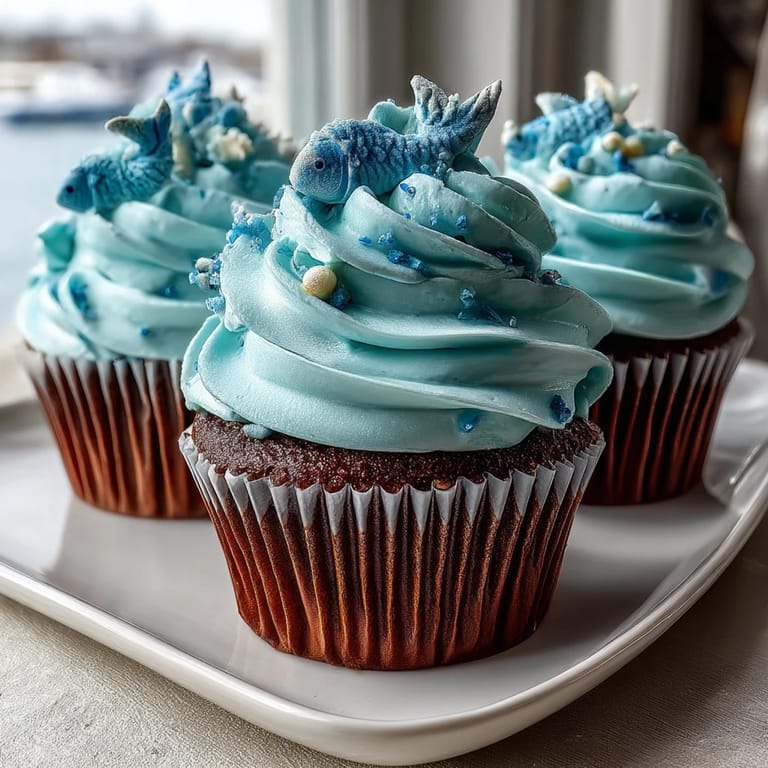
Save My niece turned nine last spring, and she wouldn't stop talking about her Pisces sign. She had this whole Pinterest board of fish-themed everything, and I found myself standing in the kitchen on a Saturday afternoon, wondering how to make her birthday feel magical. Vanilla cupcakes seemed too simple until I remembered fondant—suddenly, I could sculpt tiny edible fish to swim across blue frosting waves. The moment she saw them, her face lit up in a way that made every minute of fondant shaping worth it.
There's something about watching someone bite into a cupcake with a fondant topper they didn't expect. A coworker brought her daughter to our office potluck once, and that little girl grabbed one of these without hesitation. She examined the fish first, asked if it was real (it wasn't), then demolished it with such enthusiasm that I had to make another batch by the next week.
Ingredients
- All-purpose flour: The structure of everything—measure it by weight if you can, because scooping straight from the bag always packs it tighter than you think.
- Baking powder: This is your rise, so check the expiration date; old baking powder turns your cupcakes dense and disappointing.
- Salt: A quarter teaspoon might seem tiny, but it's the secret that makes vanilla taste like actual vanilla instead of sweet nothing.
- Unsalted butter: Room temperature is non-negotiable here—cold butter refuses to cream properly, and you'll be beating it forever.
- Granulated sugar: Creaming sugar and butter together should take three to four minutes; you'll know it's ready when it looks pale and fluffy like clouds.
- Eggs: Also room temperature, because they incorporate into the batter so much more smoothly when they're not cold.
- Vanilla extract: Real vanilla makes a noticeable difference if you're tasting side by side.
- Whole milk: The alternating wet and dry method keeps the batter from becoming dense or separated.
- Powdered sugar for frosting: Sift it before measuring, or you'll end up with lumpy, grainy frosting that frustrates you.
- Blue food coloring: Gel coloring won't thin out your frosting the way liquid does, and the color stays vibrant.
- White fondant: Buy quality fondant if possible; cheaper versions crack and tear when you try to shape them.
- Gel food coloring for fondant: Again, gel over liquid—fondant drinks up liquid coloring and becomes sticky and weird.
- Edible black marker: Easier and more precise than trying to paint tiny eyes with a brush and food coloring, though either works.
- Cornstarch: For dusting your work surface so fondant doesn't stick and become a wrestling match.
Tired of Takeout? 🥡
Get 10 meals you can make faster than delivery arrives. Seriously.
One email. No spam. Unsubscribe anytime.
Instructions
- Set your stage:
- Preheat the oven to 350°F and line your muffin tin with liners. Doing this first means you won't be rushed when the batter is ready.
- Combine dry ingredients:
- Whisk flour, baking powder, and salt in a medium bowl—this distributes the leavening evenly so you don't get pockets of dense cake.
- Cream butter and sugar:
- Beat them in a large bowl for three to four minutes until they're pale, fluffy, and noticeably lighter in color. This incorporates air into the batter, which creates tender crumb.
- Build the batter carefully:
- Add eggs one at a time, mixing well after each, then vanilla. Then alternate adding dry and wet ingredients in three additions each, starting and ending with dry—this prevents overmixing and keeps the cupcakes tender.
- Bake to golden softness:
- Divide batter evenly (an ice cream scoop works perfectly) and bake for 18 to 20 minutes until a toothpick inserted in the center comes out clean. The tops should spring back when you touch them gently.
- Cool completely:
- This is important and worth the wait—frosting warm cupcakes will melt and slide everywhere.
- Make the frosting cloud:
- Beat softened butter until it's creamy, then gradually add sifted powdered sugar a bit at a time so you don't create a sugary dust cloud. Add milk slowly to reach a spreadable consistency, then tint with blue food coloring.
- Shape fondant fish:
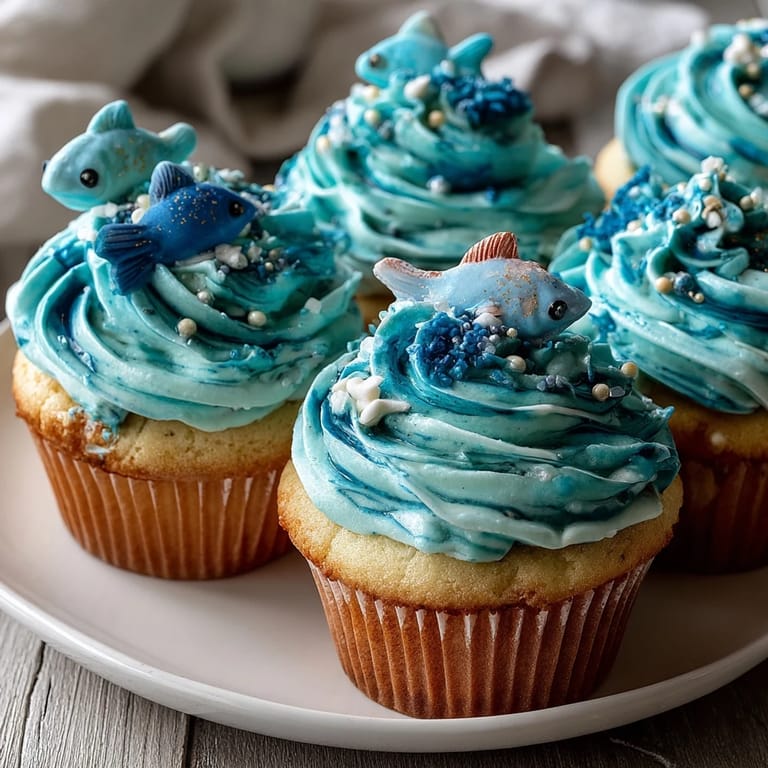
- Divide fondant and knead in gel coloring until the color is even. Roll small ovals for bodies, shape tiny triangles for tails and fins, and attach pieces with a dab of water—fondant is just like clay, so don't overthink the shapes.
- Add character with eyes:
- Use an edible black marker to dot eyes, or mix black food coloring with a drop of water and paint them on with a tiny brush.
- Let fish air-dry:
- Place them on parchment paper for a couple hours or overnight so they set firm and won't leave color on the frosting.
- Frost and top:
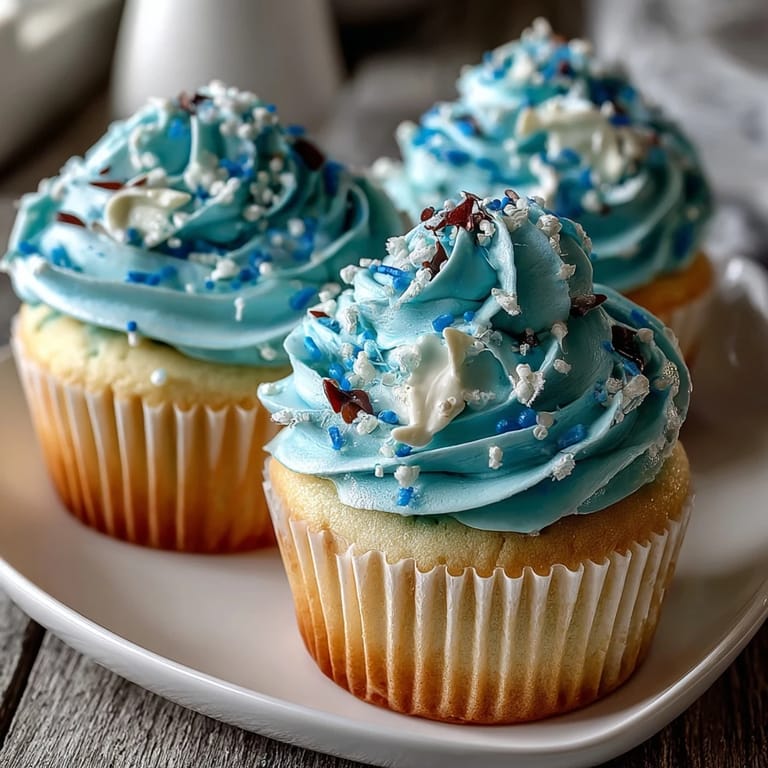
- Swirl blue buttercream onto each cupcake to look like water waves, then crown each with a fondant fish.
 Save
Save There was a moment while shaping fish where my hands stopped thinking and just knew what to do. I wasn't following a diagram anymore—I was just feeling the fondant, adjusting fins, making each fish a little different. That's when baking stopped being about rules and started being about the small magic of creating something with your hands.
The Science of Vanilla Cupcakes
Vanilla cupcakes work because of chemistry—creaming butter and sugar incorporates air, eggs bind and add structure, and the alternating wet and dry method prevents overmixing that would make them tough. I learned this through trial, making dense batches until a baker friend explained that I was stirring too hard after adding ingredients. Now I fold the final bits together gently, and the difference is noticeable every time.
Working with Fondant Like a Sculptor
Fondant feels strange at first—it's softer than clay but firmer than dough, and it responds to warmth from your hands. I used to think tiny details had to be perfect until I made a bunch of imperfect fish that somehow looked better, more alive, than the ones I'd overthought. The key is not treating it like an exact art but letting your hands discover what the fondant wants to become.
Frosting Swirls and Presentation
The blue frosting swirl is where presentation and taste collide in the best way. I use an offset spatula and just let my hand move in loose circles, creating peaks that look like water. Some swirls end up perfect, others look chaotic, but somehow they all feel right on a cupcake topped with a fish.
- If your frosting is too soft to hold swirls, refrigerate it for ten minutes and try again.
- A turntable makes frosting easier, but you can absolutely frost cupcakes in a muffin tin if you rotate the tin as you work.
- Fondant fish can be made days ahead and stored in an airtight container, which means less stress on party day.
 Save
Save These cupcakes stopped being about a birthday theme and became about the joy of making something for someone you care about. That's the real magic—not the fondant or the blue frosting, but the moment they taste it.
Recipe FAQ
- → How do you make the fondant fish toppers?
Divide white fondant into portions, tint with gel food colors, then shape small ovals for fish bodies and tiny triangles for fins and tails. Use edible ink for eyes and let dry.
- → What flavor enhances the cupcakes?
Vanilla extract provides a classic flavor, and adding lemon or almond extract can offer a delightful twist.
- → How should the buttercream be prepared?
Beat softened butter until creamy, gradually add sifted powdered sugar, then vanilla extract and milk to achieve a fluffy, spreadable consistency tinted with blue food coloring.
- → What baking temperature and time are recommended?
Bake at 350°F (175°C) for 18 to 20 minutes until a toothpick inserted in the center comes out clean.
- → Can these cupcakes accommodate dietary restrictions?
They are vegetarian but contain wheat, eggs, and dairy; fondant may have nut traces, so check labels accordingly.