 Save
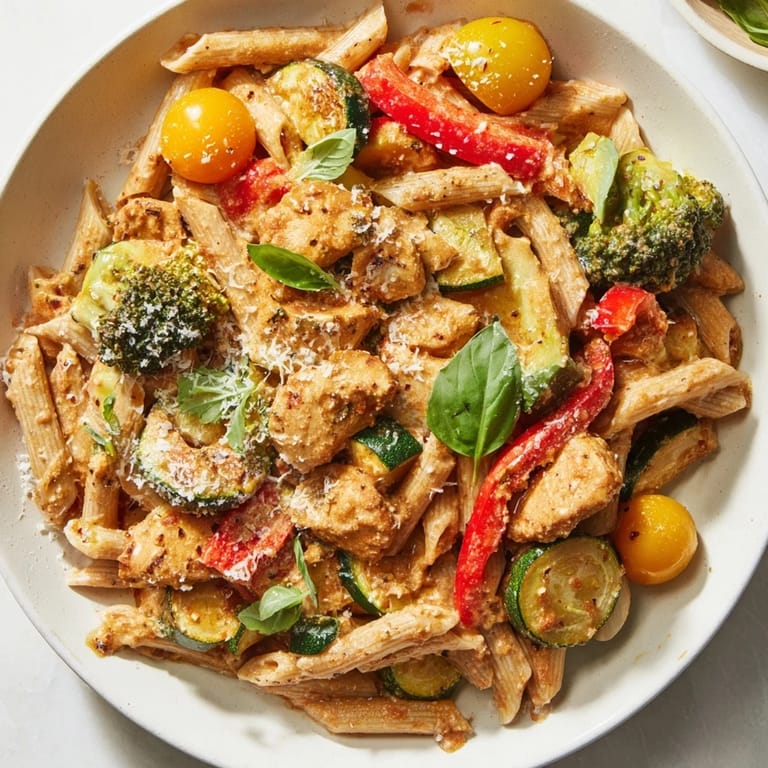
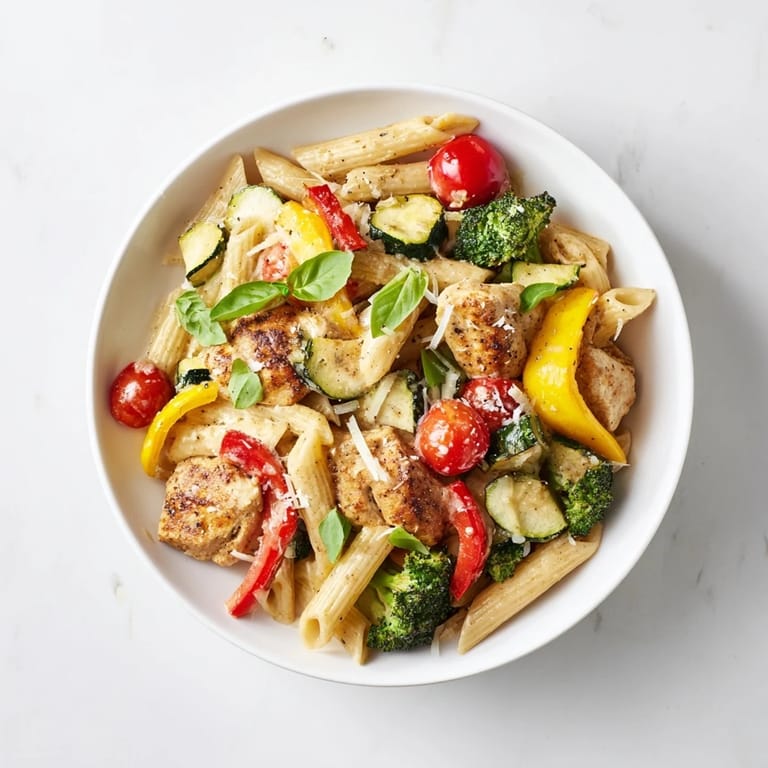
Save I discovered the magic of this pasta on a rushed Tuesday evening when my fridge looked like a farmer's market had exploded inside it. Five different vegetables were nearing their expiration dates, and instead of tossing them, I threw them into a pan with chicken and cream. What started as a desperate attempt to use what I had became the dish I now make whenever I need something that feels both nourishing and effortless. The colors alone make you smile before you even taste it.
My partner came home to the smell of garlic hitting hot oil and fresh basil, and before I could finish plating, he was hovering by the stove with a fork. That's when I knew this recipe had crossed from weeknight solution to something worth repeating. Now whenever someone asks what's for dinner at our place, this is the dish that gets requested.
Ingredients
- Chicken breasts: Cut them into bite-sized pieces so they cook evenly and soak up all the creamy sauce without drying out.
- Red bell pepper: The sweetness balances the earthiness of the other vegetables—I slice mine thin so they soften quickly.
- Zucchini and yellow squash: These are interchangeable and bring a delicate texture; don't skip cutting them into half-moons for even cooking.
- Cherry tomatoes: They burst slightly in the pan and release their juices into the sauce, creating pockets of brightness.
- Broccoli florets: A texture contrast that makes each bite interesting, and they stay crisp if you add them at the right moment.
- Penne or farfalle pasta: Shapes that catch the cream sauce beautifully; choose whichever you have or prefer.
- Heavy cream and Parmesan: These two transform the dish from simple sautéed vegetables into something that feels luxurious.
- Garlic and olive oil: The foundation—good quality olive oil makes a real difference here.
- Italian herbs: Dried herbs work here because they bloom when heated with the garlic and oil.
- Fresh basil: Added at the end, it's optional but changes everything if you have it.
Tired of Takeout? 🥡
Get 10 meals you can make faster than delivery arrives. Seriously.
One email. No spam. Unsubscribe anytime.
Instructions
- Get the pasta going:
- Bring salted water to a boil and cook the pasta until it's just al dente—tender but still with a slight bite. Before draining, scoop out half a cup of that starchy cooking water; it's liquid gold for loosening the sauce later.
- Sear the chicken:
- Heat olive oil in your skillet over medium-high heat until it shimmers, then add chicken pieces seasoned with salt and pepper. You want a golden crust on each piece, which takes about 5 to 6 minutes of undisturbed cooking.
- Build the flavor base:
- In the same skillet, add a touch more oil if needed and let garlic toast for just 30 seconds—any longer and it turns bitter. You'll smell when it's right.
- Cook the vegetables:
- Add the bell pepper, zucchini, yellow squash, and broccoli all together, stirring often for 4 to 5 minutes until they're tender but still have a slight firmness. This is where you're listening for the gentle sizzle and watching colors intensify.
- Bring it together:
- Return the chicken to the skillet, add the cherry tomatoes, and let them warm through for 2 minutes. Then lower the heat and pour in the cooked pasta, cream, Parmesan, and herbs.
- Finish with sauce:
- Toss everything together, adding splashes of that reserved pasta water until the sauce coats the pasta but doesn't pool. Taste and adjust the salt and pepper, knowing that Parmesan adds its own saltiness.
- Serve with intention:
- Plate it while it's hot, torn fresh basil on top if you have it, and extra Parmesan on the side. This dish loses its magic if it sits, so eat it fresh.
 Save
Save There was a moment when my eight-year-old niece ate three helpings in a row and asked if vegetables could always taste this good. That question stuck with me because it meant the bright flavors and color weren't just food—they were a small joy that made her curious instead of resistant. This recipe does that.
Why This Dish Works on Any Night
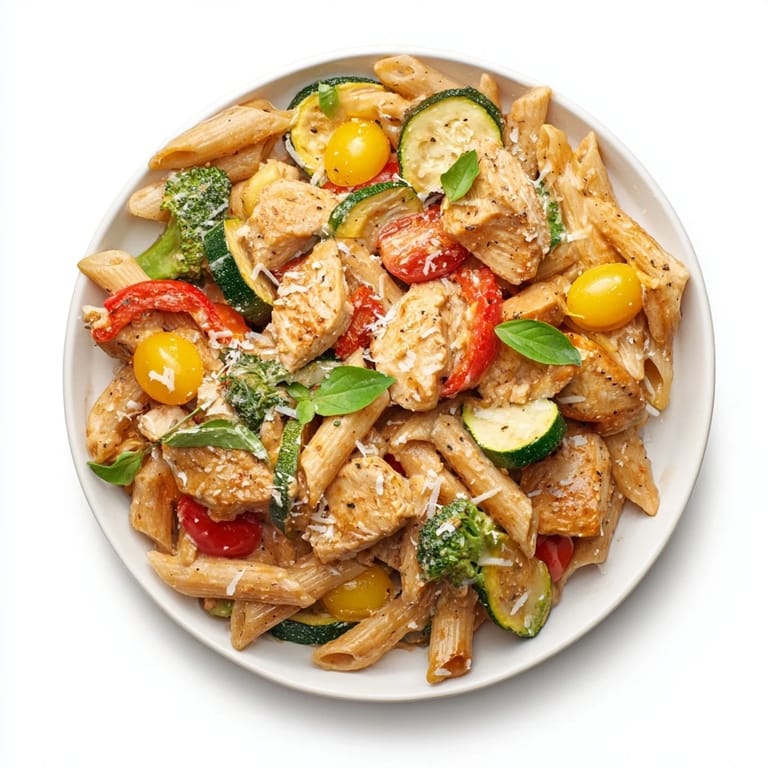
The beauty of this pasta is that it lives in the middle ground between comfort and nutrition. It's not heavy like a cream-based Alfredo, but it's not sparse like a simple aglio e olio. The vegetables add volume without making you feel stuffed, and the protein keeps you satisfied for hours. I've made it on nights when I'm exhausted and nights when I'm cooking for company, and it performs the same way every time.
Variations That Work Just as Well
If you're vegetarian, chickpeas or crispy-edged tofu pieces work beautifully in place of chicken. I've also used shrimp when I wanted something lighter, and it cooked in the same time frame. The vegetables are your canvas—swap in asparagus, snap peas, mushrooms, or spinach depending on the season or what's in your crisper drawer. Whole wheat pasta adds nuttiness and fiber if that's your preference.
How to Make It Your Own
Once you've made this once, you'll see how flexible it is. Some people add red pepper flakes for heat, a splash of white wine for brightness, or a touch of honey to balance acidity. I've watched friends make it with half cream and half pasta water to lighten it up, and it's equally delicious. The five-vegetable structure is just a starting point—respect the cooking technique and proportions, and the rest is yours to explore.
- A squeeze of fresh lemon juice at the very end brightens everything without needing extra salt.
- If you prefer a lighter sauce, use Greek yogurt or creme fraîche instead of heavy cream.
- Roasted garlic cloves scattered on top add sweetness and a different texture dimension.
 Save
Save This recipe taught me that the simplest meals often become the ones you make most often because they ask so little while giving so much. Make it this week.
Recipe FAQ
- → Can I use a different type of pasta?
Yes, penne or farfalle work well, but feel free to use any short pasta that holds sauce nicely.
- → How can I make this dish vegetarian?
Swap chicken for tofu or chickpeas to maintain protein while keeping the dish meat-free.
- → What can I substitute for heavy cream?
For a lighter version, use half-and-half or a plant-based cream alternative, though it may alter the richness slightly.
- → Is it possible to prepare this in advance?
Yes, but it’s best served fresh. Store components separately and combine just before serving.
- → How do I ensure the pasta remains al dente?
Cook pasta according to package instructions and drain promptly. Reserve some cooking water to adjust sauce consistency.