 Save
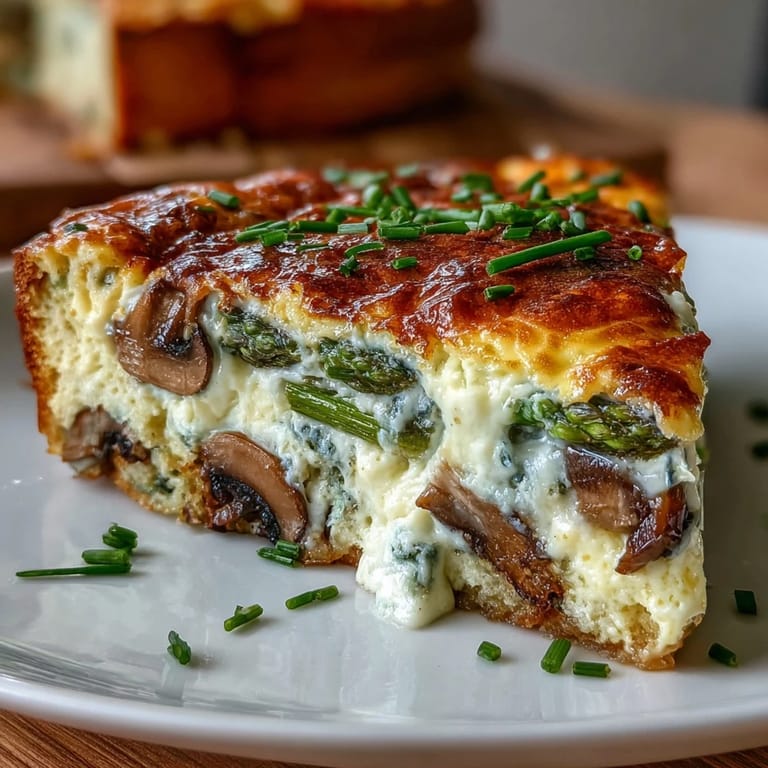
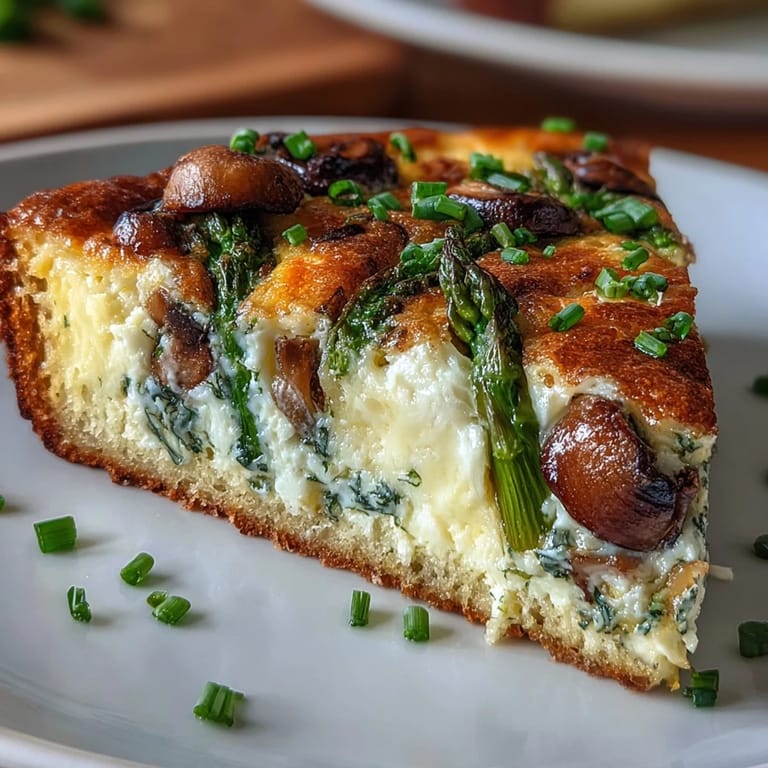
Save There's something about spring that makes you want to bake vegetables into eggs, and this frittata arrived in my kitchen on one of those mornings when the farmers market suddenly had asparagus piled high. I grabbed a bunch, wandered past the mushroom stand, and thought about what would happen if I layered it all over sourdough instead of just tossing it in a pan. The result was golden, puffy, and somehow both elegant and completely unfussy.
I made this for brunch once when someone mentioned they'd never had a frittata before, and watching their face when they cut through that golden top and found the custardy eggs underneath was worth every minute of prep. Now it's become my go-to when I'm cooking for people who think they don't like vegetables.
Ingredients
- Sourdough bread: Six slices with crusts removed create a sturdy, flavor-forward base that won't turn soggy under the egg custard.
- Unsalted butter: Two tablespoons melted over the bread crust before baking gives you that essential crispy texture.
- Fresh asparagus: One cup trimmed and cut into one-inch pieces—look for bright green spears and trim the woody ends by snapping rather than cutting.
- Cremini or button mushrooms: One cup sliced releases their earthiness into the whole dish and creates little pockets of umami flavor.
- Shallot: One small one finely chopped adds sweetness without overpowering like garlic might.
- Olive oil: Two tablespoons for sautéing the vegetables, enough to coat the pan without making things greasy.
- Large eggs: Eight of them form the backbone of the custard, and they should be room temperature if you remember it.
- Whole milk and heavy cream: One third cup milk and one quarter cup cream create that silky, rich texture in the center.
- Gruyère and Parmesan cheese: Half cup and one quarter cup respectively melt into the eggs and add a salty, nutty depth.
- Fresh chives: Two tablespoons chopped right before mixing preserve their onion-like brightness.
- Salt and pepper: Half teaspoon salt and one quarter teaspoon black pepper season everything quietly from within.
Tired of Takeout? 🥡
Get 10 meals you can make faster than delivery arrives. Seriously.
One email. No spam. Unsubscribe anytime.
Instructions
- Heat your oven and prepare the pan:
- Set your oven to 375°F and grease a nine-inch springform pan or deep pie dish thoroughly so nothing sticks when it's time to slice.
- Build the sourdough crust:
- Arrange six sourdough slices to line the bottom and sides of your pan, overlapping them slightly like you're building a edible bowl. Brush generously with melted butter, then bake for eight to ten minutes until the bread just starts to crisp and turn golden at the edges.
- Sauté the vegetables:
- While the crust cools, heat olive oil in a skillet over medium heat and cook your chopped shallot for a minute or two until it becomes fragrant and slightly softened. Add the sliced mushrooms and let them cook undisturbed for a few minutes so they release their water and start to brown, then add the asparagus pieces and cook everything together for two to three minutes more until the asparagus brightens slightly.
- Whisk the egg mixture:
- In a large bowl, crack your eggs and whisk them together with the milk, cream, both cheeses, fresh chives, salt, and pepper until everything is completely combined and the mixture looks pale and slightly frothy.
- Assemble the frittata:
- Spread your sautéed vegetables evenly over the crispy sourdough crust, then pour the egg mixture over the top, letting it settle into all the spaces between the vegetables and bread.
- Bake until set:
- Slide the pan into your hot oven and bake for twenty-five to thirty minutes, watching for the moment when the top turns golden and puffy and the center jiggles just slightly when you gently shake the pan. Remove it from the oven and let it cool for five minutes so the custard continues to set as it cools.
- Slice and serve:
- Run a thin knife around the edges if you're using a springform pan, release the sides, and slice into six wedges. Serve warm or at room temperature with a simple salad if you want to make it a full meal.
 Save
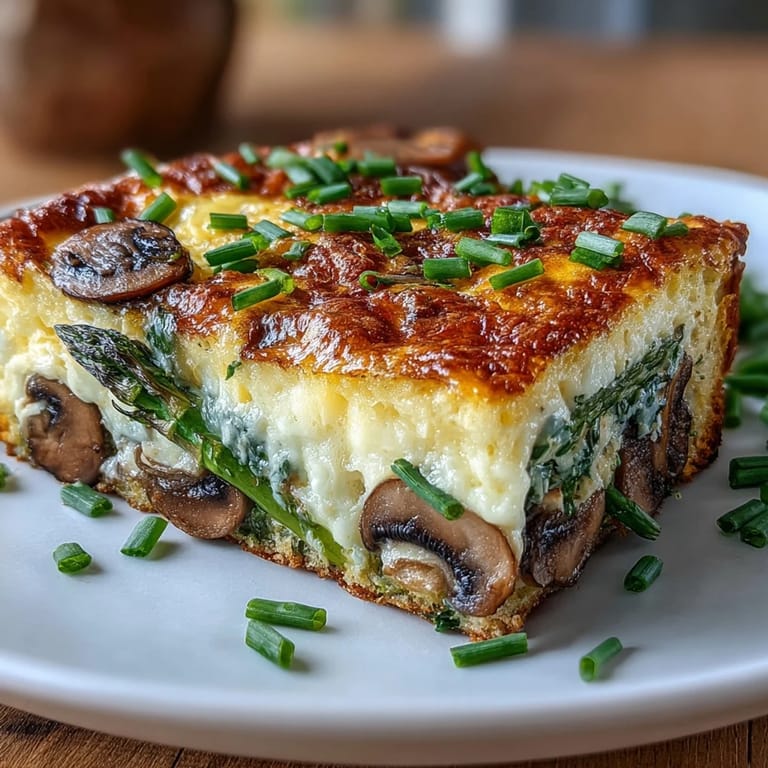
Save There was a moment when I realized this frittata had become less about following a recipe and more about understanding how bread and eggs and vegetables could become something greater together. That's when it stopped being just brunch and started being something I made whenever I wanted people to feel taken care of.
Making It Your Own
The beauty of a frittata is that it adapts to whatever you have and whatever season you're cooking in. Spring calls for asparagus and fresh herbs, but summer could bring zucchini and tomatoes, fall could feature caramelized onions and sage, and winter could lean into roasted Brussels sprouts and thyme. The sourdough crust stays the same, the egg mixture stays the same, but the vegetables tell the story of when you made it.
Timing and Temperature
The oven temperature of 375°F is important because it's hot enough to set the eggs and crisp the top without browning it too aggressively. If you peek at the frittata and the top is browning too quickly while the center is still jiggly, you can tent it loosely with foil for the remaining cooking time. The whole process from start to finish takes about fifty-five minutes, but most of that is hands-off baking time.
Pairing and Storage
This frittata tastes equally good warm from the oven or cold from the refrigerator the next day, which makes it perfect for meal prep or unexpected guests. Serve it alongside a simple green salad dressed with lemon vinaigrette, and pour a crisp white wine like Sauvignon Blanc if you're making an occasion of it.
- Leftovers keep in an airtight container in the refrigerator for up to three days and can be reheated gently in a low oven.
- For a dairy-free version, use plant-based milk and cheese alternatives in the same quantities and the frittata will still bake beautifully.
- If you want to add protein, crispy pancetta or smoked salmon stirred into the vegetables adds richness without overpowering the spring vegetables.
 Save
Save This frittata has become the kind of dish I make when I want to cook something that looks more impressive than it actually is, and that's its greatest strength. Once you understand how it works, you'll find yourself making it again and again, each time a little different, each time exactly right.
Recipe FAQ
- → How should I prepare the sourdough crust?
Line the pan with overlapped sourdough slices brushed with melted butter, then bake briefly until crisp to create a sturdy crust base.
- → Can I use other vegetables besides asparagus and mushrooms?
Yes, you can substitute or add vegetables like spinach, bell peppers, or zucchini according to your preference.
- → What cheeses provide the best flavor in this dish?
Gruyère and Parmesan offer a rich, nutty flavor and melt beautifully to complement the vegetables and eggs.
- → Is it possible to make this dish dairy-free?
Yes, replace the milk, cream, and cheeses with plant-based alternatives designed for cooking and baking.
- → How do I know when the frittata is fully cooked?
The frittata should be puffed and golden with the center just set but not jiggly when gently shaken.
- → What serving suggestions pair well with this dish?
A fresh green salad and a crisp white wine like Sauvignon Blanc enhance the flavors beautifully.