 Save
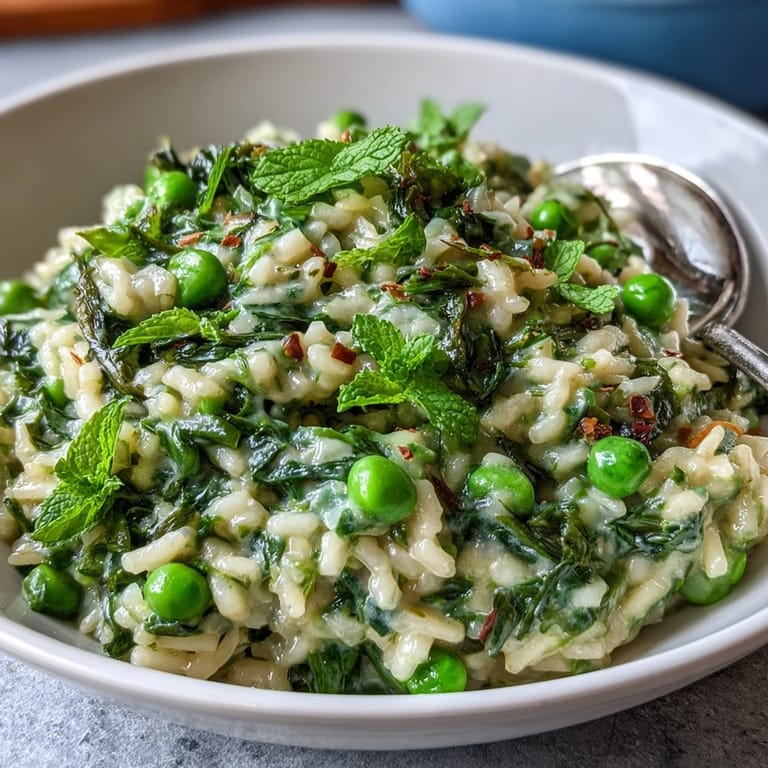
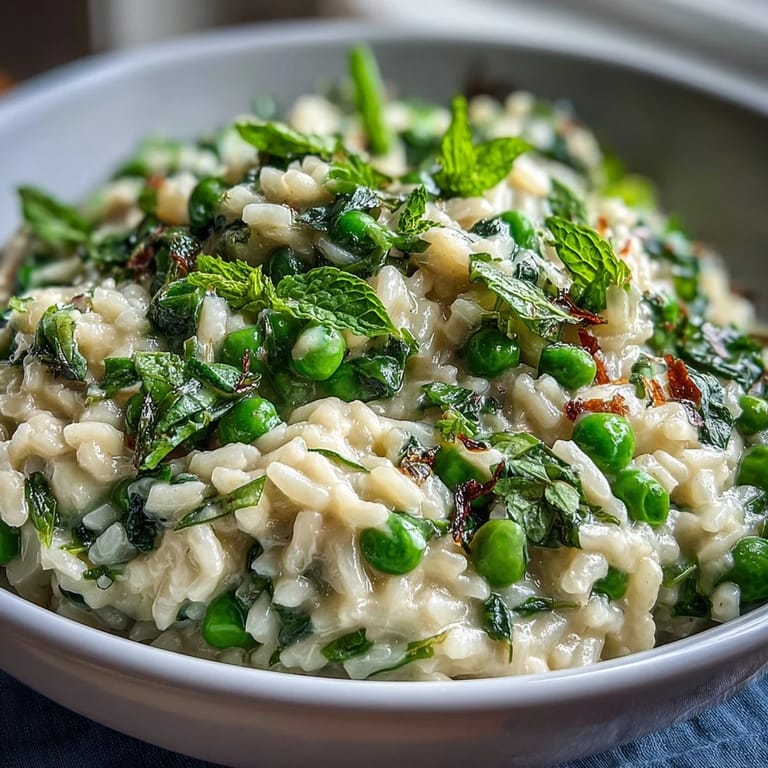
Save There's something about late spring that makes me crave risotto, though most people would reach for something lighter. My neighbor brought over a basket of the first sweet peas from her garden one April evening, and I found myself stirring rice at the stove while the evening light turned golden through the kitchen window. The mint was almost an afterthought—a handful from a pot on the windowsill that smelled impossibly fresh when I crushed it between my palms. That first taste, creamy and bright and nothing like the heavy winter risottos I'd made before, completely changed how I thought about spring cooking.
I served this to my sister on her first visit after moving back to the city, and she ate it while telling me about her new job, barely looking up from the bowl. That's when I knew it was the kind of dish that lets people relax—substantial enough to feel like dinner, but so delicate and green that it doesn't weigh on you. She asked for the recipe before dessert, which felt like the highest compliment.
Ingredients
- Fresh or frozen spring peas, 1 cup: Frozen peas are honestly just as good here, sometimes better because they're picked at peak sweetness; don't thaw them unless the recipe says to.
- Arborio rice, 1 1/2 cups: This short-grain rice is worth seeking out because it releases starch as it cooks, creating that signature creamy texture without cream.
- Small onion, finely chopped: The onion disappears into the risotto and becomes the flavor foundation; don't skip it or rush chopping it.
- Garlic, 2 cloves minced: Fresh garlic matters here; it softens into the rice rather than overpowering it.
- Fresh mint leaves, 2 tablespoons chopped: Tear or chop the mint just before using so it stays vibrant green and aromatic.
- Lemon zest, from 1 lemon: This is optional but it wakes up the whole dish with brightness.
- Unsalted butter, 3 tablespoons divided: Use real butter; it's part of why this tastes so good.
- Parmesan cheese, 1/2 cup grated: Grate it yourself if you have time because pre-grated cheese has additives that affect the creaminess.
- Heavy cream, 1/4 cup optional: Honestly, you don't need it, but some nights I add it anyway because it feels luxurious.
- Vegetable broth, 4 cups kept warm: Keep it simmering in another pot the whole time; cold broth stops the cooking process and makes the rice starchy instead of creamy.
- Dry white wine, 1/2 cup: A wine you'd drink; nothing labeled 'cooking wine'.
- Extra-virgin olive oil, 2 tablespoons: Good oil makes a difference in the base layer of flavor.
- Salt and freshly ground black pepper: Taste as you go because the Parmesan and broth are already salty.
Tired of Takeout? 🥡
Get 10 meals you can make faster than delivery arrives. Seriously.
One email. No spam. Unsubscribe anytime.
Instructions
- Start your broth warming:
- Pour the vegetable broth into a medium saucepan and set it over low heat so it stays gently simmering the entire time you're making risotto. This is the most important step people skip, and it's why their risotto turns gluey.
- Build your flavor base:
- Heat the olive oil and 2 tablespoons of butter in a large, heavy-bottomed skillet over medium heat. Once the butter foams, add the finely chopped onion and let it soften for about 4 minutes, stirring occasionally until it turns translucent and sweet-smelling.
- Wake up the garlic:
- Add the minced garlic and cook for just 1 minute, stirring so it doesn't brown. You want it fragrant but still pale.
- Toast the rice:
- Stir in the Arborio rice and keep stirring constantly for 2 minutes. You'll see the grains begin to look slightly translucent at the edges, which means they're absorbing the oil and ready for liquid.
- Add the wine:
- Pour in the dry white wine and stir until most of it disappears into the rice. This takes about 2 to 3 minutes and adds depth without heaviness.
- Begin the patient part:
- Add the warm broth one ladleful at a time, stirring frequently after each addition. Wait until you barely see liquid on the surface before adding more, which usually takes about 2 to 3 minutes per ladle. The rice should always look creamy, never swimming in broth or completely dry. This process takes about 18 to 20 minutes total, and you can't rush it.
- Add the peas:
- When you have about 5 minutes of cooking time left, stir in the peas. They'll warm through and add little bursts of sweetness.
- Finish with richness:
- Once the rice is creamy and tender but still has a slight bite to it (that's al dente), remove the pan from heat. Stir in the remaining tablespoon of butter, the grated Parmesan, the heavy cream if you're using it, the chopped fresh mint, and the lemon zest. Season with salt and pepper, remembering that you already have some saltiness from the cheese and broth.
- Rest and serve:
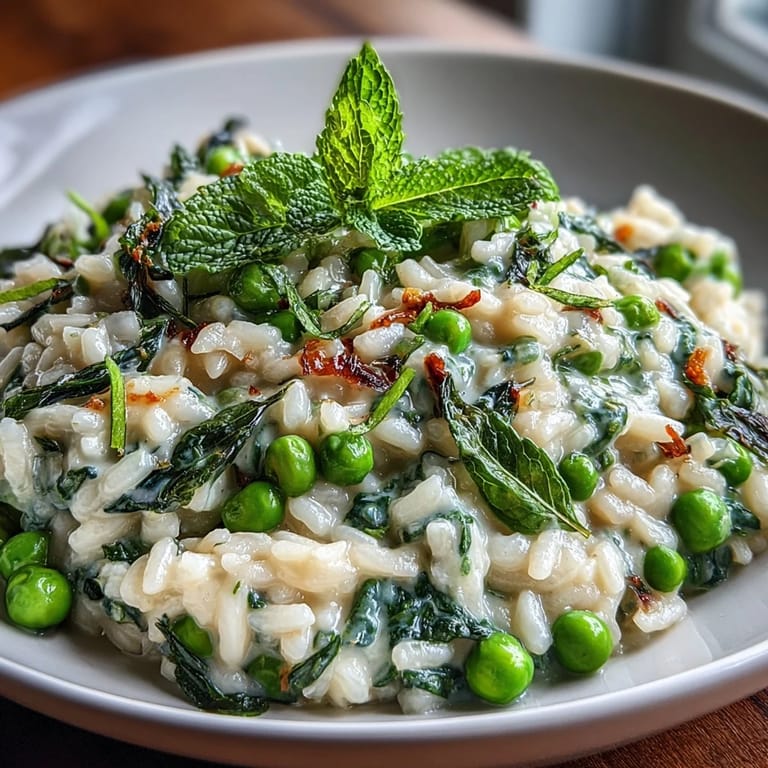
- Let the risotto sit undisturbed for 2 minutes; this allows the rice to settle and the flavors to meld. Serve immediately into shallow bowls, garnished with extra mint leaves and a tiny drift of Parmesan if you like.
 Save
Save There's a moment, maybe halfway through cooking, when the rice starts to smell like butter and wine and something indefinably spring-like, and that's when you know it's going to be good. I remember standing there at the stove on a Wednesday night, shoulders relaxed, just stirring and thinking about nothing in particular, and realizing that cooking this dish had become as much a part of my week as making coffee.
Timing and Rhythm
Risotto asks something from you that most other dishes don't—it asks for your attention and presence, not in a stressful way but in a meditative one. You're tied to the stove for about 20 minutes, but those minutes feel different than watching something roast or simmer unattended. The rhythm of stirring, ladling, stirring again becomes almost hypnotic, and you end up with something infinitely better than if you'd rushed it.
When to Use Mint Versus When to Save It
The mint does two completely different things depending on when you add it. If you stir it in at the very end off the heat, it stays bright and punchy and tastes like spring. If you'd accidentally added it earlier, the heat would soften and dull it, turning it into a whisper instead of a voice. I learned this the hard way by doing it wrong first, and now I'm almost fanatic about adding it at the last moment.
Making It Your Own
This recipe is a foundation, not a rule book, and the best meals happen when you make it yours. I've stirred in baby spinach, scattered toasted pine nuts across the top, added a handful of fresh pea shoots that tasted impossibly delicate. One time I drizzled truffle oil at the end because I felt fancy, and another time I topped it with a perfectly fried egg because why not. The thing that makes this work is respecting the method and then playing with it however your mood and pantry suggest.
- A handful of baby spinach wilts right into the finished risotto and adds color without changing the flavor.
- Toasted pine nuts or breadcrumbs add a textural contrast that makes every spoonful more interesting.
- If you're feeding someone without dairy, vegan butter and a good cashew Parmesan substitute work beautifully here.
 Save
Save This risotto is the kind of food that makes an ordinary night feel intentional and nourishing. It's a reminder that the best meals aren't always the complicated ones, but the ones where you showed up fully and stirred with intention.
Recipe FAQ
- → How do I achieve a creamy texture in this risotto?
Slowly adding warm broth and stirring frequently helps release the rice's starch, creating a creamy consistency.
- → Can I use frozen peas instead of fresh?
Yes, frozen peas work well and can be added during the last 5 minutes of cooking to maintain their sweetness and color.
- → Is the lemon zest necessary?
Lemon zest is optional but adds a bright, fresh note that complements the mint and peas beautifully.
- → What is the best wine to serve with this dish?
A crisp Sauvignon Blanc or a light Pinot Grigio pairs excellently, balancing the creamy and fresh flavors.
- → How can I make this dish vegan?
Substitute vegan butter and Parmesan alternatives, and omit the heavy cream to maintain a creamy texture without dairy.