 Save
Save Last summer, I was rushing to put together appetizers for an unexpected dinner party when my neighbor leaned over the fence with a basket of cherry tomatoes still warm from her garden. That's when it clicked—the simplest combinations are often the best. I toasted some bread, grabbed burrata from the market, and suddenly had something that felt both effortless and elegant. Now whenever I make crostini, I think of that afternoon and how she reminded me that good food doesn't need to be complicated.
I served these to my sister's book club once, and the quietest moment of the evening was when everyone was eating. There's something about burrata that makes people slow down—that first bite where the cream spills onto the warm crostini and you taste olive oil, tomato, and basil all at once. She texted me later asking if I could make them for her daughter's college send-off dinner, and I realized this recipe had somehow become more meaningful than I'd expected.
Ingredients
- Baguette, sliced into 1/2-inch rounds (about 12–16 slices): A good baguette with a sturdy crust and airy crumb is non-negotiable here. Day-old bread actually works better because it's drier and crisps up beautifully without becoming hard as a rock.
- Extra virgin olive oil (2 tbsp for bread, 1 tbsp for tomatoes, plus drizzle for finishing): This isn't the time to skimp on quality—the olive oil is a main character, not a supporting player, so choose one you'd actually taste straight from a spoon.
- Cherry tomatoes, halved (1 cup): Smaller tomatoes concentrating their sweetness is the whole game here. Look for ones that smell fragrant at room temperature, which tells you they'll taste like something.
- Balsamic vinegar (2 tsp): A modest amount adds depth without overpowering the delicate burrata, but don't use the cheap stuff that tastes like syrup.
- Burrata cheese (8 oz / 225 g): Buy this as close to serving time as possible, and let it sit at room temperature for five minutes so the cream inside becomes silky and easy to spread.
- Fresh basil leaves, torn (1/4 cup): Tear by hand rather than cutting with a knife—the leaves stay bright green and taste fresher that way.
- Salt, freshly ground black pepper, and optional flaky sea salt for finishing: The finishing salt is optional only in theory; use it if you want these to taste like they came from a proper Italian kitchen.
Tired of Takeout? 🥡
Get 10 meals you can make faster than delivery arrives. Seriously.
One email. No spam. Unsubscribe anytime.
Instructions
- Get your oven ready and set the stage:
- Preheat to 400°F (200°C) and line a baking sheet with parchment paper. This seemingly small step means no cleanup drama later and your bread toasts evenly without sticking.
- Toast the bread until it's golden and crisp:
- Arrange baguette slices on the sheet, brush both sides lightly with olive oil, then toast for 6–8 minutes with a flip halfway through. You want them the color of honey, not charcoal—there's a narrow window where they're perfect, and that's when you should pull them out.
- Roast the tomatoes until they soften and burst:
- Toss halved cherry tomatoes with 1 tbsp olive oil, balsamic vinegar, salt, and pepper, then spread on a separate section or another sheet. They should roast for 10–12 minutes until their skins blister slightly and the smell is almost sweet enough to make you dizzy.
- Let everything cool just slightly:
- Remove both bread and tomatoes from the oven and give them a minute to settle. The bread stays crisp as it cools, and the tomatoes finish cooking gently from residual heat.
- Assemble with care and intention:
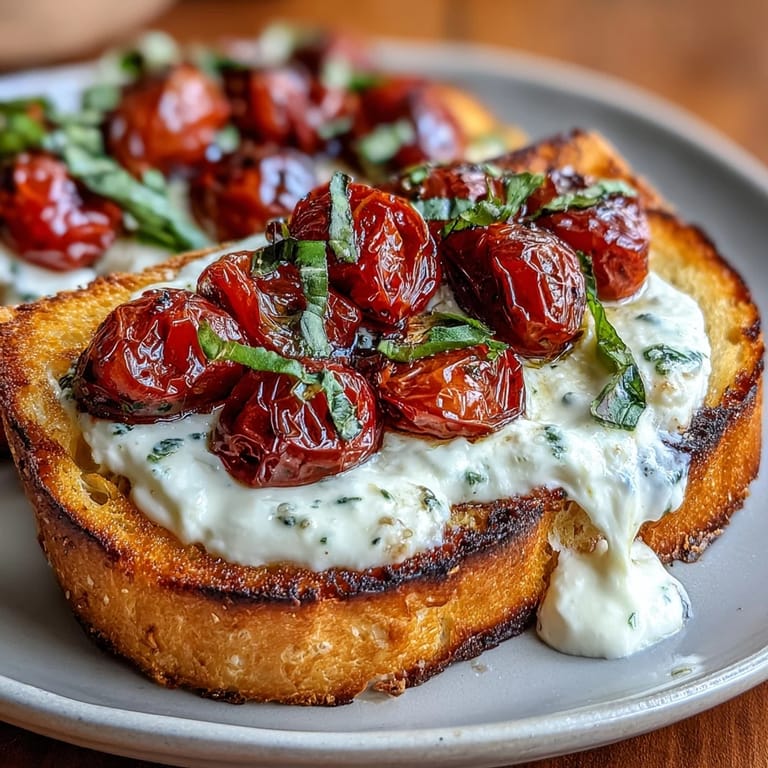
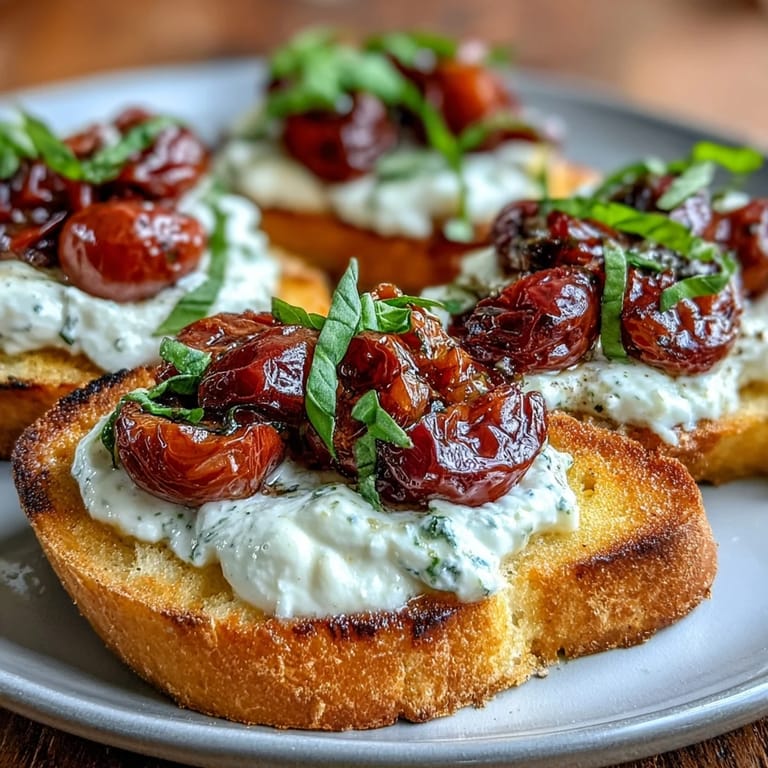
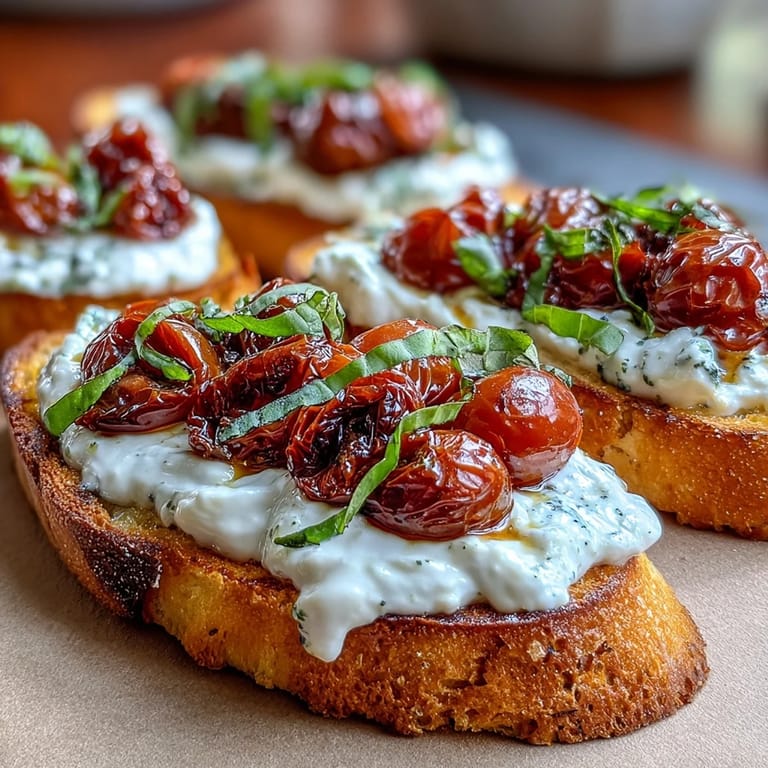
- Gently tear burrata into small pieces and spoon onto each warm crostini, then top with roasted tomatoes. The warmth of the bread helps the burrata soften into a creamy topping without needing any help from you.
- Finish with basil, oil, and salt:
- Scatter torn basil over each crostini, drizzle with one final pass of good olive oil, and finish with flaky sea salt if you have it. Serve immediately while the bread is still warm and everything feels alive on the plate.
 Save
Save My mother once asked why I'd bother making something so simple when we could just buy it from the bakery. I realized then that crostini isn't about being difficult or impressive—it's about five minutes of attention and the knowledge that when you toast your own bread and choose your own tomatoes, you're making a choice about flavor. That choice matters more than any complicated technique ever could.
The Bread Matters More Than You Think
The quality of your baguette sets the tone for the entire dish. A proper baguette has a crispy exterior and an open crumb inside, which means it absorbs just enough olive oil to taste rich but not soggy. If you slice it too thin, it turns into a chip and loses its textural contrast with the creamy burrata. If you slice it too thick, it stays bread instead of becoming toast. Hunt down a baguette from an actual bakery if you can—the difference is worth the detour.
Why Roasting Changes Everything
Fresh cherry tomatoes are delicious, but roasted ones shift into an entirely different category. The heat concentrates their natural sugars and creates those precious little bursts of jammy sweetness against the burrata's creaminess. The balsamic vinegar caramelizes slightly and adds a tangy depth that raw tomatoes can't deliver. It's the difference between nice and memorable, and it only takes 12 minutes.
Making This Your Own
This recipe is a foundation, not a prison. A warm crostini rubbed with a cut garlic clove becomes something entirely different—more assertive and perfect if you're serving these before a hearty meal. A drizzle of good pesto adds herbal richness, or a thin slice of prosciutto adds saltiness and texture that plays beautifully against the cream. The magic isn't in following every step exactly; it's in understanding what each component does and trusting yourself to adjust.
- If your tomatoes are still hard after roasting, just roast them a few minutes longer—they'll get sweeter the longer they sit in heat.
- Tear your basil right before serving so it doesn't turn dark and bruised.
- Make the crostini ahead, but assemble the toppings as close to serving as you can manage so the bread stays crisp.
 Save
Save This recipe teaches you something true about cooking: sometimes the most satisfying meals are the ones where every ingredient shines because you've given it space to breathe. Serve these with a cold glass of wine and watch how quickly they disappear.
Recipe FAQ
- → What type of bread works best for crostini?
A crusty baguette sliced into rounds makes ideal crostini, providing a firm, crispy base that holds toppings well.
- → How should the cherry tomatoes be prepared?
Halve the cherry tomatoes and toss them with olive oil, balsamic vinegar, salt, and pepper before roasting until softened and bursting.
- → Can I add flavor variations to this dish?
Yes, rubbing the warm crostini with garlic or adding prosciutto or pesto offers tasty variations that complement the existing flavors.
- → What cheese is used and how is it served?
Soft burrata cheese is torn into pieces and generously placed atop the toasted bread just before serving for creamy texture contrast.
- → How long does this dish take to prepare?
The total time is about 25 minutes, including toasting bread and roasting tomatoes, making it a quick and approachable option.
- → Is this suitable for vegetarians?
Yes, this dish suits a vegetarian diet as it contains dairy and plant-based ingredients without meat.