 Save
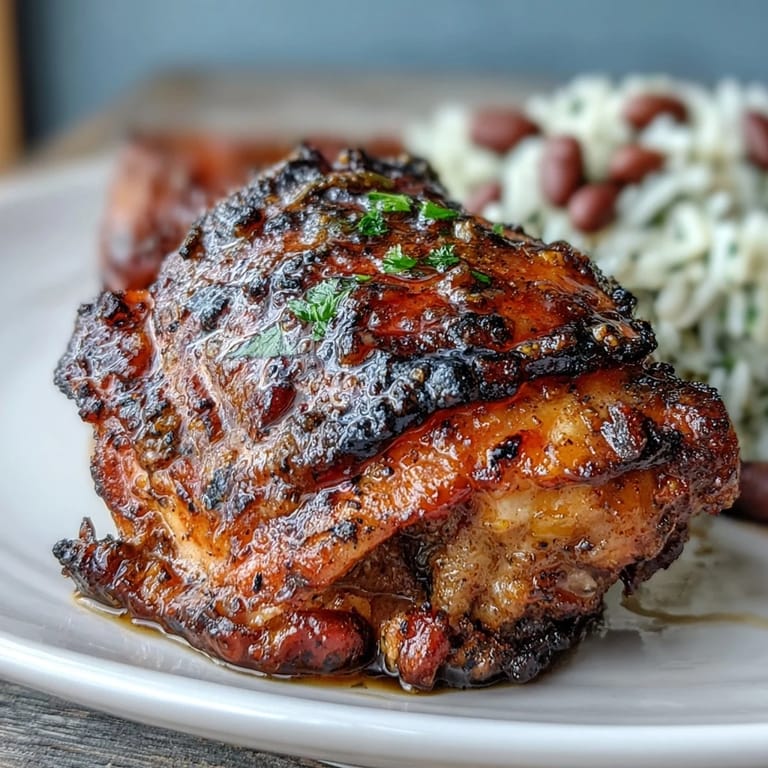
Save My first real jerk chicken came from a tiny restaurant in Kingston where the cook refused to write down her recipe, insisting that spice memory lives in your hands, not on paper. Years later, I finally understood what she meant when I nailed that perfect balance of heat and sweetness, the Scotch bonnet doing its fiery dance with brown sugar and allspice. This version—served over coconut rice studded with kidney beans—has become my kitchen anchor, the dish I make when I want to feel the Caribbean breeze indoors, no matter the season outside.
I'll never forget cooking this for my neighbor Marcus when he mentioned missing food from his grandmother's Jamaican kitchen. Watching his face when he took that first bite—eyes closing, fork pausing mid-air—reminded me why cooking matters. He came back the next week asking for the recipe, and I realized I'd finally become the cook who could share what that Kingston woman had taught me.
Ingredients
- Chicken thighs, bone-in and skin-on: they stay juicy under high heat while the skin crisps into crackling gold, unlike breasts which dry out if you look at them wrong.
- Jerk seasoning: use store-bought as a base or blend your own—either way, you're building a foundation that sings.
- Scotch bonnet pepper: wear gloves and treat this with respect; it's heat with personality, not just fire.
- Fresh thyme: the dried stuff won't give you those green, piney notes that make jerk taste alive.
- Coconut milk: full-fat is non-negotiable here; it transforms plain rice into something creamy and luxurious.
- Kidney beans: they absorb the coconut flavor beautifully, though pigeon peas are the traditional choice if you can find them.
- Long-grain rice: basmati or jasmine both work, and they won't turn to mush when meeting the coconut milk.
Tired of Takeout? 🥡
Get 10 meals you can make faster than delivery arrives. Seriously.
One email. No spam. Unsubscribe anytime.
Instructions
- Build your jerk paste:
- In a large bowl, combine your jerk seasoning with oil, garlic, onion, that finely minced Scotch bonnet, fresh thyme, lime juice, soy sauce, and warm spices. The paste should smell like a Caribbean hillside—peppery, garlicky, slightly sweet—and coat the back of a spoon.
- Coat and marinate the chicken:
- Rub each thigh thoroughly with the paste, making sure it gets under the skin where the magic happens. Refrigerate for at least an hour, but overnight is when the flavors really settle in and the chicken starts absorbing all that complexity.
- Get your oven ready:
- Preheat to 400°F and line a baking tray with foil for easy cleanup. Remove the chicken from the fridge about 15 minutes before roasting so it cooks evenly.
- Roast until golden:
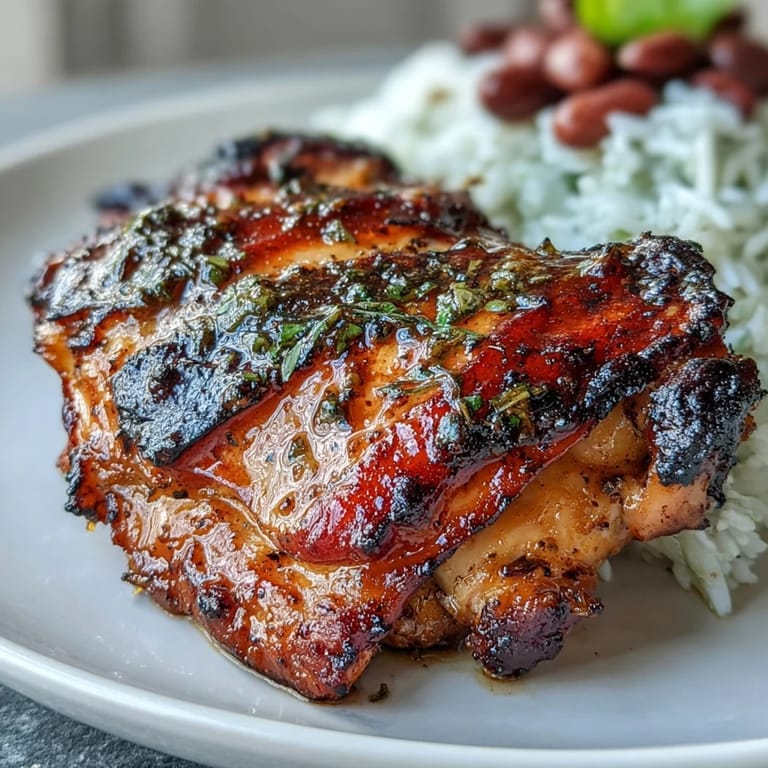
- Place the chicken skin-side up and roast for 35–40 minutes until the internal temperature hits 165°F and the skin is crispy and bronzed. If you want serious char, blast it under the broiler for 2–3 minutes at the end, watching carefully so it doesn't burn.
- Simmer the rice and beans together:
- While the chicken roasts, combine coconut milk, water, drained kidney beans, rice, spring onions, garlic, thyme, and a bay leaf in a saucepan. Bring to a boil, then reduce heat to low, cover, and let it simmer undisturbed for 18–20 minutes.
- Let it steam and rest:
- Once the liquid absorbs and the rice is tender, remove from heat and keep it covered for 5 minutes. This resting time lets everything settle and the flavors meld.
- Serve with pride:
- Fluff the rice with a fork, discarding the bay leaf, and pile that golden jerk chicken on top. A squeeze of lime and fresh thyme finishes it beautifully.
 Save
Save There's a moment when the kitchen fills with that smoky, peppery aroma—when the Scotch bonnet hits the heat and mingles with roasting chicken—where you realize this isn't just dinner, it's an experience. That's when I know the dish has become exactly what it should be.
The Scotch Bonnet Question
I've learned through trial and some burnt tongues that Scotch bonnets aren't trying to destroy you—they're trying to teach you. Seeding and mincing them finely distributes the heat evenly rather than creating spicy pockets that blindside your guests. If you're cooking for heat-sensitive people, start with half a pepper, taste as you go, and remember that you can always add more fire but you can't take it out.
Why Overnight Marinating Changes Everything
I used to marinate for just an hour and wondered why my jerk never tasted like what I remembered. Then I left a batch overnight by accident and everything clicked—the acid from the lime, the enzymes in the garlic and ginger, and the heat all had time to break down the chicken slightly and penetrate deep. Now I plan ahead, knowing that patience in the fridge transforms decent into unforgettable.
Making This Meal Work for Your Kitchen
The beauty of this dish is how flexible it really is, even though it tastes like it demands precision. Boneless chicken breasts work if that's what you have, though they need watching so they don't dry out. The rice and peas can simmer while you're prepping other things, and the whole meal comes together in about an hour and a half once marinating is done.
- Swap the beans: pigeon peas are traditional, but black beans or chickpeas work beautifully if that's easier to find.
- Control your heat: start with half the Scotch bonnet and add more next time once you know your comfort level.
- Plan ahead: marinate the chicken the night before and your evening cooking becomes almost meditative.
 Save
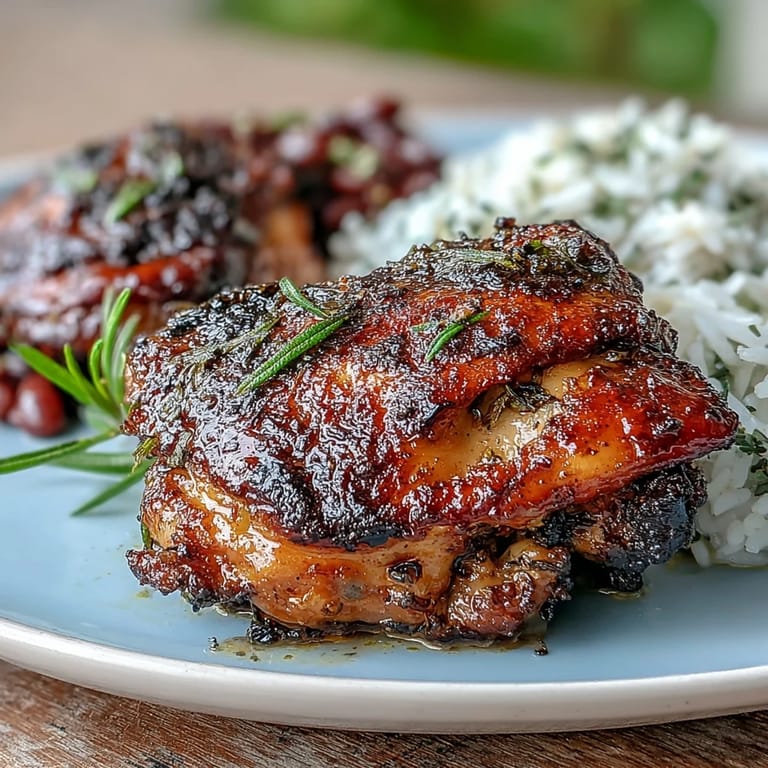
Save This jerk chicken and rice has become the dish I make when I want to slow down and remember why cooking matters. Share it with someone and watch their face transform.
Recipe FAQ
- → What cut of chicken works best for jerk seasoning?
Bone-in, skin-on chicken thighs are ideal as they retain moisture and develop crispy skin when roasted.
- → Can I control the heat level of the dish?
Yes, adjust the Scotch bonnet pepper quantity or omit it for a milder flavor without sacrificing depth.
- → What rice type suits this preparation?
Long-grain rice like basmati or jasmine absorbs the coconut broth well, enhancing the aromatic profile.
- → Is marinating time important?
Marinating for at least one hour, preferably overnight, deepens the flavors and tenderizes the chicken effectively.
- → Can I substitute kidney beans with another legume?
Pigeon peas or black-eyed peas are excellent alternatives and offer traditional Caribbean authenticity.