 Save
Save There's something almost meditative about watching vegetables transform in a hot oven—the way the edges catch caramel while the insides turn silky. I made this salad on a rainy afternoon when I had absolutely no protein in the house and a fridge full of vegetables that needed rescuing. What surprised me was how the roasting intensified flavors I'd taken for granted, turning a simple collection of produce into something genuinely crave-worthy. Now it's become my go-to when I want something that feels substantial without being heavy.
I remember making this for my sister's book club last spring, and she stayed in the kitchen asking questions while I roasted vegetables instead of joining everyone else in the living room. By the time the salad was assembled, three people had gathered around asking for the recipe, which felt like the highest compliment I could get. That's when I realized this wasn't just a weeknight dinner—it was something worth sharing.
Ingredients
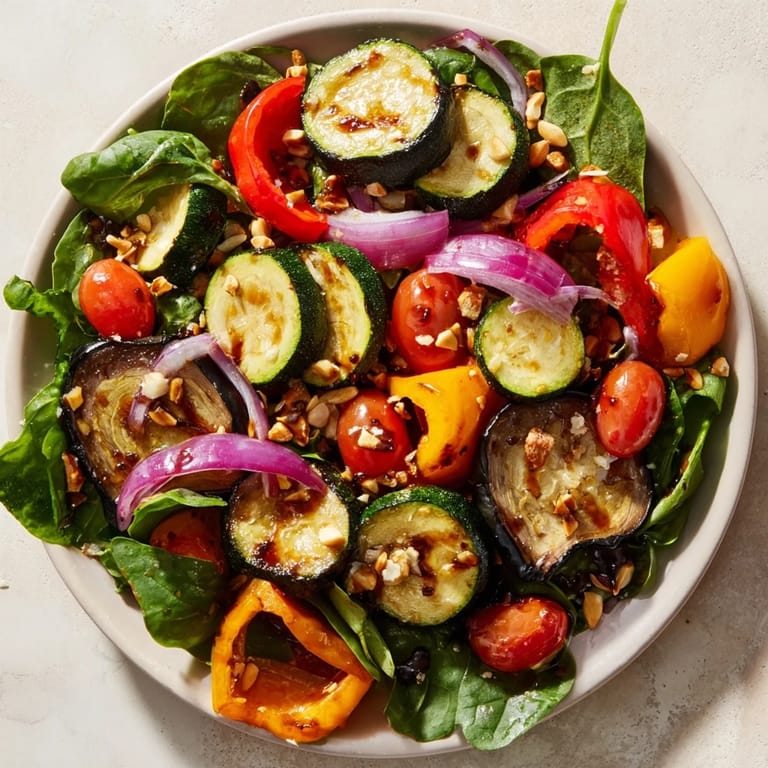
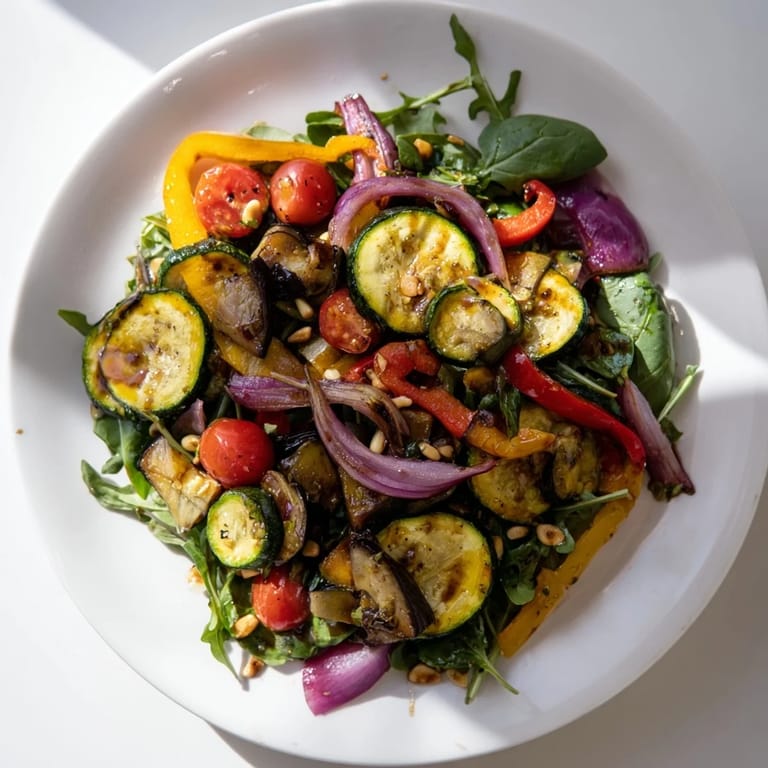
- Zucchini: Choose medium ones that are still firm, not oversize and watery, and cut them thick enough that they hold their shape during roasting without turning mushy.
- Red and yellow bell peppers: These bring sweetness and brightness, and cutting them into roughly equal pieces ensures they roast evenly without any pieces turning papery.
- Red onion: It softens beautifully when roasted and brings a gentle sharpness that balances the sweetness of the other vegetables.
- Eggplant: This is the star that absorbs all the olive oil and seasoning, becoming almost buttery if you don't crowd the pan.
- Cherry tomatoes: Halve them so they roast quickly and burst slightly, releasing their sweet juice into the mix.
- Olive oil (2 tbsp for roasting): Enough to coat everything lightly, but not so much that vegetables steam instead of caramelize.
- Dried Italian herbs: A teaspoon is all you need—the heat of the oven will amplify the flavor, and fresh herbs will burn, so save those for garnish.
- Salt and pepper: Season generously before roasting so the vegetables season themselves, not just their surfaces.
- Mixed salad greens: Use whatever you have on hand, but slightly peppery greens like arugula hold up better to warm vegetables than delicate lettuces.
- Extra virgin olive oil (3 tbsp for dressing): This is your base, so use something you'd actually taste on its own.
- Balsamic vinegar: It's acidic, slightly sweet, and brings depth that vinegar alone never could.
- Dijon mustard: Just a teaspoon acts as an emulsifier, keeping the oil and vinegar from immediately separating.
- Garlic: Mince it fine so it distributes throughout the dressing without leaving harsh chunks.
- Honey or maple syrup: A tiny amount rounds out the dressing's sharp edges and plays off the vegetables' natural sweetness.
- Pine nuts or walnuts: These add textural contrast and a richness that makes the salad feel more complete.
- Parmesan or feta: Shavings or crumbles add a salty, savory note that ties everything together.
Tired of Takeout? 🥡
Get 10 meals you can make faster than delivery arrives. Seriously.
One email. No spam. Unsubscribe anytime.
Instructions
- Heat your oven and prep your pan:
- Set the oven to 425°F and line a large baking sheet with parchment paper so nothing sticks and cleanup is effortless. The high heat is crucial—it's what creates those caramelized edges that taste almost like the vegetables have been kissed by fire.
- Coat everything with oil and seasonings:
- Toss all your cut vegetables in a large bowl with 2 tablespoons of olive oil, dried herbs, salt, and pepper until every piece glistens. Don't be shy with the seasoning—this is your only chance to flavor them evenly.
- Spread and roast:
- Arrange vegetables in a single layer on your baking sheet, making sure nothing is crowded or piled on top of itself. Roast for 25 to 30 minutes, stirring halfway through, until the edges are golden-brown and everything is tender when pierced with a fork.
- Build your dressing while vegetables cook:
- In a small bowl, whisk together olive oil, balsamic vinegar, Dijon mustard, minced garlic, and honey until the mixture looks slightly thickened and unified. Taste and adjust salt and pepper—the dressing should taste bold, almost sharp on its own.
- Assemble the salad:
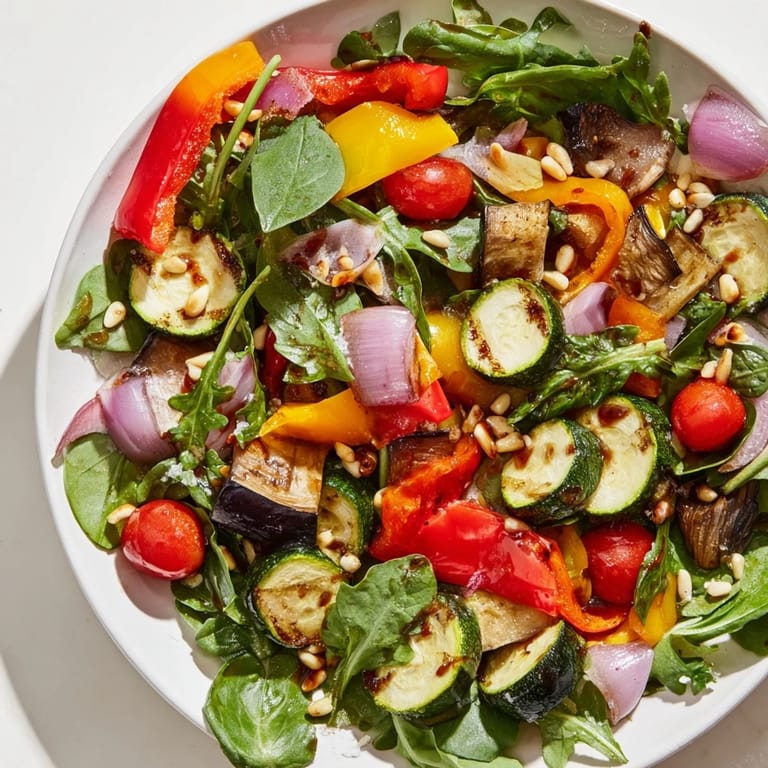
- Spread your greens across a platter or individual plates, then top with warm or cooled roasted vegetables, depending on what mood you're in. A warm salad feels luxurious on a cool day, while room temperature or chilled versions work beautifully for lunch.
- Dress and garnish:
- Drizzle the balsamic dressing across everything, then scatter with toasted nuts and cheese if you're using them. Serve immediately so the greens stay crisp and the warm vegetables are still at their best.
 Save
Save The first time someone told me this salad was the reason they started roasting their own vegetables at home, I felt a little proud of something so simple. It's not fancy or complicated, but there's something honest about it—just vegetables treated with respect and a dressing that lets them shine.
Why Roasted Vegetables Work So Well
Raw vegetables are nutritious and fresh, but roasting them is almost like unlocking a flavor that was always there, hiding underneath the crunch. The dry heat of the oven concentrates sugars, turns starches into caramel, and brings out umami notes you didn't know your eggplant had. It's the difference between eating vegetables because you should and eating them because you want to.
Dressing Techniques That Actually Matter
A good vinaigrette is simple science—emulsify oil and acid with something sticky like mustard or honey, and you get something that coats greens instead of pooling at the bottom of the bowl. The key is whisking vigorously enough to break the oil into tiny droplets, which creates that silky texture. If your dressing breaks and separates an hour later, it's not a failure—just whisk it again before serving.
Variations and Flexibility
The beauty of this salad is that it adapts to whatever you have and whatever season it is. In fall, roast sweet potatoes and add dried cranberries; in spring, add asparagus and finish with fresh mint; in winter, include root vegetables like beets and carrots. The formula stays the same—coat with oil and herbs, roast until caramelized, dress and serve—but you're never making the same salad twice if you don't want to.
- Add roasted chickpeas or white beans to make it more protein-forward and filling.
- Try different greens like kale or farro if you want something with more texture and body.
- Experiment with aged balsamic for deeper flavor or swap it for red wine vinegar if you want something brighter.
 Save
Save This salad proves that the most satisfying food doesn't need to be complicated or time-consuming—just good ingredients, a hot oven, and enough care to notice when everything is golden and ready. Make it once and you'll understand why I keep coming back to it.
Recipe FAQ
- → What vegetables are best for roasting in this salad?
Zucchini, bell peppers, red onion, eggplant, and cherry tomatoes offer a balanced mix of textures and flavors when roasted.
- → How do you achieve tender, caramelized vegetables?
Roast vegetables at 425°F (220°C) for 25–30 minutes, turning halfway to develop even caramelization and tenderness.
- → Can the dressing be made ahead of time?
Yes, the balsamic dressing with olive oil, mustard, garlic, and honey can be prepared in advance and whisked before serving.
- → What are good garnishes to complement this salad?
Toasted pine nuts or walnuts add crunch, while shaved Parmesan or crumbled feta adds savory depth.
- → Is this salad suitable for different dietary preferences?
It is vegetarian and gluten-free; for vegan options, omit cheese and use plant-based substitutes for honey.