 Save
Save The kitchen smelled like heaven that first time I attempted these sandwiches, with spicy frying oil perfuming every corner of the house. My youngest stood on a chair watching the oil bubble, asking if it was ready yet every thirty seconds. When that first piece emerged golden and crackling, the sound alone was enough to make us all gather round the stove.
Last summer, I made these for a backyard gathering and watched something magical happen. Friends who started with polite I couldnt possibly eat another bite comments suddenly found room for seconds. Now they text me randomly asking when Im making the chicken sandwiches again.
Ingredients
- Boneless chicken breasts: Pounding them to even thickness ensures they cook through without drying out, a lesson learned after one too many hockey puck experiences
- Buttermilk: The acid here tenderizes like nothing else, leaving you with juicy meat that falls apart at the fork
- Cornstarch in the dredge: This little secret creates that extra light crunch that makes people ask what you did differently
- Smoked paprika: Adds depth and warmth to the sauce that regular paprika just cannot deliver
- Brioche buns: Their buttery richness holds up beautifully against the spicy chicken without getting soggy
- Hot sauce in the marinade: Builds heat from the inside out, creating layers of flavor rather than just surface spice
Tired of Takeout? 🥡
Get 10 meals you can make faster than delivery arrives. Seriously.
One email. No spam. Unsubscribe anytime.
Instructions
- Create the buttermilk bath:
- Whisk together buttermilk, hot sauce, salt, paprika, cayenne, garlic powder, and onion powder until fully combined. Submerge the pounded chicken breasts and let them soak up all that spicy tangy goodness for at least an hour, though overnight makes them even more tender.
- Mix up the magic dust:
- Combine flour, cornstarch, and all those spices in a shallow dish until everything looks uniform and smells incredible. This coating is what creates that signature crunch.
- Get your oil ready:
- Heat vegetable oil in a heavy skillet until it reaches 350 degrees F, then set up a wire rack over a baking sheet for draining. Having everything staged beforehand prevents frantic scrambling later.
- Coat for maximum crunch:
- Let excess marinade drip off each piece, then press firmly into the flour mixture. For extra crispy results, dip again and press a second time. The double coat makes all the difference.
- Fry to golden perfection:
- Carefully lower chicken into the hot oil and cook for 4 to 6 minutes per side until deep golden and a thermometer reads 165 degrees F. Let drain on the wire rack while you make the sauce.
- Whisk up the creamy sauce:
- Combine mayonnaise, sour cream, hot sauce, lemon juice, smoked paprika, garlic powder, and honey if using. Season with salt and pepper until it tastes exactly right.
- Build your masterpiece:
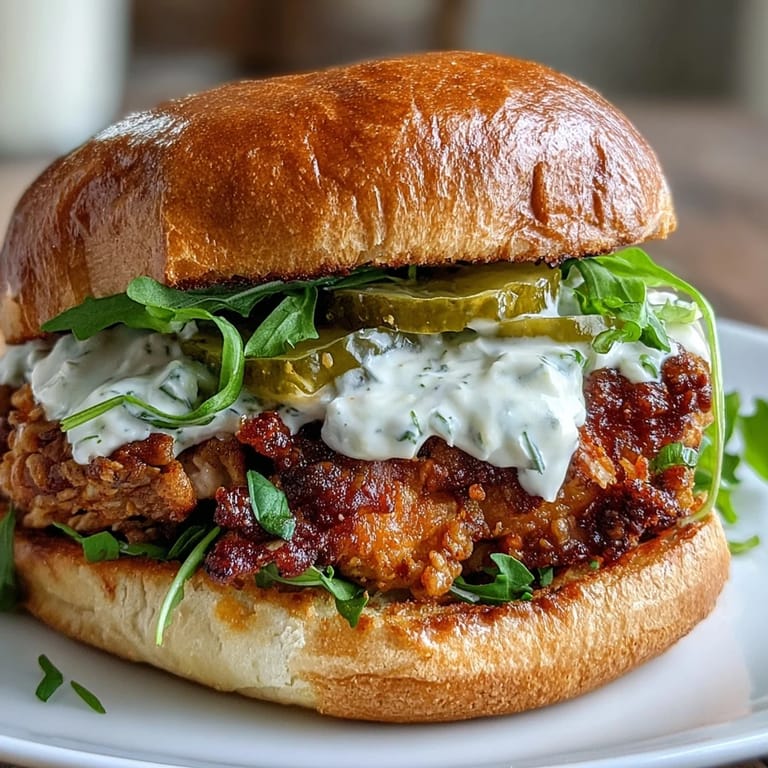
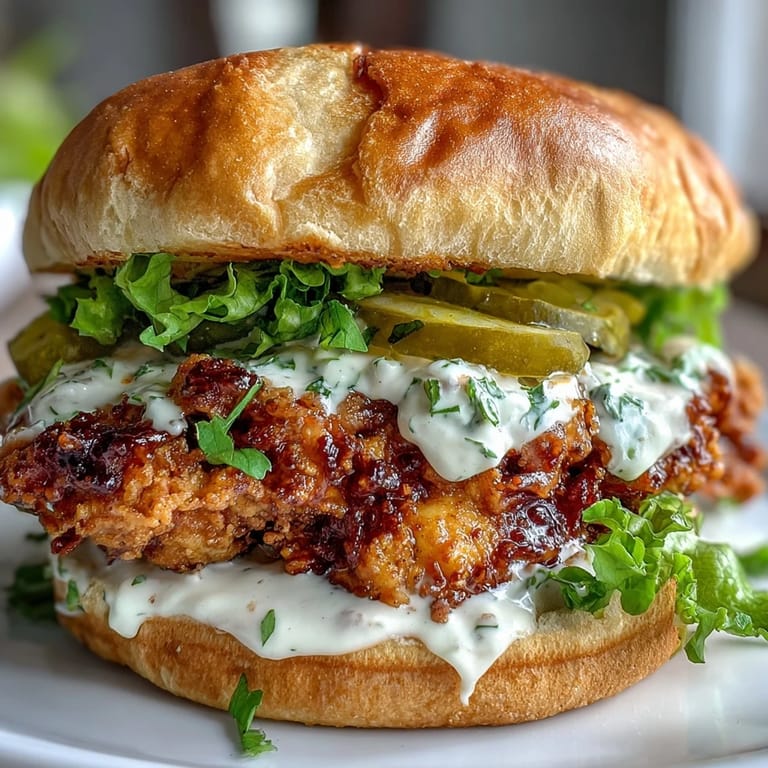
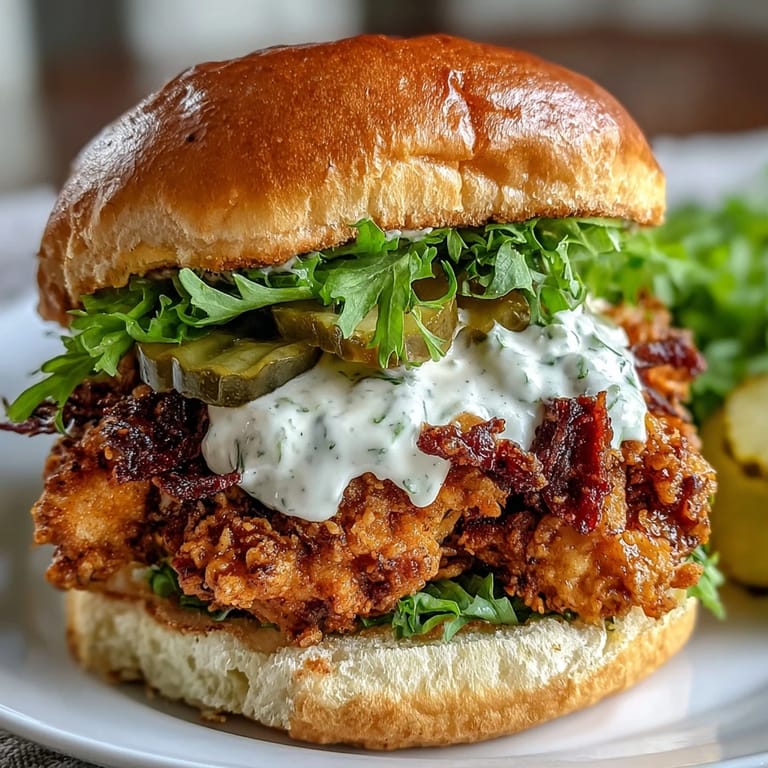
- Lightly toast those brioche buns, slather both sides with sauce, then stack with chicken, pickles, lettuce, and tomato. The contrast of hot crispy chicken against cool crisp toppings is everything.
 Save
Save These sandwiches have become my go to for birthdays and celebrations, the kind of meal that makes people lean back in their chairs completely satisfied. There is something about that first bite, the crunch, the heat, the cool sauce hitting your tongue, that just feels like a celebration.
Making Ahead Like A Pro
The marinade does its best work overnight, transforming good chicken into great chicken with zero effort. Mix up the sauce a day ahead too, letting those flavors meld together. When it is time to cook, you are just minutes away from sandwich bliss.
Perfecting The Fry
My early attempts resulted in burnt outsides and raw insides until I learned to trust my thermometer. Oil that is too cool makes greasy sad chicken, while oil that is too hot burns before cooking through. Finding that sweet spot around 350 degrees F is worth every bit of patience.
Customizing Your Heat Level
Some nights I dial back the cayenne for the kids, other times I amp it up for friends who love the burn. The beauty of this recipe is how easily it adapts to your crowd. The sauce can carry extra heat too, or serve it mild and let guests add their own hot sauce at the table.
- Let the oil return to temperature between batches for consistent results
- Pound chicken evenly so all pieces finish cooking at the same time
- Have all toppings prepped before you start frying, assembly goes fast
 Save
Save Every time I serve these, someone asks for the recipe, and that is the highest compliment a home cook can receive. Hope these sandwiches become a staple in your house too.
Recipe FAQ
- → How can I adjust the spice level?
To increase the heat, you can add more cayenne pepper to both the chicken marinade and the flour dredge. A dash more hot sauce in the creamy topping will also elevate the spice.
- → Can I use chicken thighs instead of breasts?
Absolutely! Using boneless, skinless chicken thighs is a great option. They tend to be more forgiving and stay juicier when fried, offering a slightly richer flavor profile.
- → What's the best way to get crispy fried chicken?
The key to ultra-crispy chicken is the double-dredging technique. After removing the chicken from the marinade, coat it thoroughly in the seasoned flour, pressing firmly. For an even crispier crust, dredge it a second time. Also, ensure your oil maintains a consistent temperature of 350°F (175°C) during frying.
- → Can I prepare the sauce or chicken ahead of time?
Yes, the chicken can be marinated in the buttermilk mixture overnight for deeper flavor. The creamy sauce can also be made a day in advance and stored in the refrigerator, allowing its flavors to meld even further. Just keep them separate until assembly.
- → What are some good accompaniments for this dish?
This sandwich pairs wonderfully with classic sides like crispy french fries, a fresh coleslaw, or even a simple green salad to balance the richness. A cold, hoppy beer also complements the spicy and creamy flavors perfectly.
- → How do I know the chicken is cooked through?
The chicken should fry for about 4-6 minutes per side, or until it reaches a deep golden brown color. To be certain, use a meat thermometer to check the internal temperature, which should register 165°F (74°C) at its thickest part.