 Save
Save There's something about the smell of soffritto hitting hot oil that makes you feel like you're doing something right in the kitchen. My neighbor Marco taught me minestrone wasn't about following rules but about listening to what was in season and what made sense in your pantry. The first time I made it, I overcomplicated things until he walked over, tasted it, and simply said, "Let the vegetables speak for themselves." That soup taught me that sometimes the best meals come from simplicity.
I made this for my partner on a cold Tuesday when neither of us had the energy to think about dinner, but we were tired of takeout boxes piling up. By the time the apartment filled with that herby tomato warmth, we were both sitting at the counter eating straight from the pot while it was still steaming. It became our quiet moment, the kind where you don't need to say much because the food is doing all the talking.
Ingredients
- Olive oil: Use something you actually like tasting, not the fancy stuff, but not the stuff in the back of the cabinet either. Two tablespoons is enough to get everything golden without making it heavy.
- Onion, carrots, and celery: This trio is your foundation, the soffritto that Italian cooking is built on. Dice them roughly the same size so they soften evenly.
- Garlic: Two cloves, minced fine, added after the vegetables start softening so it doesn't burn and turn bitter.
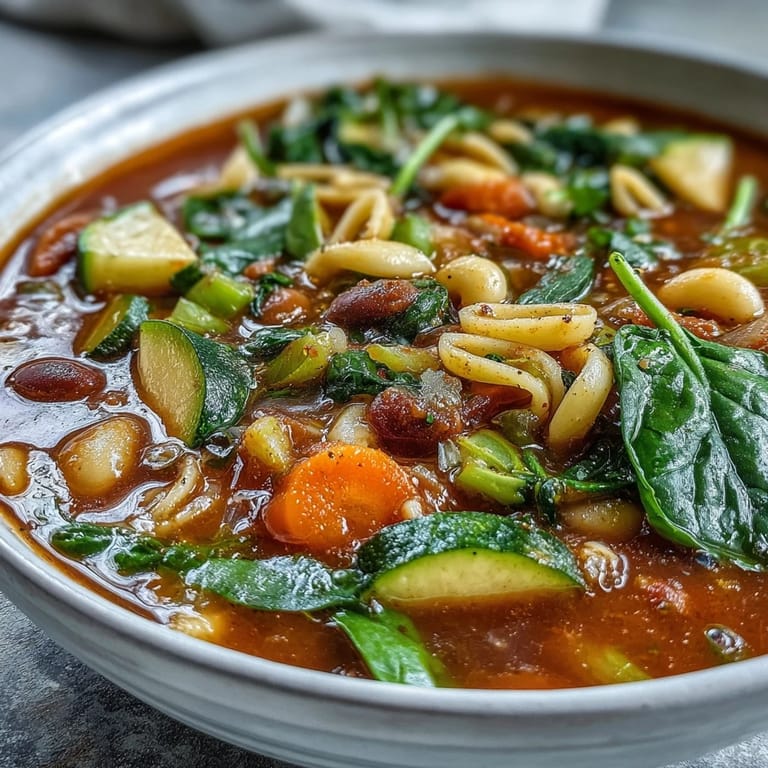
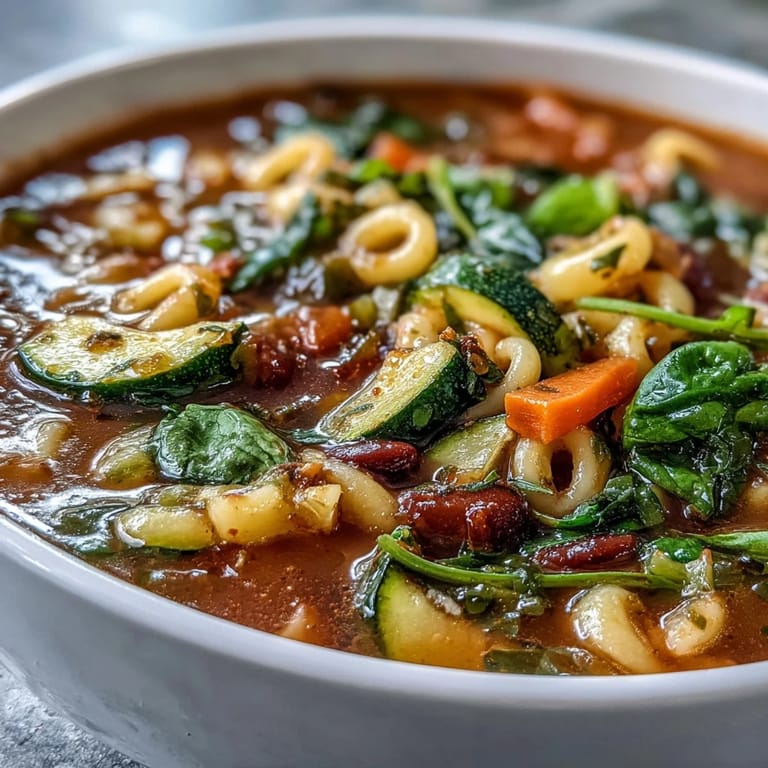
- Zucchini and green beans: These are where the soup gets its personality and color. Don't peel the zucchini, the skin holds the nutrients and structure.
- Spinach or kale: Add it at the very end so it keeps its brightness and doesn't turn into a dull shadow of itself.
- Diced tomatoes: Canned is perfectly fine here, actually better because they're picked at peak ripeness and already broken down slightly.
- Vegetable broth: Six cups is the baseline, but taste as you go because not all broths are equally salty.
- Dried oregano, basil, and thyme: This is the Italian seasoning base that ties everything together. Don't skip the bay leaf, it adds a subtle depth you'll notice if it's missing.
- Cannellini and kidney beans: Both kinds give you different textures and colors. Rinse them well to get rid of the starchy liquid that makes the broth cloudy.
- Small pasta: Ditalini is traditional, but elbow or small shells work just fine. Cook it in the soup so it absorbs the broth flavor instead of tasting like plain pasta water.
- Parmesan, parsley, and extra olive oil: The toppings that make people feel cared for, even though the soup is already complete without them.
Tired of Takeout? 🥡
Get 10 meals you can make faster than delivery arrives. Seriously.
One email. No spam. Unsubscribe anytime.
Instructions
- Build your flavor base:
- Heat the olive oil in a large pot over medium heat until it shimmers just slightly, then add the diced onion, carrots, and celery. Let them soften for five to six minutes, stirring occasionally, until the onion turns translucent and starts to smell sweet. This is when you know the vegetables are releasing their natural sugars.
- Add the quiet flavors:
- Stir in the minced garlic, then the zucchini and green beans. Cook for another three to four minutes, letting the heat slightly soften everything and marry the flavors together. You'll notice the pot starting to smell more complex and alive.
- Pour in the soul of the soup:
- Add the diced tomatoes, vegetable broth, oregano, basil, thyme, bay leaf, salt, and pepper. Bring it all to a boil, then immediately reduce the heat and let it simmer gently with the lid on for about fifteen minutes. This is when you can step back, maybe make tea, and let the soup do its thing.
- Bring it together:
- Stir in the pasta and both types of beans, then simmer uncovered for ten to twelve minutes until the pasta reaches that perfect al dente state where it still has a slight bite. The soup will start to look fuller and more cohesive as the pasta releases its starch.
- Finish with the greens:
- Add the spinach or kale and cook for just two to three minutes until it's wilted but still bright. Remove the bay leaf and taste the whole thing, adjusting salt and pepper as your mood and taste buds dictate.
- Serve and celebrate:
- Ladle into bowls and top with freshly grated Parmesan, chopped parsley, and a drizzle of good olive oil if you're feeling generous. The toppings are optional but they're the difference between soup and something people will remember.
 Save
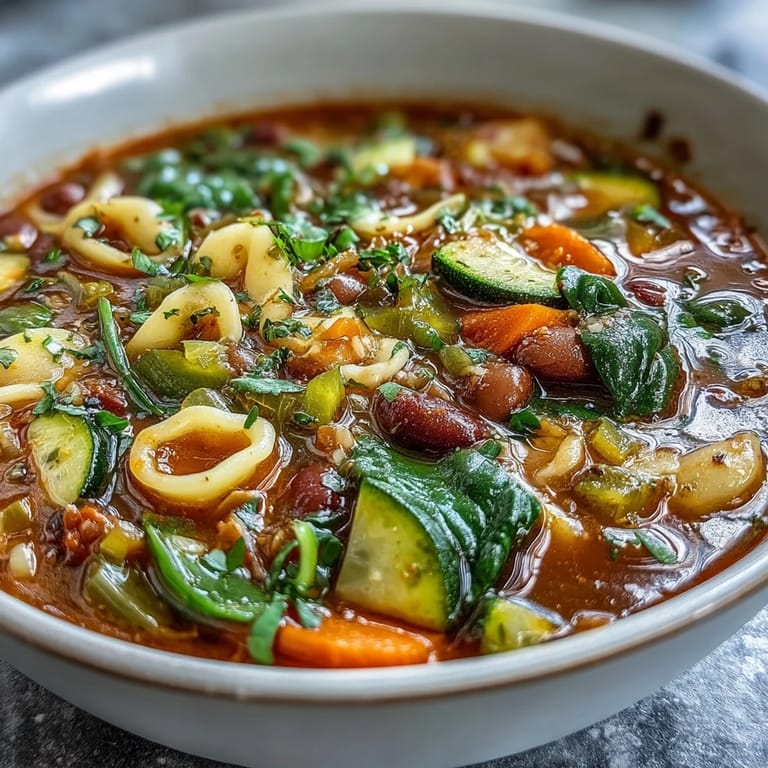
Save My six-year-old niece once told me this was her favorite soup because it had "treasures" in it, meaning the beans and pasta mixed with the vegetables felt like little surprises. That's when I realized minestrone isn't just lunch, it's the kind of meal that sticks with you because it's honest and unpretentious.
The Magic of Seasonal Flexibility
The beauty of minestrone is that it doesn't have a rigid identity. In summer, I make it lighter with zucchini, green beans, and fresh tomatoes. In winter, I throw in diced potatoes, cabbage, or diced butternut squash. The core formula stays the same, but the soup adapts to what's in your garden or what looked good at the farmers market that morning. It's the kind of dish that teaches you to cook by feel rather than by rules.
Why This Works as Comfort Food
There's a reason minestrone exists in almost every Italian home. It's efficient, it's economical, and it tastes like someone spent more time on it than they actually did. The combination of vegetables, beans, and pasta means you're getting fiber, protein, and sustained energy in one bowl. It's the kind of soup that satisfies without making you feel heavy afterward.
How to Make It Your Own
Once you make this recipe a few times, you'll stop thinking of it as a recipe and start thinking of it as a template. Maybe you like it brothier and add an extra cup of stock. Maybe you add fennel because you like the subtle anise flavor, or red pepper flakes if you want heat. Maybe you use farro instead of pasta, or you add white beans instead of kidney beans. The soup gets better the more you trust your instincts.
- Stir in a Parmesan rind while the soup simmers for extra depth and richness.
- Add pasta water if the soup gets too thick as it cools, because pasta continues to absorb liquid even after it's off the heat.
- Make a big batch and freeze it in portions, but wait to add the pasta until you reheat it, otherwise you'll end up with mushy pasta.
 Save
Save Make a pot of this when someone needs feeding or when you need to feed yourself with the kind of care you'd show a friend. It's forgiving, it's nourishing, and it proves that simple ingredients in the right combinations can be exactly what you needed without being complicated about it.
Recipe FAQ
- → What vegetables work best in minestrone?
Traditional minestrone includes onions, carrots, celery, zucchini, and green beans. You can also add spinach, kale, potatoes, cabbage, or peas depending on what's in season. The key is using a variety of colorful vegetables for both flavor and nutrition.
- → Can I make minestrone in advance?
Absolutely! Minestrone actually tastes better the next day as flavors meld together. Store in the refrigerator for up to 4 days. Add the pasta when reheating to prevent it from becoming too soft, or slightly undercook it initially.
- → Is minestrone suitable for freezing?
Yes, freeze for up to 3 months. For best results, cook the pasta separately and add it when reheating to avoid mushy texture. Leave space in containers as liquid expands when frozen. Thaw overnight in the refrigerator before warming.
- → What pasta shapes are ideal for this soup?
Small pasta shapes like ditalini, elbows, small shells, or tubetti work perfectly as they fit on the spoon with vegetables. Larger shapes can overwhelm the soup. For gluten-free options, use rice-based small pasta or quinoa pasta.
- → How do I make minestrone vegan?
Simply omit the Parmesan cheese garnish or use a plant-based alternative. The soup base is naturally vegan with vegetable broth, olive oil, and vegetables. Nutritional yeast can provide a cheesy flavor sprinkle without dairy.
- → What should I serve with minestrone?
Crusty Italian bread or garlic bread is perfect for dipping. A light green salad with vinaigrette balances the heartiness. For a complete Italian meal, pair with a glass of Chianti or other light red wine and perhaps a simple antipasto.