 Save
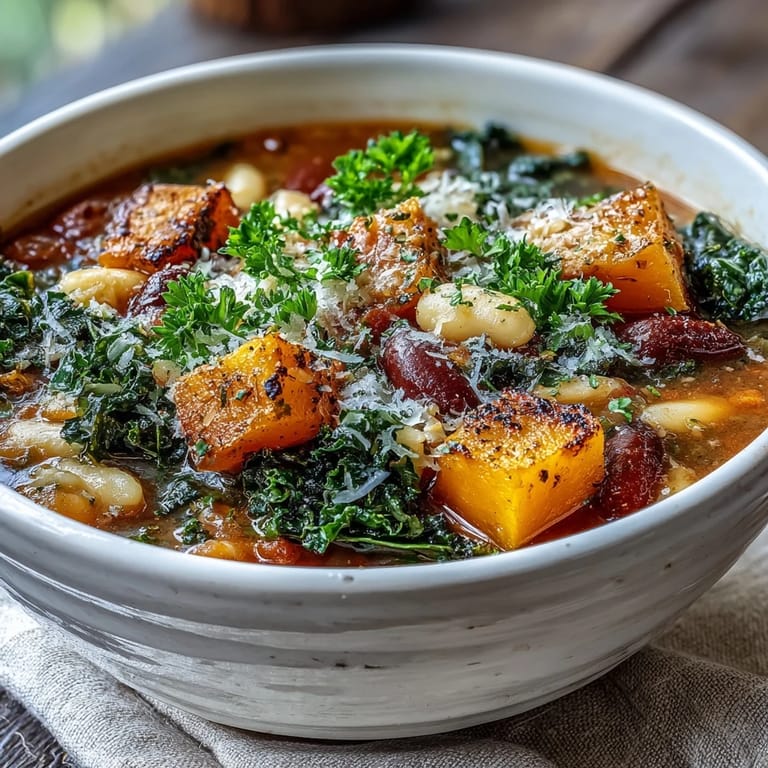
Save There's something magical about opening your freezer in November and finding a bag of butternut squash you'd forgotten about—suddenly the whole trajectory of dinner changes. I'd been standing in my kitchen listening to wind rattle the windows when the idea hit me: why not turn that forgotten squash into something warm enough to chase away the chill? What started as a simple rummage through my pantry became this deeply satisfying minestrone that somehow tastes like comfort wrapped in a bowl.
I made this for my neighbor Sarah on a particularly gloomy evening, and she showed up at my door the next morning asking for the recipe before she'd even finished her coffee—that's when I knew it had crossed from weeknight dinner into something people actually crave. She's been making it every other week since, tweaking it with roasted chickpeas and extra garlic, which tells you something about how forgiving and adaptable this soup really is.
Ingredients
- Olive oil: Don't skimp here—good quality oil carries the whole flavor profile forward from the first sizzle.
- Yellow onion, carrots, and celery: This aromatic trio is the backbone; their sweetness deepens when sautéed properly.
- Garlic: Three cloves might seem modest, but they bloom into something rich and mellow once they hit the hot oil.
- Butternut squash: The star ingredient that transforms this from plain vegetable soup into something almost creamy without any cream involved.
- Zucchini: Adds lightness and helps the soup feel less heavy, especially important when you're eating it on weeknights.
- Fresh kale: Remove those thick stems first—they'll throw off your texture and take forever to cook anyway.
- Diced tomatoes: Canned is perfectly fine and honestly more convenient; the acidity keeps everything tasting bright.
- Cannellini beans: Tender, mild, and they break down slightly to thicken the broth naturally.
- Small pasta: Ditalini is traditional, but elbow macaroni or even tiny shells work beautifully.
- Vegetable broth: The backbone of your liquid—taste it before you buy if you can, as quality varies wildly.
- Oregano, thyme, and rosemary: Dried herbs are your friends here; they concentrate during the simmer and build a fragrant, layered flavor.
- Red pepper flakes: Optional but recommended—just a whisper adds complexity without heat.
- Fresh parsley: Stirred in at the very end so it stays bright and doesn't turn dark and bitter.
- Parmesan cheese: A shower on top adds richness; skip it if you're keeping things vegan, but don't skip the salt and pepper.
Tired of Takeout? 🥡
Get 10 meals you can make faster than delivery arrives. Seriously.
One email. No spam. Unsubscribe anytime.
Instructions
- Build your flavor base:
- Heat the olive oil over medium heat and add your diced onion, carrots, and celery—what Italian cooks call soffritto. Let them sauté for 5 to 6 minutes, stirring now and then, until the onion turns translucent and everything smells almost sweet.
- Wake up the garlic:
- Add your minced garlic and stir constantly for about a minute—you're listening for that moment when the kitchen suddenly smells incredible, which tells you it's fragrant but not burned.
- Introduce the squash:
- Add the butternut squash and zucchini now, stirring occasionally for 4 to 5 minutes so they start softening slightly and begin releasing their flavor into the oil.
- Create the broth:
- Pour in your canned tomatoes with all their juices, then add the vegetable broth and water, and bring the whole thing to a boil—you'll see it start to bubble at the edges first, then build momentum.
- Season and simmer:
- Stir in the oregano, thyme, rosemary, and red pepper flakes if using, then lower the heat and let it simmer uncovered for 15 minutes. This is when the flavors start talking to each other and the squash becomes genuinely tender.
- Add the pasta and beans:
- Stir in your drained cannellini beans and pasta, then let everything bubble gently for another 8 to 10 minutes until the pasta reaches that perfect tender-but-not-mushy state and the squash breaks apart when you touch it with a spoon.
- Finish with greens:
- Add your chopped kale and cook for just 2 to 3 minutes—you want it wilted and tender, not dark and exhausted. Taste everything now and adjust your salt and pepper with confidence.
- Final touch:
- Remove from heat, stir in your fresh parsley, and ladle it into bowls with a generous shower of Parmesan if the mood strikes.
 Save
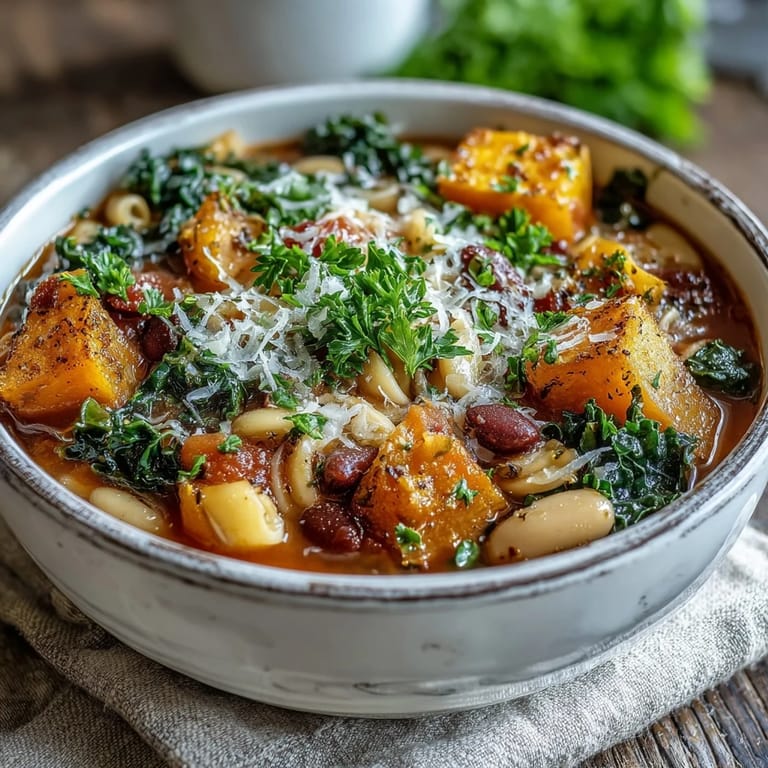
Save There's a moment about halfway through cooking when the whole kitchen fills with this herbaceous steam, and suddenly you're standing in something that feels like a small warm room in the middle of winter. That's the moment when you know you've gotten it right.
Making It Your Own
The beauty of minestrone is that it bends to whatever you have on hand—I've made it with roasted chickpeas instead of beans, swapped in spinach when kale wasn't available, and once even added a handful of diced sweet potato when I was out of butternut squash. The core aromatics and tomato broth stay consistent, but everything else is genuinely negotiable. Think of it less as a rigid recipe and more as a framework for turning seasonal vegetables into something deeply satisfying.
Storage and Reheating
This soup actually tastes better the next day after the flavors have had time to mingle and deepen—I've found that it keeps beautifully in the refrigerator for up to four days in an airtight container. Reheating is straightforward: just warm it gently over medium heat, adding a splash of extra broth if it's thickened up too much, which it inevitably does as the pasta continues absorbing liquid. If you're freezing it, leave out the pasta and add fresh pasta when you reheat, otherwise you'll end up with a soupy starch situation.
Pairing and Serving Ideas
Serve this with crusty bread that you can tear apart and dip into the broth—honestly, that bread might matter more than anything else you put on the table. A crisp white wine like Pinot Grigio cuts through the richness beautifully, or if you're not drinking wine, a simple green salad with bright vinaigrette provides welcome contrast. The soup itself is hearty enough to stand alone as a main course, though some people like to follow it with something light like fruit or sorbet so they don't feel weighed down by the evening.
- Drizzle with good olive oil and fresh basil if you're feeling fancy.
- Add a dollop of pesto or a swirl of cream just before serving for richness.
- Top with crispy croutons or toasted breadcrumbs for texture contrast.
 Save
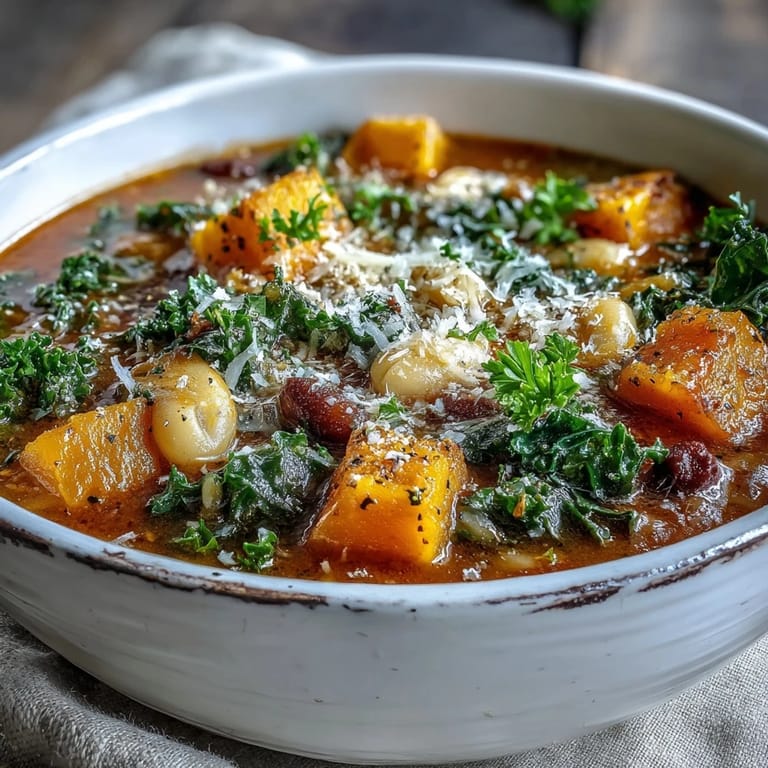
Save Winter minestrone is the kind of dish that proves you don't need anything fancy or complicated to create something genuinely comforting. Make it once and it'll become part of your rotation for every cold season that follows.
Recipe FAQ
- → Can I freeze this minestrone?
Yes, freeze for up to 3 months. Pasta may soften slightly, so consider cooking pasta separately and adding when reheating.
- → What pasta works best?
Small shapes like ditalini, elbow macaroni, or shells hold up well in soups and provide the perfect bite in every spoonful.
- → How can I add more protein?
Stir in shredded chicken during the last few minutes, or add extra beans like chickpeas and kidney beans for a protein boost.
- → Can I make this in a slow cooker?
Sauté vegetables first, then transfer to a slow cooker. Cook on low for 4-6 hours, adding pasta during the last 30 minutes.
- → What can I substitute for butternut squash?
Try acorn squash, delicata squash, or sweet potatoes for similar sweetness and texture that holds up beautifully in the soup.
- → Is this suitable for meal prep?
Absolutely. The flavors deepen overnight. Store in airtight containers for up to 5 days in the refrigerator.