 Save
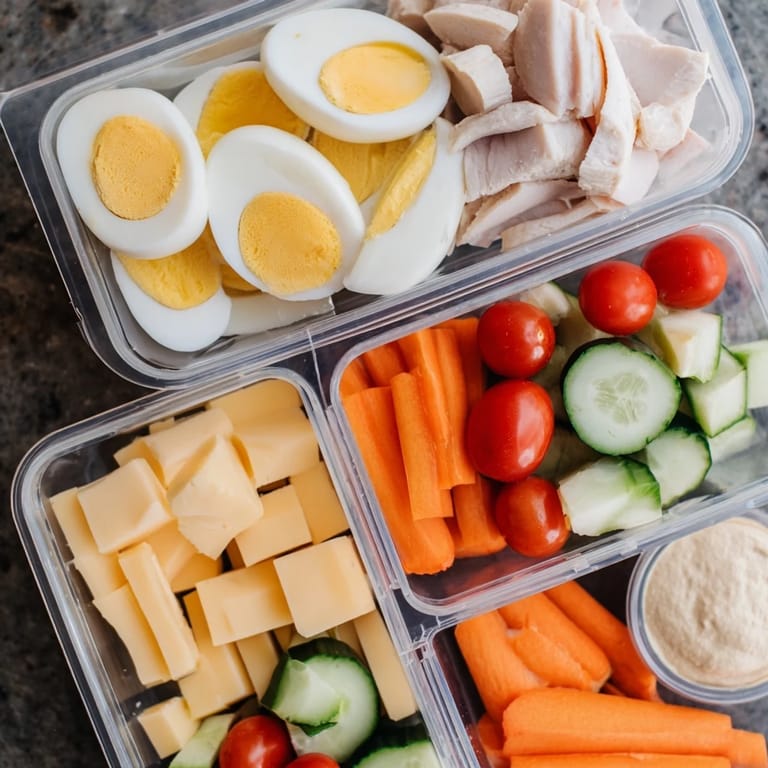
Save I stumbled onto these boxes at a friend's kitchen counter one Tuesday afternoon, and she caught me eyeing them like they were contraband. She laughed and explained she'd gotten tired of the same sad desk lunch routine, so she started assembling these little flavor combinations on Sunday nights. Ten minutes of prep, four days of actual meals that didn't feel like punishment. The moment I realized you could customize every single box to your mood, I was sold.
My coworker brought one to a stressful morning meeting, and watching her calmly crack into a box of perfectly portioned cheese and chicken while the rest of us stress-ate stale pastries was a turning point. She offered me some hummus, I tried a cracker, and suddenly I wasn't thinking about the chaos happening in that conference room. That's when I realized these boxes aren't just about nutrition—they're about reclaiming a moment of control in your day.
Ingredients
- Cooked chicken breast (8 oz, sliced): This is your protein foundation—lean, versatile, and honestly absorbs whatever flavors are around it, so don't stress if it tastes plain on its own.
- Hard-boiled eggs (4, halved): Make these ahead of time and keep them in the fridge; they're like little nutritional insurance policies that also add richness.
- Turkey or ham (4 oz, sliced): The salty contrast matters here—it wakes up your palate between bites of everything else.
- Cheddar cheese (4 oz, cubed): Sharp cheddar is your friend because it has actual flavor; don't go mild unless you genuinely prefer it.
- Cherry tomatoes (1 cup): Pop them in whole if they're small enough, or halve them so they don't roll around and hide in the container corners.
- Cucumber slices (1 cup): The cooling, crunchy element that makes your mouth feel fresh—prep these the night before if you want, they handle it fine.
- Baby carrots (1 cup): Raw and naturally sweet, they're the reliable friend who shows up every time.
- Apple slices (1, with lemon juice): That lemon juice isn't just for looks; it keeps the apples from turning brown and adds a subtle brightness.
- Hummus (½ cup, divided): Your creamy anchor that ties everything together—make sure it's in separate little containers so it doesn't seep everywhere.
- Whole-grain crackers (16 total): Keep these strictly separate from anything wet, or they'll turn into sad soggy regrets by lunch.
- Mixed nuts (¼ cup): A tablespoon per box adds the satisfying crunch and healthy fats that make you feel full, not just fed.
Tired of Takeout? 🥡
Get 10 meals you can make faster than delivery arrives. Seriously.
One email. No spam. Unsubscribe anytime.
Instructions
- Set up your station:
- Arrange all four containers in front of you and gather your ingredients like you're about to start an assembly line. Having everything visible makes the whole process faster and more fun.
- Layer the proteins:
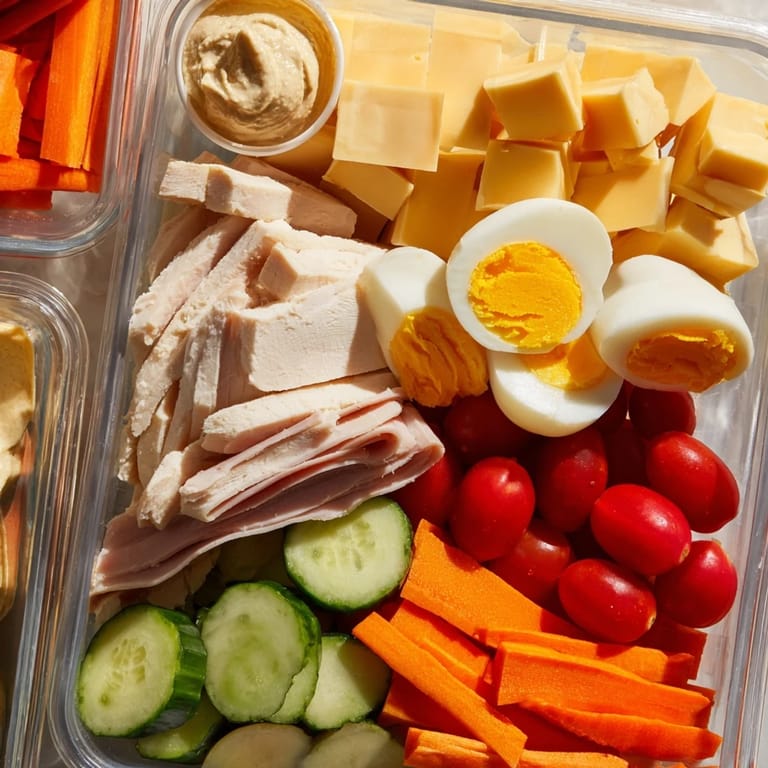
- Divide the chicken, eggs, and turkey evenly among the boxes—think of it like dealing cards, making sure everyone gets a fair hand. This is where precision actually matters because uneven boxes feel like someone got robbed.
- Add your vegetables and fruit:
- Distribute the tomatoes, cucumber, carrots, and apple slices next, filling the gaps and creating a little color story in each box. Arrange them how they look good to you; this is your art.
- Tuck in the hummus containers:
- Place the small lidded containers of hummus somewhere that keeps them stable and won't leak into your other food. Some people fit them in a corner, others nestle them between proteins.
- Finish with the crunch:
- Add four crackers and a tablespoon of nuts to each box, keeping them as separate as possible from anything moist. Store the crackers in a separate compartment if your container allows it, or place them on top as the final layer.
- Seal and store:
- Close everything up tight and refrigerate until you're ready to eat, which should happen within three or four days. Grab one on your way out the door and congratulate yourself for being the organized type.
 Save
Save My neighbor used to meal prep these every week, and I'd watch her from my kitchen window with actual jealousy. Then one day she invited me over to help, and we spent an hour laughing, snacking on rejected apple slices, and assembling these boxes while talking about everything except recipes. It became our Sunday ritual for three months. These boxes stopped being about convenience and became about spending intentional time with someone I cared about.
Why These Boxes Win Every Time
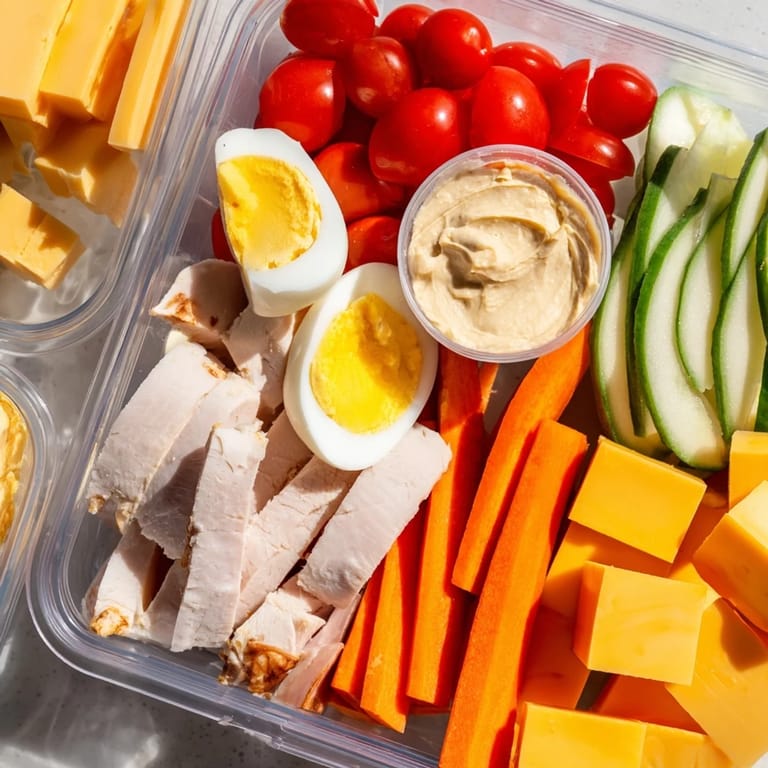
The magic isn't in any single ingredient—it's in the psychology of having a variety of textures and flavors in one place. Your brain gets bored eating the same thing, but four bites of chicken followed by a cracker, then a carrot, then cheese creates this little sensory journey that feels way more indulgent than it actually is. You're eating basically the same food as if you'd assembled a plate at home, except now it's in a portable box that somehow makes you feel like you have your life together.
Customization Is the Whole Point
These boxes only work if you actually like what's in them, so treat this recipe as a template, not a law. Hate cucumber? Swap it for bell pepper. Don't like nuts? Add seeds instead. Vegan? Use marinated tofu and swap the cheese for a dairy-free version. The person I learned this from changes her boxes based on what's on sale that week, and honestly, that's the most sustainable approach. You'll make these again and again because you can always adjust them to match whatever you're craving.
- Try grilled shrimp, rotisserie chicken, or plant-based deli slices for protein variety.
- Mediterranean versions work great with olives, marinated artichokes, and feta cheese instead of cheddar.
- Add extra crunch with snap peas, bell pepper strips, or radishes if your standard veggies feel boring.
The On-the-Go Logistics
These boxes are genuinely portable, but there are a few tricks that make a difference between arriving at your destination as a proper meal versus arriving as warm mush. A small ice pack tucked into the box keeps everything cool and also prevents the eggs from sweating all over your cheese. If you're packing these the night before, store them in the coldest part of your fridge, and if you're traveling more than a couple hours, seriously consider the ice pack situation. Also, keep your hummus container separate if possible because even sealed containers can leak a little, and hummus on your nuts is a textural tragedy.
 Save
Save These boxes won't change your life, but they'll quietly improve it by giving you one less thing to stress about on busy days. Once you make them once, you'll probably make them again.
Recipe FAQ
- → How long do the snack boxes stay fresh?
Store the boxes refrigerated and consume within 3-4 days to maintain freshness and optimal flavor.
- → Can I substitute the proteins used here?
Yes, try grilled shrimp, tofu, or plant-based deli slices for variety while keeping the protein content balanced.
- → What vegetables complement these boxes well?
Fresh vegetables like cherry tomatoes, cucumber slices, baby carrots, snap peas, bell pepper strips, or radishes add crunch and nutrients.
- → Are gluten-free options possible?
Using gluten-free crackers ensures the snack boxes suit gluten-intolerant diets without sacrificing texture or taste.
- → How should hummus be stored in the boxes?
Divide hummus into small lidded containers to keep it separate and prevent sogginess until ready to eat.