 Save
Save I discovered the magic of the solo charcuterie board on a quiet Sunday afternoon when I realized that treating myself to something beautiful didn't require hosting a dinner party. It started as a way to use up odds and ends from the fridge, but it became something more—a small ritual of self-care that turned an ordinary lunch into something worth savoring. There's something deeply satisfying about arranging a few treasured ingredients with intention, creating a moment just for yourself.
I remember the first time I made this for myself after a long work week, plating it on my favorite small dish and sitting by the window with a glass of wine. My partner walked by, saw it, and asked if they could have some too. That's when I realized that something made with care, even if it's just for you, has a way of inviting others in. It became our new tradition on Friday evenings—nothing fancy, just something we looked forward to together.
Ingredients
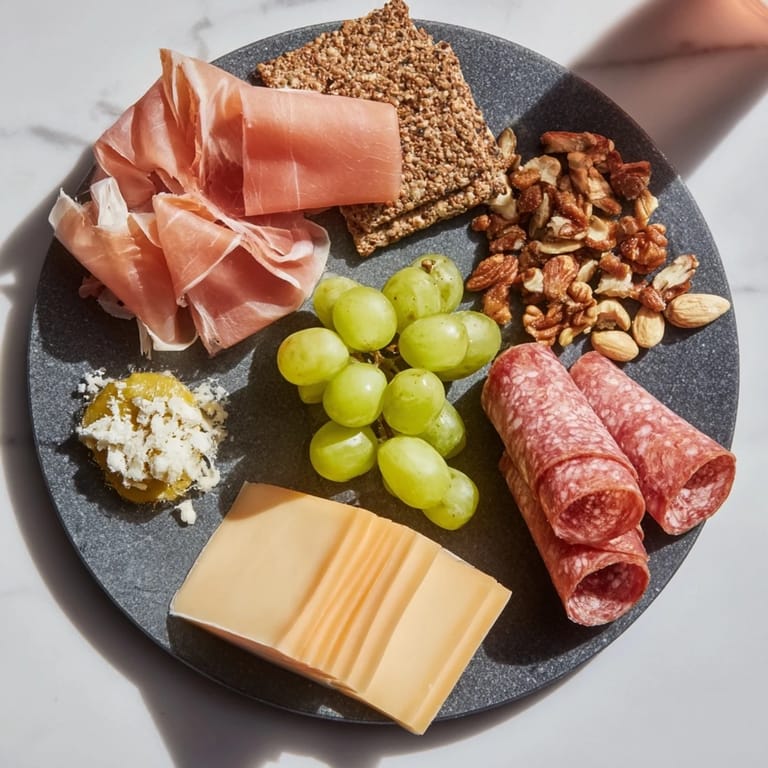
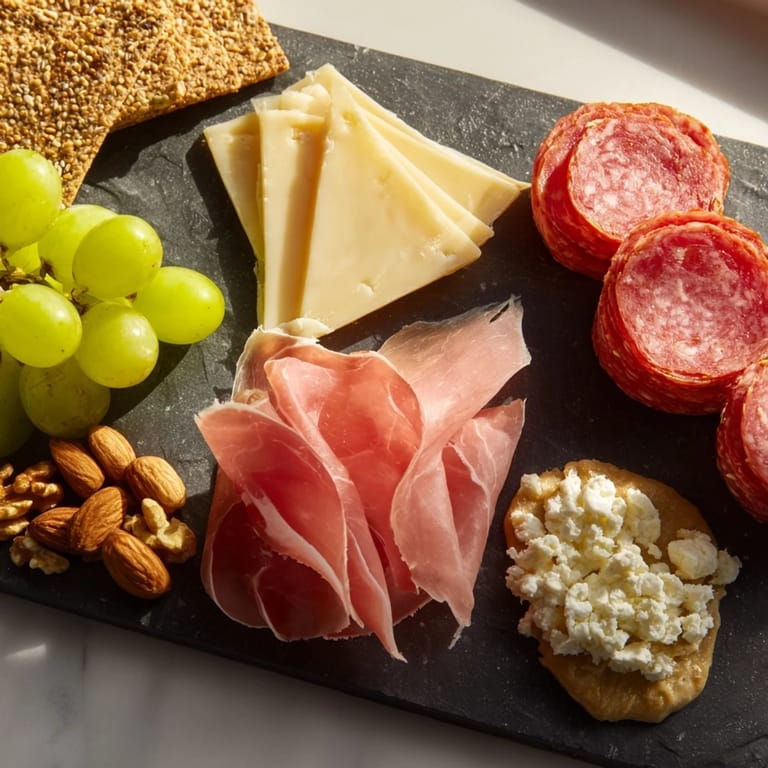
- Prosciutto: Two delicate slices folded gently into soft waves. I learned that prosciutto tastes best when it's been out of the refrigerator for just a few minutes, allowing the flavor to bloom.
- Soppressata or salami: Two slices of something with real depth. The marbling and spice are what make this board feel intentional, not like leftovers.
- Aged cheddar or brie: About 30 grams of something that's had time to develop character. Aged cheddar gives you that satisfying crumble, while brie offers creamy indulgence—choose based on your mood.
- Soft goat cheese or blue cheese: Another 30 grams of something different. I love how goat cheese brings a bright tanginess, while blue cheese commands attention with its boldness.
- Seedless grapes or fresh berries: A small handful that provides sweetness and cuts through the richness. They're your palate cleanser and your color contrast all at once.
- Mixed nuts: One tablespoon of almonds and walnuts for crunch. Toast them yourself if you have time—it makes all the difference in flavor.
- Cornichons or baby gherkins: Two or three tiny pickled gems that add brightness and acidity. They're the secret weapon that keeps everything from feeling too heavy.
- Whole grain mustard: One small teaspoon dolloped somewhere inviting. This is your flavor anchor, the thing that ties all the flavors together.
- Crackers or sliced baguette: Three or four pieces, chosen for texture and taste. I prefer a sturdy cracker that won't crumble under the weight of good cheese.
Tired of Takeout? 🥡
Get 10 meals you can make faster than delivery arrives. Seriously.
One email. No spam. Unsubscribe anytime.
Instructions
- Choose your canvas:
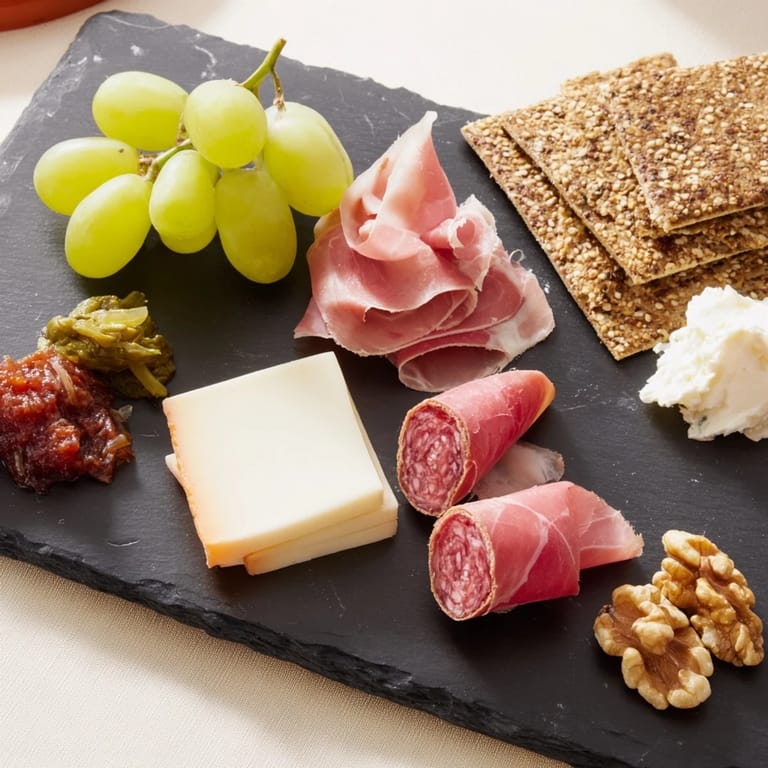
- Select a small slate coaster or appetizer plate as your base. This is your stage, so pick something that makes you happy to look at. The color of your plate matters—it frames everything you're about to arrange.
- Fold the cured meats with intention:
- Arrange your prosciutto and soppressata in gentle folds or loose rolls on one side of the plate. Don't stress about perfection; those natural wrinkles are part of the charm. Let them catch the light.
- Position the cheeses as anchors:
- Place each cheese next to the meats, keeping them distinct from one another. This separation lets each ingredient have its moment without competing. Soft cheese on one side, firm on the other, creates a nice visual rhythm.
- Fill the gaps with color and brightness:
- Scatter your grapes or berries, nuts, and cornichons into the remaining spaces. Think of these as the punctuation marks that complete the composition. Let some sit at the edge, let some nestle between other ingredients.
- Add the mustard with purpose:
- Place a small dollop of whole grain mustard somewhere it can be reached. This is your flavor bridge, so give it a spot that feels intentional, maybe near the crackers or meats.
- Stack the crackers or bread with care:
- Arrange your crackers or baguette slices neatly in the remaining space. Stand some upright, lay others at an angle. This gives height and dimension to your board.
- Step back and assess the balance:
- Look at your arrangement with fresh eyes. Does it have rhythm? Do the colors dance together? Adjust if something feels too heavy on one side. The goal is something that feels harmonious and invites you to dig in. Serve immediately while everything is at its best.
 Save
Save There was a particular moment when this simple arrangement stopped being just a meal and became something more meaningful. I was having a difficult day, feeling small and uncertain, and I made myself this board. As I sat there, taking my time with each element, savoring the flavors and the silence, something shifted. It wasn't the food that changed things—it was the act of deciding I was worth the care. Now, whenever I make one, I remember that lesson.
The Art of Arrangement
I've learned that what makes a charcuterie board feel special isn't the rarity of ingredients but the thoughtfulness of presentation. The French understand this instinctively—it's not about having the most, but about making what you have look intentional. Think in terms of color contrast: the pale pink of prosciutto against dark blue cheese, the jewel tones of berries scattered like edible confetti, the warm cream of goat cheese. Think about texture: the crunch of nuts against the softness of cheese, the snap of a cornichon, the delicate chew of cured meat. When you arrange with these elements in mind, something ordinary becomes extraordinary.
Building Your Signature Board
The beauty of this recipe is that it's really a framework, not a formula. Once you understand the basic proportions and arrangement principles, you can build based on what you love and what's available. I keep certain staples on hand always—good cured meat, a few varieties of cheese I genuinely enjoy, something pickled for brightness. Then I play with seasonal changes: summer berries when they're ripe and sweet, dried figs when it turns cold, fresh herbs from the garden if I have them. The board becomes a reflection of the season and your current cravings, which means it never gets boring.
Perfect Pairings and Moments
I've found that context matters as much as content. A glass of crisp white wine—something like a sauvignon blanc or pinot grigio—brings out brightness in the cheese. A light red, perhaps a young pinot noir, echoes the earthiness of the cured meats. But honestly, I've enjoyed this board with tea on a lazy morning, with sparkling water in the afternoon, even with a quiet cup of coffee. The magic isn't in what you drink; it's in the intentionality of pausing to enjoy something beautiful. I sometimes add a small square of dark chocolate too, tucked somewhere on the board. The way the bitterness plays against salty prosciutto or creamy goat cheese is genuinely revelatory.
- Serve immediately after assembly so everything is at its optimal temperature and texture.
- If you're making this for guests, arrange it no more than an hour before serving to keep the meats from drying out.
- Don't be afraid to leave empty space on your board—sometimes what's not there is as important as what is.
 Save
Save This simple board taught me that the most luxurious moments are often the quietest ones, built from just a few excellent ingredients chosen with care. You deserve to create something beautiful, even if it's just for yourself.
Recipe FAQ
- → What meats are ideal for this board?
Prosciutto and soppressata or salami are excellent choices, offering a balance of mild and robust cured flavors.
- → Which cheeses complement the meats best?
Aged cheddar or brie pairs wonderfully with soft goat cheese or blue cheese, providing a mix of creamy and sharp notes.
- → What are suitable accompaniments to add?
Seedless grapes, fresh berries, mixed nuts, cornichons, and a dab of whole grain mustard enhance the flavors and textures.
- → Can this board be adapted for dietary needs?
Yes, using gluten-free crackers or bread options keeps it gluten-free, and ingredients can be adjusted to personal preferences.
- → How should the board be arranged for best presentation?
Arrange meats folded to one side, cheeses next to them, then fill gaps with fruits and nuts. Add mustard and crackers neatly to balance colors and shapes.