 Save
Save The first time I made mapo tofu, I was standing in my tiny kitchen at midnight, armed with a jar of doubanjiang I'd bought weeks earlier and finally decided to use. The aroma that bloomed when the chili bean paste hit the hot oil was so intoxicating that my entire apartment smelled like Sichuan for three days straight. I remember thinking this couldn't possibly be just tofu and sauce—it felt too alive, too complex, too good. Since then, it's become my go-to dish when I want to cook something that feels impressive but doesn't demand hours of attention.
I made this for my friend Chen one evening, and watching her face light up when she took that first bite reminded me why I love cooking at all. She immediately wanted to know everything—where the numbness came from, why the tofu was so soft, whether I'd learned this from my family. I hadn't, actually; I'd learned it from a combination of late-night recipe videos and a lot of trial and error, but in that moment it felt like I was serving her something with real roots.
Ingredients
- Silken or soft tofu (400 g): This is where tenderness comes from—it soaks up sauce like a sponge and nearly dissolves on your tongue, which is the whole point of the dish.
- Ground pork or beef (150 g, optional): Adds richness and texture, but the dish is just as satisfying vegetarian if you skip it entirely.
- Sichuan doubanjiang (2 tbsp): This fermented chili bean paste is the soul of the dish; don't skip it or substitute it with regular hot paste, as the complexity won't be the same.
- Soy sauce (1 tbsp): Adds saltiness and depth without overpowering the other flavors.
- Shaoxing wine (1 tbsp): A rice wine that rounds out the sauce; dry sherry works if you can't find it.
- Sugar (1 tsp): Just enough to balance the heat and fermented funk without making anything sweet.
- Low-sodium broth (1/2 cup): The liquid foundation that lets everything simmer together gently.
- Cornstarch slurry (1 tbsp cornstarch mixed with 2 tbsp water): This thickens the sauce so it clings to the tofu instead of pooling at the bottom.
- Sichuan peppercorns (1 tbsp, toasted and ground): These create that distinctive numbing sensation that makes the dish feel alive on your mouth.
- Vegetable oil (3 tbsp): A neutral oil that won't compete with the bold flavors you're building.
- Garlic and ginger (3 cloves and 2 tsp): The aromatic foundation that makes your kitchen smell incredible while you cook.
- Scallions (2, white and green parts separated): The whites go into the sauce for flavor, and the greens garnish the finished dish for freshness and color.
- Dried red chilies (1–2, optional): Extra heat if you want to push the spice level further; start with one and taste as you go.
Tired of Takeout? 🥡
Get 10 meals you can make faster than delivery arrives. Seriously.
One email. No spam. Unsubscribe anytime.
Instructions
- Set up your mise en place:
- Drain your tofu and cut it into gentle cubes, being careful not to crush them. Mix the cornstarch with water in a small bowl to create a smooth slurry, separate your scallion whites from the greens, and have everything chopped and ready within arm's reach.
- Toast the peppercorns:
- Heat your wok or skillet over medium heat and add the Sichuan peppercorns, stirring constantly until they're fragrant and slightly darkened. Grind them in a mortar and pestle until they're coarse but not powdery, releasing that distinctive numbing aroma.
- Build the aromatic base:
- Add the oil to the hot pan and let it shimmer. Toss in the scallion whites, garlic, and ginger, stirring constantly for about 1 minute until the kitchen fills with an incredible fragrance that makes your mouth water.
- Brown the meat (if using):
- Add the ground pork or beef to the aromatic base, breaking it apart with your spoon as it cooks. Keep stirring until there's no pink left and the meat is nicely browned, which takes about 3–4 minutes.
- Awaken the doubanjiang:
- Stir in the chili bean paste and any dried chilies, mixing constantly for 1–2 minutes. Watch as the oil turns a deep, glowing red—this is when the paste releases all its complex fermented flavors and the smell becomes almost overwhelming in the best way.
- Add the braising liquid:
- Pour in the Shaoxing wine, soy sauce, sugar, and broth, stirring to combine everything into a cohesive sauce. Bring it to a gentle simmer, letting the flavors meld for a moment before the tofu joins the party.
- Introduce the tofu gently:
- Carefully slide your tofu cubes into the simmering sauce, trying to keep them whole. Spoon the hot sauce over them repeatedly as they simmer for about 5 minutes, letting them soften and absorb all those bold flavors without falling apart.
- Thicken the sauce:
- Give your cornstarch slurry a quick stir to recombine it, then drizzle it slowly into the pan while stirring very gently. Watch as the sauce transforms from thin and loose to silky and coat-able, clinging to every piece of tofu.
- Finish with aromatics:
- Sprinkle the ground Sichuan peppercorns over the top, add half of the scallion greens, and stir once more with utmost gentleness to avoid breaking apart the tofu.
- Serve immediately:
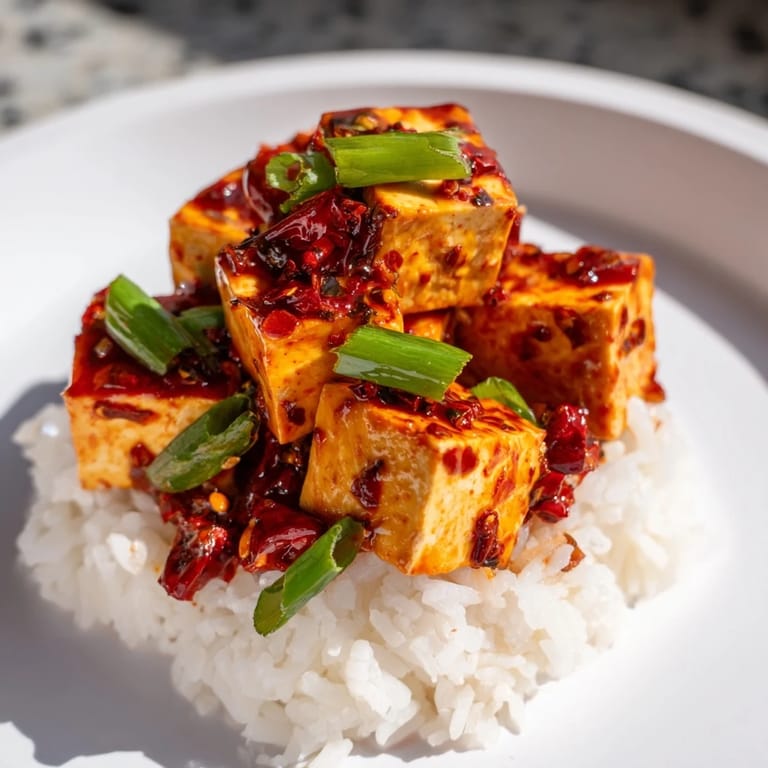
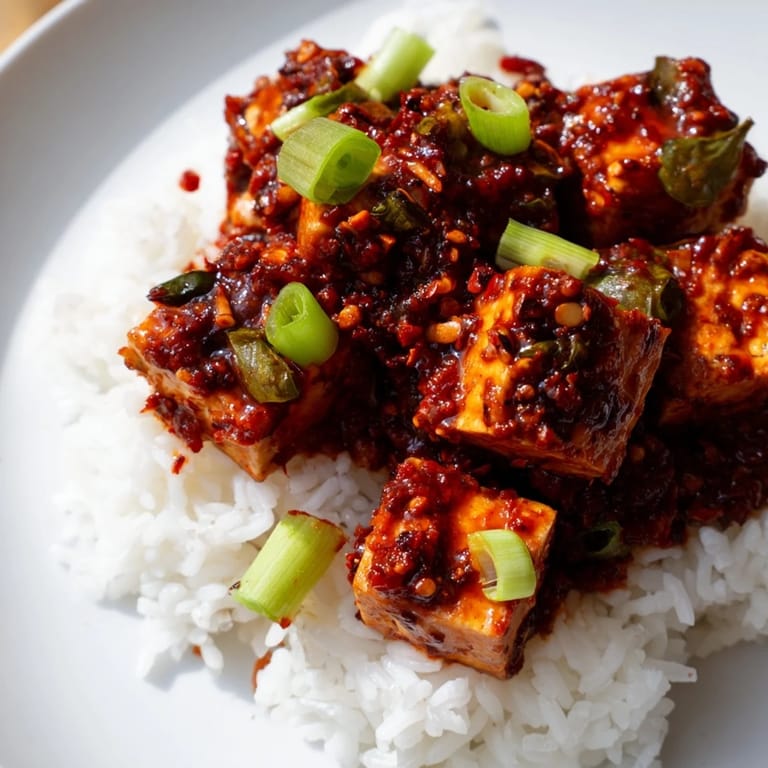
- Spoon everything into bowls over steaming jasmine rice, garnish with extra scallions and a drizzle of chili oil if you're feeling brave, and serve while the sauce is still bubbling hot.
 Save
Save There's a moment while the sauce simmers where everything feels quiet and focused—just you, the gentle bubbling, and that intoxicating smell filling your kitchen. It's one of the reasons I keep coming back to this dish.
The Magic of Sichuan Peppercorns
The numbing sensation from Sichuan peppercorns isn't actually heat; it's a compound called hydroxy-alpha sanshool that triggers a tingling nerve response. The first time you experience it, you might think something is wrong with your mouth, but once you understand what's happening, it becomes weirdly addictive. I always toast mine fresh because even a week of sitting in the pantry seems to dull them down. The difference between a properly toasted, freshly ground peppercorn situation and a tired, pre-ground powder is the difference between being blown away and wondering why people make such a fuss about this dish.
Tofu Texture and Why It Matters
Silken tofu is nearly custard-like in texture and absorbs sauce beautifully, but it requires a gentle hand in the kitchen because it falls apart if you look at it wrong. Soft tofu offers a middle ground—still creamy but structured enough to handle a bit of stirring. I use silken tofu because I'm careful by nature and the payoff in tenderness is worth the extra attention, but if you're nervous about the texture, soft is absolutely fine and still delicious. Firm tofu would work too, though you'd lose some of that ethereal quality that makes mapo tofu feel special.
Vegetarian Variations and Wine Pairing
This dish transitions beautifully to vegetarian territory—just swap the meat for extra mushrooms if you want something hearty, or simply skip the protein entirely and let the tofu and sauce be the main event. The fermented bean paste carries enough umami that you won't miss the meat at all. For wine pairing, I go for a crisp Riesling or something slightly off-dry; the sweetness and acidity cut through the heat and numbing spice in a way that feels refreshing rather than heavy.
- Vegetarian doubanjiang exists and tastes just as good as the traditional version with no compromise.
- If you skip the meat, consider adding a splash of soy sauce to compensate for the umami you'd have gotten from the pork.
- The whole dish comes together so quickly that you might as well have everything prepped before you turn on the heat—it's the only way to stay calm and avoid mistakes.
 Save
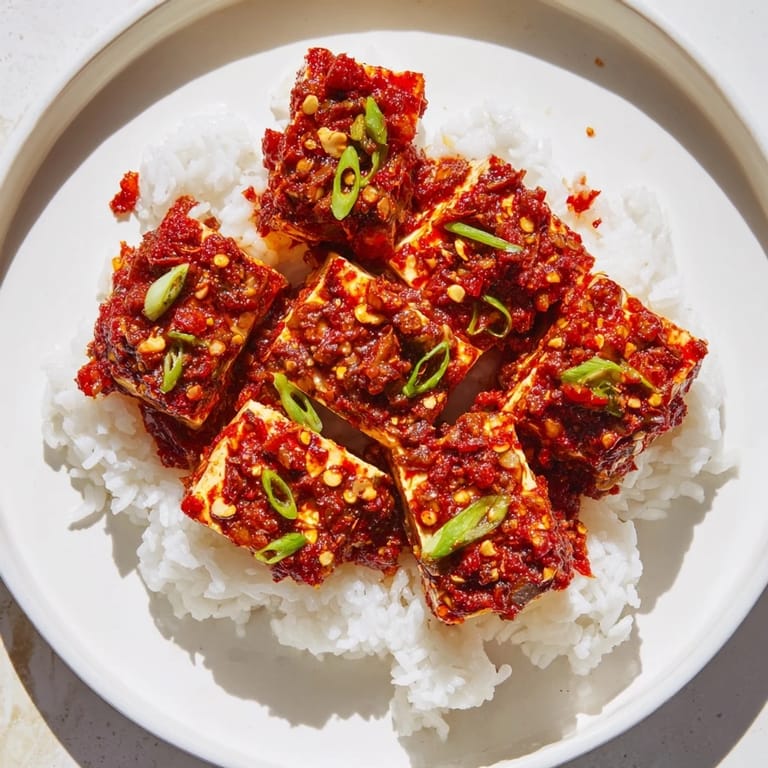
Save Mapo tofu has a way of making you feel like you've unlocked something special in the kitchen—like you're cooking not just a meal but a moment. That's the real magic of it.
Recipe FAQ
- → What type of tofu is best for this dish?
Silken or soft tofu is recommended for a delicate texture, though firm tofu can be used for a sturdier bite that holds up well during cooking.
- → Can I make this dish vegetarian?
Yes, omit the meat and use vegetarian chili bean paste along with vegetable broth to maintain the rich flavors.
- → How spicy is the sauce?
The sauce is boldly spicy with a numbing effect from Sichuan peppercorns; spice level can be adjusted by changing the amount of chili bean paste and dried chilies.
- → What ingredients contribute to the numbing sensation?
Toasted and ground Sichuan peppercorns provide the characteristic numbing and aromatic sensation unique to this dish.
- → What is the best way to serve this dish?
Serve hot over steamed jasmine rice, garnished with fresh scallions and a drizzle of chili oil to enhance the flavors.
- → Can I prepare the sauce in advance?
While the sauce is best freshly made, the chili bean paste and aromatics can be prepped ahead to speed up cooking time.