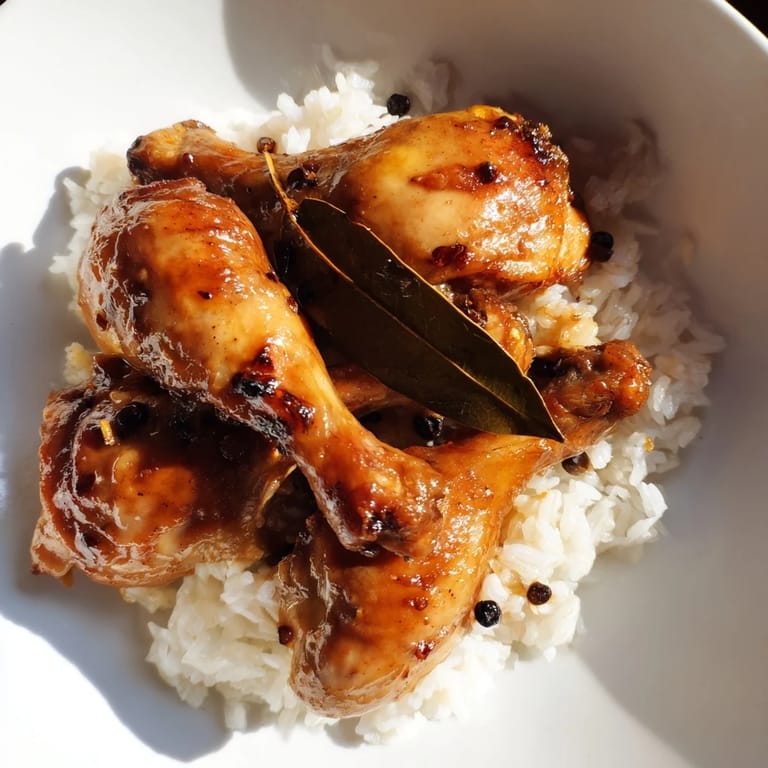
 Save
Save My tía Maria taught me that adobo isn't something you rush—it's a conversation between vinegar and soy sauce that happens slowly in a hot pan. The first time she let me stir the pot, I was maybe eight, standing on my tippy toes to reach the stove, and I remember the exact moment the kitchen filled with that complex, tangy-salty steam that made my eyes water but somehow made me hungry at the same time. She didn't hand me a recipe card; she just guided my hand and said, taste it, tell me what you feel. That lesson stuck with me through every batch I've made since.
I made this for my partner's family dinner once without warning, just grabbed thighs from the market and decided to wing it, and by the time the adobo hit the table, his grandmother was already asking for seconds. That moment—when she closed her eyes taking that first bite—taught me that some dishes carry their own authority, no fancy plating required.
Ingredients
- Bone-in, skin-on chicken thighs and drumsticks (1.5 lbs): This cut stays moist and flavorful through the long braise, unlike breasts which dry out. The skin renders down and adds richness to the sauce.
- Soy sauce (1/3 cup): Use a good quality soy sauce—the cheaper stuff can taste hollow. This is half your flavor base.
- Cane vinegar or white vinegar (1/3 cup): Cane vinegar is traditional and mellower, but white vinegar works if that's what you have. The vinegar is what makes adobo sing.
- Garlic (6 cloves): Smash it, don't mince it, so the cloves stay whole and can be easily removed or left in depending on your preference.
- Bay leaves (2): They're easy to forget about but they're doing essential work, adding a subtle herbaceousness that ties everything together.
- Whole black peppercorns (1 teaspoon): Whole peppercorns taste fresher and sharper than ground pepper, though ground works in a pinch.
- Brown sugar (1 tablespoon, optional): A tiny bit of sweetness balances the vinegar's bite without making the dish sugary.
- Water (1/2 cup): This extends the braising liquid so the chicken cooks gently rather than drying out.
- Cooking oil (2 tablespoons): Use something neutral like vegetable or canola oil for the browning step.
Tired of Takeout? 🥡
Get 10 meals you can make faster than delivery arrives. Seriously.
One email. No spam. Unsubscribe anytime.
Instructions
- Marinate the chicken:
- Toss your chicken pieces with the soy sauce, vinegar, smashed garlic, bay leaves, peppercorns, and brown sugar in a bowl. Even 30 minutes makes a difference, but overnight in the fridge is when the magic really happens—the vinegar starts breaking down the chicken and seasoning it from the inside out.
- Dry and brown the chicken:
- Pat the marinated chicken dry with paper towels (this helps it brown better) and save every drop of that marinade. Heat oil in your skillet until it shimmers, then lay the chicken skin-side down and let it sit for 3-4 minutes without moving it—you want that skin to turn golden and crispy.
- Add the liquid and braise:
- Pour in the reserved marinade and water, bring it to a boil so you see some real action in the pot, then drop the heat to low and cover. Simmer for 25 minutes, turning the chicken halfway through so it cooks evenly.
- Reduce the sauce:
- Uncover the pot and let it simmer for another 10-15 minutes—this is when the sauce thickens and darkens and becomes less brothy. You'll notice the smell changes too, becoming deeper and more concentrated.
- Finish and serve:
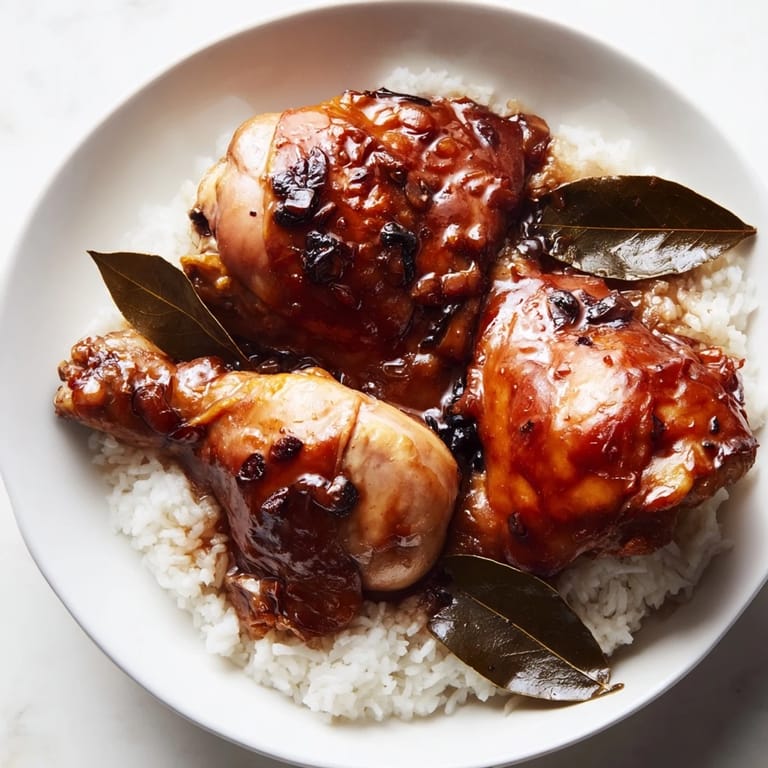
- Skim off any excess fat floating on top if you want (though some people leave it for richness), taste it, adjust the salt or vinegar if needed, and pull out those bay leaves. Serve it hot over steamed rice, garnished with scallions if you have them.
 Save
Save There was a day when a friend came over upset about something, and I made this without thinking about it, just muscle memory taking over. By the end of that quiet dinner, she wasn't upset anymore—just focused on the food, the rice, the sauce, the simplicity of it all. That's when I realized adobo isn't just a dish; it's a small act of care that doesn't need words.
The Story Behind Adobo
Adobo is Filipino comfort food with Spanish roots—the word itself comes from a cooking technique the Spanish brought over, but Filipinos made it their own by swapping in vinegar and soy sauce. It's humble enough for a weeknight dinner but dignified enough for a family gathering, which is exactly why it's survived centuries and ended up in every Filipino kitchen. There's something democratic about it: you don't need fancy equipment or rare ingredients, just time and attention.
Why This Tastes Even Better Leftovers
Adobo is one of those rare dishes that improves overnight, once the chicken has cooled and the flavors have melded together into something richer and more complex. The fat congeals slightly, the sauce clings better to the rice, and somehow the vinegar and soy have made a more complete peace with each other. I've reheated three-day-old adobo in a quiet kitchen at 7 AM before work, eaten it straight from the container, and felt like the day could actually be good.
Variations and Swaps You Can Make
Some days you might want to add a splash of coconut milk in the last few minutes for richness, or throw in a dried chili or two if you want heat. Pork works beautifully in place of chicken—use shoulder or ribs and add a few extra minutes to the cooking time. Even beef makes sense, though you lose that Filipino authenticity unless you grew up making it that way. The core technique—vinegar, soy, garlic, time—stays the same; everything else is just playing around.
- Add a 1/4 cup of coconut milk in the final 5 minutes for creaminess.
- Substitute pork shoulder or ribs and cook an extra 10-15 minutes until completely tender.
- Throw in a whole dried chili or two if you want subtle heat without overpowering the soy and vinegar.
 Save
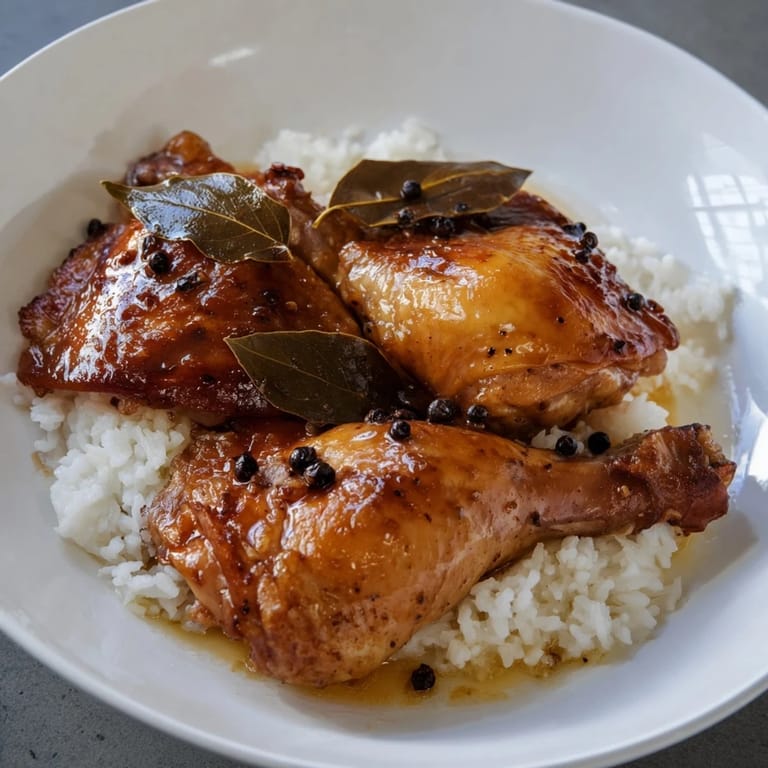
Save Make this when you need to feed people you love, or when you need to remind yourself that good food doesn't require complicated instructions. It'll be waiting for you in the rice cooker, better every time you reheat it.
Recipe FAQ
- → What cuts of chicken work best?
Bone-in, skin-on thighs and drumsticks offer optimal flavor and moisture throughout cooking.
- → Can I marinate the chicken longer?
Yes, marinating between 30 minutes and 8 hours helps deepen the savory and tangy flavors.
- → How do I achieve the right balance of flavors?
Using equal parts soy sauce and vinegar creates a harmonious blend of salty and sour that defines the dish.
- → Is browning the chicken necessary?
Yes, browning enhances the dish’s depth by developing caramelized notes before simmering.
- → What are good serving suggestions?
Serve hot over steamed white rice and garnish with chopped scallions for freshness.
- → Can I adjust sweetness?
Adding brown sugar is optional and provides a subtle sweetness that balances acidity.