 Save
Save My first encounter with hojicha was at a small teashop tucked behind a busy Tokyo street, where the owner served it warm in a chipped ceramic cup alongside a delicate sponge cake. Years later, I found myself standing in my own kitchen wondering if I could capture that earthy, toasted flavor in something I could actually make. The hojicha roll cake became my answer—a tender sponge infused with that distinctive roasted green tea, soft enough to roll without cracking, and forgiving enough that even my initial attempts turned into something worth eating.
I made this for my sister's birthday knowing she'd been obsessed with matcha everything, and I wanted to introduce her to hojicha as its more sophisticated, less-hyped cousin. When she took that first bite, she got quiet in the way people do when they're actually tasting something rather than just eating it. That moment taught me that sometimes the best dishes are the ones that change how someone thinks about flavor, even if just for a second.
Ingredients
- Eggs, separated (4 large): The yolks create richness while the whites provide the lift that makes this cake pillowy and rollable without tearing.
- Granulated sugar (80 g, divided): Split between the yolks and whites so you get both stability and sweetness balanced throughout the batter.
- Whole milk (60 ml): Keep it at room temperature so it mixes smoothly without creating lumps in the delicate batter.
- Vegetable oil (50 ml): This keeps the cake moist and tender, far better than butter for achieving that silky crumb that rolls without breaking.
- Cake flour, sifted (70 g): Don't skip the sifting—lumpy flour is the enemy of a smooth roll.
- Cornstarch (10 g): This softens the flour further and gives the cake an almost creamy texture when you bite into it.
- Hojicha powder (1 tbsp in cake, 2 tsp in cream): The star ingredient with its warm, toasted aroma that fills your kitchen like a quiet invitation to slow down.
- Salt (1/4 tsp): A pinch that makes the hojicha flavor pop without announcing itself.
- Heavy cream, chilled (200 ml): The fat content matters here—aim for at least 35 percent so it whips to proper peaks without separating.
- Powdered sugar (2 tbsp): Dissolves instantly into the cream for sweetness that won't grit between your teeth.
- Ripe mango (1, optional): The acidity and brightness cut through the richness, transforming each bite into something more complex.
Tired of Takeout? 🥡
Get 10 meals you can make faster than delivery arrives. Seriously.
One email. No spam. Unsubscribe anytime.
Instructions
- Prepare your stage:
- Set your oven to 170°C and line a 23 x 33 cm tray with parchment paper, smoothing out wrinkles so the cake bakes evenly. This takes two minutes but saves you from wrestling with a torn cake later.
- Build the yolk base:
- Whisk the separated egg yolks with 40 g sugar until the mixture goes pale and ribbony—you're incorporating air and sugar simultaneously. Pour in the milk and oil while whisking, then fold in the sifted flour mixture gently until you don't see streaks.
- Create cloud-like peaks:
- In a completely clean bowl (any yolk residue will sabotage you), beat the egg whites until foamy, then gradually add the remaining 40 g sugar while beating, until stiff peaks form. This is what gives your cake its tender, rollable structure.
- Fold with intention:
- Add the meringue to the yolk mixture in three additions, folding gently each time until just combined—you want to preserve the air you just captured. Overmixing here is the quickest path to a dense, unrollable cake.
- Into the oven:
- Pour the batter into the tray and tap it gently against the counter a few times to release trapped air bubbles, then bake for 13 to 15 minutes until the surface springs back when lightly touched. The cake should be golden but not dark.
- The critical inversion:
- While still warm, flip the cake onto a fresh sheet of parchment and peel away the original paper—this prevents it from drying out and sticking. Cover it loosely with a clean kitchen towel and let it cool completely, which takes about 20 minutes.
- Whip the hojicha cream:
- Using chilled cream, powdered sugar, and hojicha powder, whip to medium-stiff peaks where the cream holds its shape but still looks pillowy. Don't overwhip or you'll have hojicha butter on your hands.
- Assemble with care:
- Spread the hojicha cream evenly over the cooled cake, then arrange mango strips along one short edge in a neat line. This gives you a focal point to roll toward and distributes the fruit throughout each slice.
- The roll:
- Using the parchment underneath, gently roll the cake from the mango edge toward the opposite side, keeping tension steady but not aggressive. Wrap it tightly in parchment and refrigerate for at least 30 minutes so everything sets and holds its shape.
- Finish and serve:
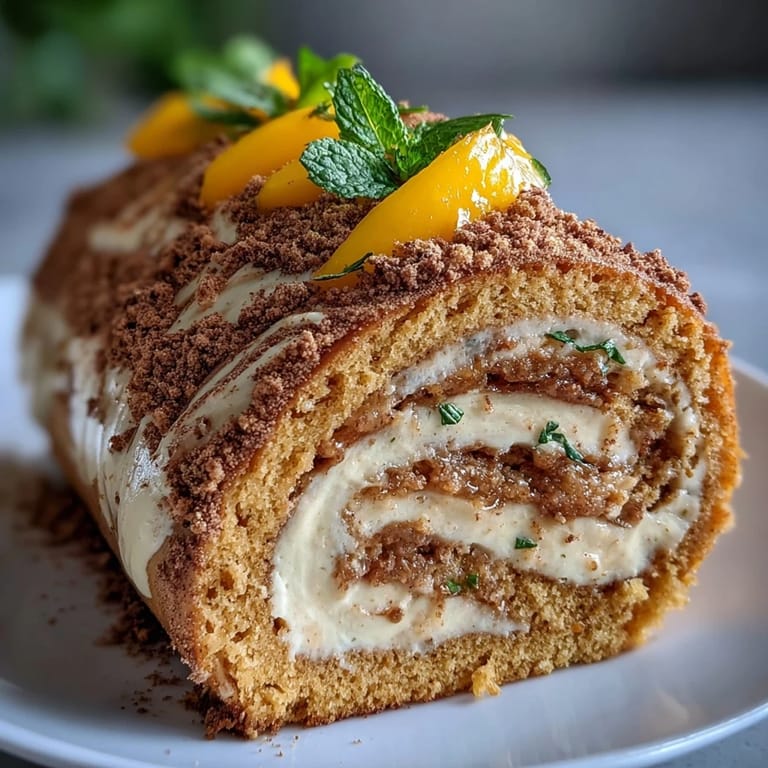
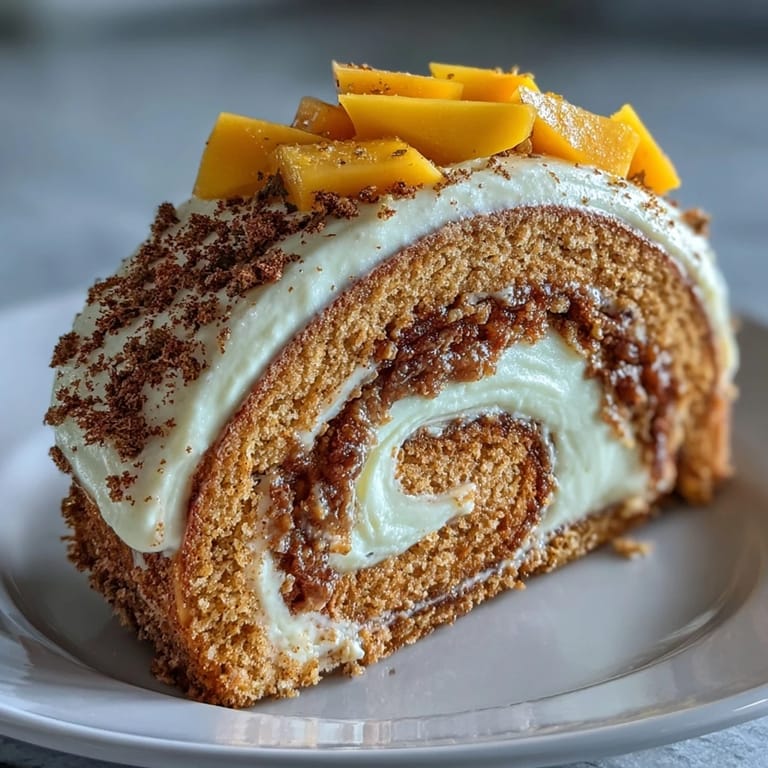
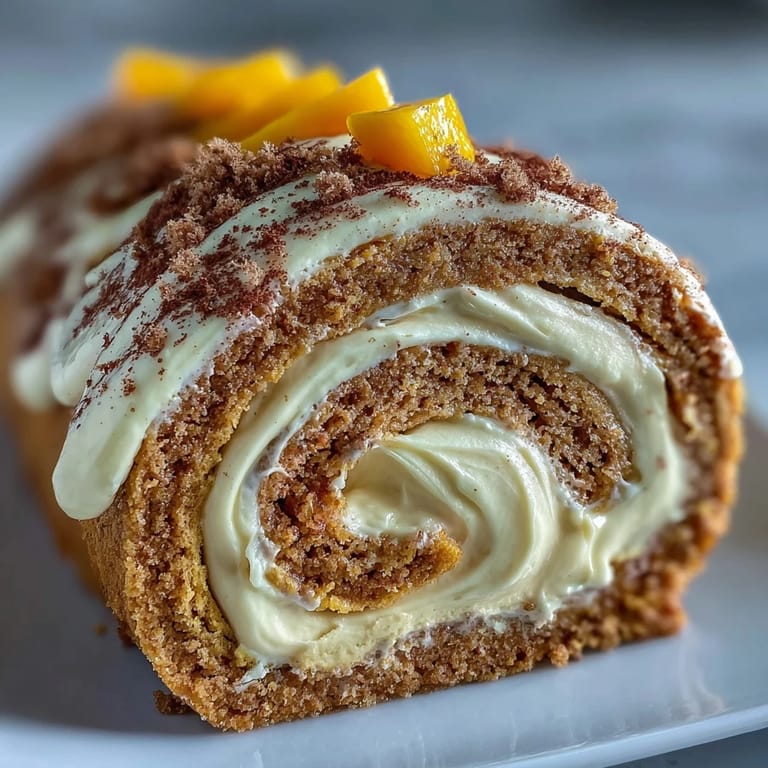
- Trim the ends for a clean look, dust lightly with extra hojicha powder if you like, and slice with a sharp, warm knife. Each slice should show those beautiful layers spiraling inward.
 Save
Save There's something quietly satisfying about watching a cake transform from a flat sponge into a spiral when you roll it—like you've just performed a small magic trick in your kitchen. My partner walked in right as I was plating a slice and asked if I'd bought it from a bakery, which felt like winning a small, butter-stained victory.
The Art of Rolling Without Tearing
The moment people fear most with any roll cake is the cracking, and honestly, it kept me from trying this for longer than it should have. The secret is that the hojicha sponge, being light and moist from the vegetable oil, is more forgiving than you'd expect—it doesn't shatter like a dry genoise would. The real danger is hesitation; if you pause mid-roll, the weight of the cream causes creases. Commit to a steady, confident motion and you'll have a beautiful spiral every time.
Why Hojicha Over Matcha
Hojicha is the roasted version of green tea, which means it's earthier, warmer, and less grassy than matcha's bright, vegetal punch. It's become my go-to for baking because it plays well with cream without any bitterness, and it doesn't stain your hands or leave a chalky residue in your mouth. People who think they don't like matcha often light up when they taste hojicha, because it feels more like caramel's sophisticated cousin.
Filling Flexibility and Seasonal Swaps
Mango is bright and tropical, but this cake welcomes other fruit partnerships depending on what's in season or what you're craving. Strawberries bring tartness that cuts through the cream beautifully, peaches add a subtle perfume, and even fresh raspberries work if you arrange them carefully to avoid crushing them during the roll. I've also made this completely plain—no fruit at all—and served it with a light dusting of hojicha powder and powdered sugar, which lets the cake's delicate flavor speak for itself.
- Mascarpone mixed with half the heavy cream creates a lighter filling that tastes a bit tangier and more luxurious.
- A drizzle of honey or a light syrup inside the roll adds complexity without changing the fundamental character of the cake.
- Toasted sesame seeds sprinkled over the cream add an unexpected nuttiness that hojicha responds to beautifully.
 Save
Save This hojicha roll cake has a way of turning ordinary afternoons into something a little more graceful. It's the kind of dessert that feels special without demanding you're a professional baker, which might be the highest compliment I can give any recipe.
Recipe FAQ
- → What does hojicha taste like?
Hojicha has a distinct roasted, nutty flavor with earthy undertones and less bitterness than regular green tea. Its warm, caramel-like notes pair beautifully with sweet cream and fresh fruit.
- → Can I make this ahead of time?
Yes, the assembled roll cake can be refrigerated for up to 24 hours. The flavors actually develop and meld better after chilling. Wrap tightly in parchment to prevent drying.
- → Why did my sponge crack when rolling?
Cracking usually happens if the sponge cools completely before rolling or if it's overbaked. Roll while still warm and pliable, and don't overbake—the cake should spring back when lightly touched.
- → Can I substitute the mango?
Absolutely. Fresh strawberries, peaches, or even persimmons work wonderfully. You can also omit fruit entirely for a pure hojicha cream experience.
- → Is hojicha powder the same as matcha?
No, they're different. Hojicha is made from roasted green tea leaves and stems, resulting in a reddish-brown color and milder flavor, while matcha is bright green and more grassy.
- → Can I freeze this roll cake?
Yes, freeze whole or sliced. Wrap tightly in plastic then foil. Thaw overnight in the refrigerator for best texture. The cream may weep slightly but will still taste delicious.