 Save
Save There's something about hojicha that stops me mid-breath—that roasted, almost nutty whisper of it reminds me of a small tea shop in Tokyo where I sat alone on a rainy afternoon, watching steam rise from ceramic cups. Years later, I found myself trying to capture that exact feeling in a dessert, and somehow a molten chocolate cake felt like the right vessel. The first time I folded hojicha powder into a delicate batter, my kitchen smelled like autumn and something I couldn't quite name until the cakes emerged from the oven with their soft, giving centers.
I made these for my neighbor last spring when she'd had a rough week, and I watched her face change the moment she tasted it—not just smiled, but actually paused. She said it tasted like something she'd been looking for without knowing it. That's when I realized this wasn't just a fancy dessert; it was a small act of understanding, wrapped in chocolate and roasted tea.
Ingredients
- White chocolate, chopped: Get the good stuff if you can—it's only 80 grams, so it's worth splurging slightly since it forms your molten heart.
- Unsalted butter: The pairing with white chocolate is gentle and necessary; it helps everything meld without greasiness.
- Eggs and egg yolk: These create the structure and that delicate, tender crumb that lets the center stay soft.
- Granulated sugar: Whisked with eggs, it adds volume and a subtle sweetness that balances the earthiness.
- All-purpose flour: Just enough to hold everything together without making the cake dense.
- Hojicha powder: This is the soul of the recipe—if you can't find it, matcha works, but hojicha's roasted warmth is what makes this special.
- Salt: A tiny pinch that amplifies the hojicha's depth and cuts through the richness.
Tired of Takeout? 🥡
Get 10 meals you can make faster than delivery arrives. Seriously.
One email. No spam. Unsubscribe anytime.
Instructions
- Prep your stage:
- Heat your oven to 200°C and grease four ramekins with butter, then dust lightly with flour—tap out the excess or it'll create a gritty layer. This small step means your cakes release cleanly onto the plate.
- Create the chocolate base:
- Set a heatproof bowl over barely simmering water and add your chopped white chocolate and butter, stirring gently until completely smooth. Let it cool for just a minute—you don't want it piping hot when you fold it into the eggs.
- Whisk the egg mixture:
- In a separate bowl, whisk eggs, egg yolk, and sugar together for about 2 to 3 minutes until it's pale and slightly thickened; this aeration is what gives the cake its tender texture. You'll see the mixture go from sunny yellow to almost cloud-like.
- Fold in the dry ingredients:
- Sift the flour, hojicha powder, and salt directly over the eggs, then fold gently with a spatula—this is where patience matters because overmixing develops gluten and makes the cake tough. Fold until you don't see streaks anymore, then stop.
- Marry the mixtures:
- Pour the cooled chocolate mixture into the egg batter and fold everything together with the same gentle hand until just combined; a few small chocolate streaks are okay, but lumps mean you've found all your chocolate. This is the most delicate moment.
- Fill and bake:
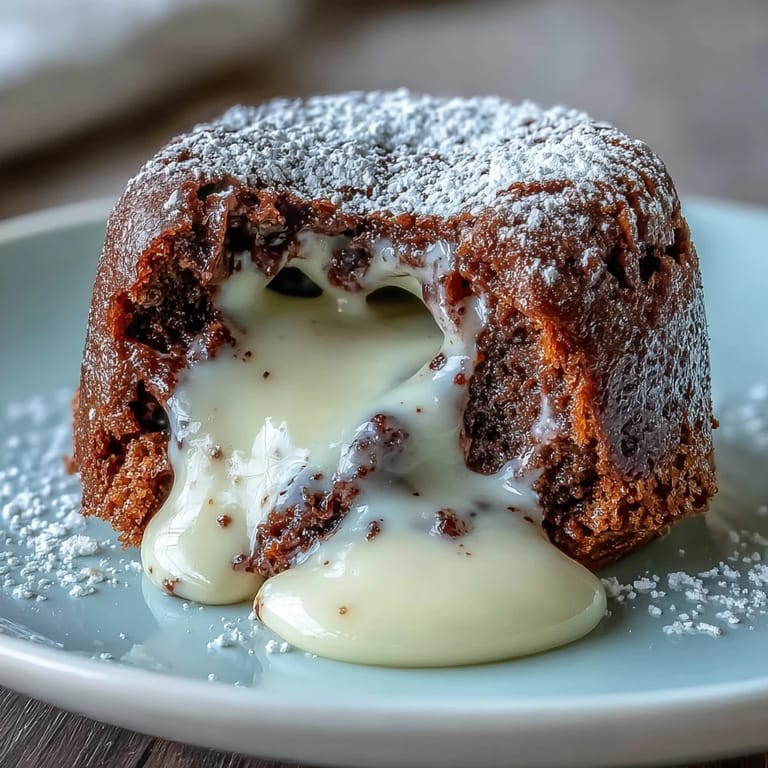
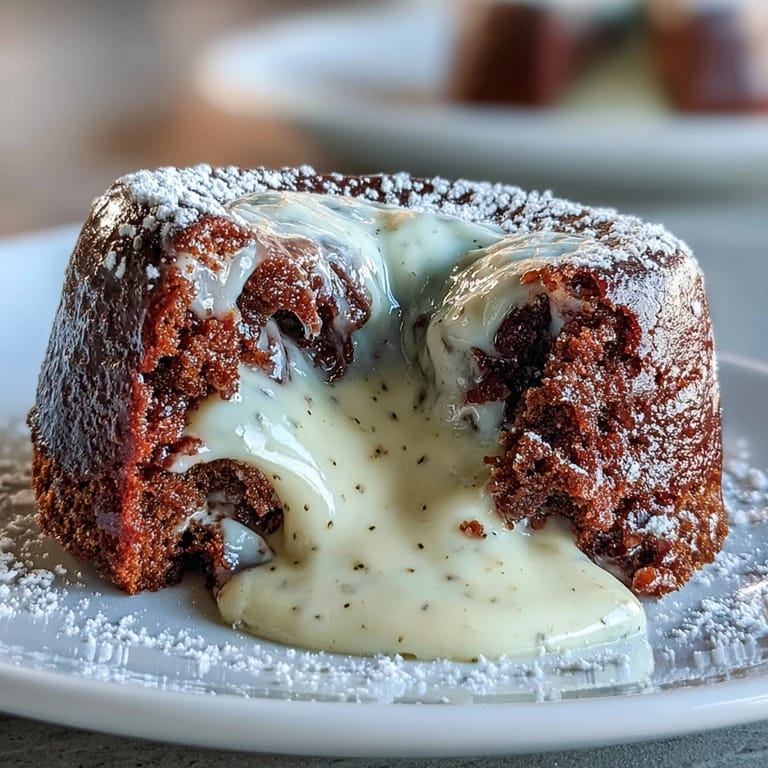
- Divide the batter equally among your ramekins and place them on a baking tray, then bake for exactly 12 minutes—the edges should be set and slightly pulling away from the sides, but the center will jiggle slightly when you gently shake it. That jiggle is the promise of molten chocolate to come.
- Release and serve:
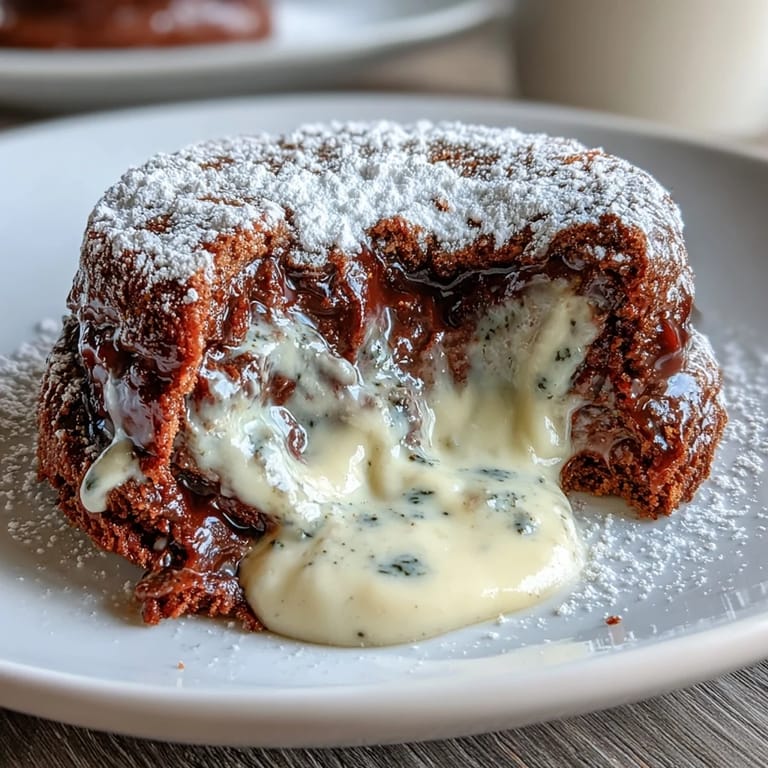
- Let the cakes rest for 1 to 2 minutes, then run a thin knife around the inside edge of each ramekin and quickly invert onto your serving plate. Dust with powdered sugar immediately and serve while the center is still warm and flowing.
 Save
Save There's a moment after the cake hits the plate and you dust it with powdered sugar when it transforms from ingredient list into something almost ceremonial. My daughter once asked why I made these so carefully, and I realized it's because they require attention—not hours of it, but genuine, present-moment focus from start to finish.
The Hojicha Advantage
Hojicha is green tea that's been roasted, which changes everything—it loses the grassy sharpness and gains this warm, almost coffee-like depth that sounds nothing like tea once you taste it. When you pair it with white chocolate's creamy sweetness, something magical happens: the roasted notes prevent the white chocolate from feeling cloying, and the sweetness prevents the hojicha from tasting bitter. It's why this combination feels balanced instead of heavy, even though chocolate and butter are doing most of the work.
Timing and Temperature Matter
These cakes live in a narrow window—underbaked and the edges don't set enough to hold their shape, overbaked and you lose that molten heart that makes them worth making. I learned this the hard way by trying to peek through the oven window every 30 seconds, which only let heat escape and made everything bake unevenly. Now I set a timer, trust it, and use that time to set the table or brew tea instead.
Serving and Variations
These cakes are stunning on their own, but they sing with the right accompaniment—a dusting of powdered sugar gives that bakery-quality finish, while fresh berries cut through the richness with brightness. Cold milk is my secret weapon because it echoes the milky sweetness of white chocolate while cooling your palate, but a small shot of espresso creates an entirely different moment, more sophisticated and late-night. Some nights call for whipped cream, some call for nothing at all except a spoon and quiet.
- Serve immediately after inverting—waiting more than a few minutes lets the center set and you lose the magic.
- For an extra-molten center, reduce baking time to 11 minutes and watch closely at the end.
- You can prep the batter up to 2 hours ahead and keep it covered in the fridge, baking just before serving.
 Save
Save These molten cakes ask for nothing but attention and good ingredients, and in return they give back something that feels like more than dessert. They're the kind of small luxury that reminds you why we cook.
Recipe FAQ
- → What is hojicha?
Hojicha is a roasted Japanese green tea with a deep, nutty flavor and reddish-brown color. The roasting process reduces bitterness and creates notes of caramel and earthiness that pair beautifully with white chocolate.
- → How do I know when the cakes are done?
The cakes are ready when the edges are set and firm but the centers still jiggle slightly when gently shaken. This ensures the molten lava center remains liquid. Avoid overbaking or the centers won't flow.
- → Can I make these ahead of time?
You can prepare the batter up to 4 hours ahead and store it in the refrigerator. Let it come to room temperature for 15 minutes before baking. For best results, bake just before serving to enjoy the molten centers.
- → What can I substitute for hojicha powder?
Matcha powder works well for a vibrant green tea version with a more grassy flavor. Alternatively, use finely ground roasted green tea leaves or Chinese roasted oolong tea for similar earthy notes.
- → Why did my centers not turn out molten?
Overbaking is the most common cause. Even 1 minute too long can set the centers completely. Also ensure your oven temperature is accurate with an oven thermometer. For extra molten results, reduce baking time by 1 minute.
- → What size ramekins work best?
Use 6-8 ounce ramekins for the classic lava cake presentation. The batter fills four ramekins of this size perfectly, allowing room for rising while maintaining the molten center.