 Save
Save The first time I made okonomiyaki, I was standing in a tiny kitchen in Osaka, watching my host mother work with the casual confidence of someone who'd made this dish a thousand times. She barely measured anything—just a glance at the bowl, a practiced fold of cabbage, and suddenly the skillet was sizzling. I went home determined to recreate that magic, and after a few slightly sad attempts, I finally understood: it's not about perfection, it's about the rhythm of folding, the sound of shredded cabbage hitting hot oil, and that moment when the bonito flakes start to dance from the residual heat.
I've served these to skeptics who swore they didn't like anything savory for breakfast, only to watch them devour two pancakes and ask for the recipe. There's something about the combination of soft cabbage, tangy-sweet sauce, and those impossible-to-resist bonito flakes that converts even the pickiest eaters. It became the dish I'd make when friends dropped by unexpectedly, because it felt special but genuinely easy.
Ingredients
- All-purpose flour: The base that keeps everything together; a cup is enough to create structure without heaviness.
- Dashi stock: If you have it, use it—it adds a subtle umami that water simply cannot match, but water works fine in a pinch.
- Eggs: Two large ones bind everything and help the pancakes stay tender and almost custardy inside.
- Salt and baking powder: A half teaspoon each lifts the batter and keeps it from tasting flat.
- Shredded green cabbage: Three cups might look like too much, but it wilts down and becomes the soul of the pancake—finely shredded matters because thicker pieces won't cook through evenly.
- Green onions and carrot: Half a cup of each adds color, texture, and a whisper of freshness that keeps the richness balanced.
- Shrimp or bacon: Optional, but I learned the hard way that they're not just toppings—they're scattered throughout the batter and make each bite feel indulgent.
- Okonomiyaki sauce: The tangy-sweet glue that ties everything together; it's worth hunting down the real thing, but you can make a version at home.
- Japanese mayonnaise: Kewpie has more egg yolk and tastes richer than standard mayo—it makes an actual difference here.
- Bonito flakes: Those paper-thin strips of dried fish that mysteriously flutter from the heat; they're crucial for texture and that specific savory-smoky flavor.
- Aonori: Dried seaweed flakes that add a salty-green note and visual appeal; find it in any Japanese market or online.
- Neutral oil: For cooking without competing flavors; about 2 tablespoons total for all four pancakes.
Tired of Takeout? 🥡
Get 10 meals you can make faster than delivery arrives. Seriously.
One email. No spam. Unsubscribe anytime.
Instructions
- Whisk the base:
- Combine flour, dashi stock, eggs, salt, and baking powder in a large bowl, whisking until the batter is smooth and no lumps remain. The batter should be thicker than pancake batter but thinner than cake batter—it should flow slightly but hold together.
- Fold in the vegetables:
- Add shredded cabbage, green onions, carrot, and your choice of shrimp or bacon, mixing gently until evenly distributed. Don't overwork it; you want the cabbage to stay intact, not become a mush.
- Heat the skillet:
- Warm half a tablespoon of oil in a nonstick skillet over medium heat until it shimmers and smells fragrant. This is your signal that it's ready.
- Shape and cook:
- Scoop about one cup of batter onto the hot skillet and use the back of a spoon to gently shape it into a thick round pancake roughly six inches wide. Listen for the sizzle—it should be immediate and confident.
- First side golden:
- Let it cook undisturbed for four to five minutes until the bottom develops a deep golden-brown crust. Resist the urge to poke it; you'll know it's ready when the edges look set and slightly pull away from the pan.
- Flip with care:
- Using a wide spatula, slide underneath the pancake and flip it in one smooth motion. The second side will cook faster, around four to five minutes, because the bottom of your skillet is now very hot.
- Cook through:
- The pancake is done when the center feels firm but still gives slightly under gentle pressure, and the cabbage inside is tender. If you're adding shrimp or bacon, make sure it's heated all the way through.
- Repeat the process:
- Transfer the finished pancake to a plate and repeat with the remaining batter, adding another half tablespoon of oil to the skillet as needed. You'll have enough for four pancakes total.
- Top with precision:
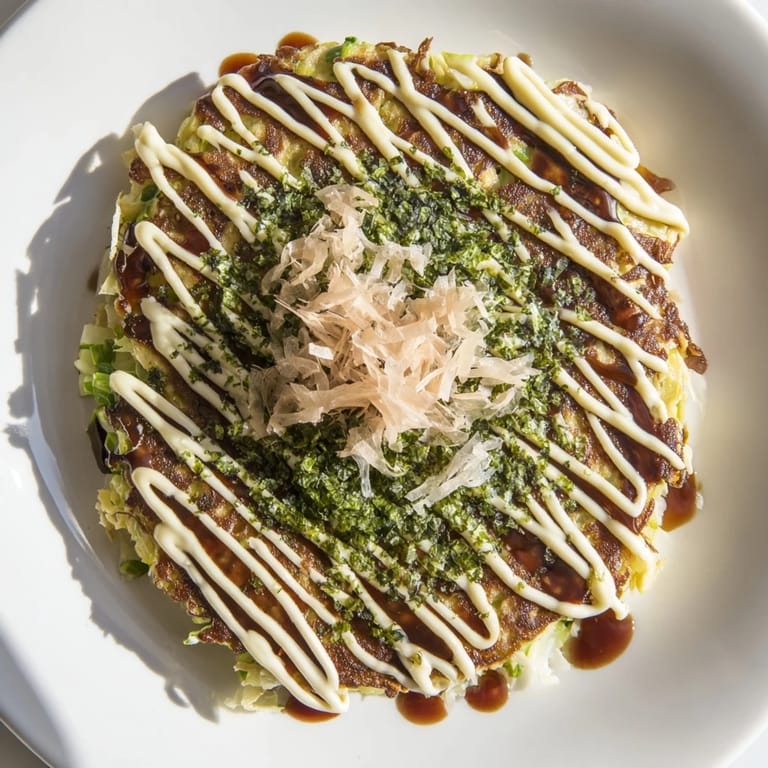
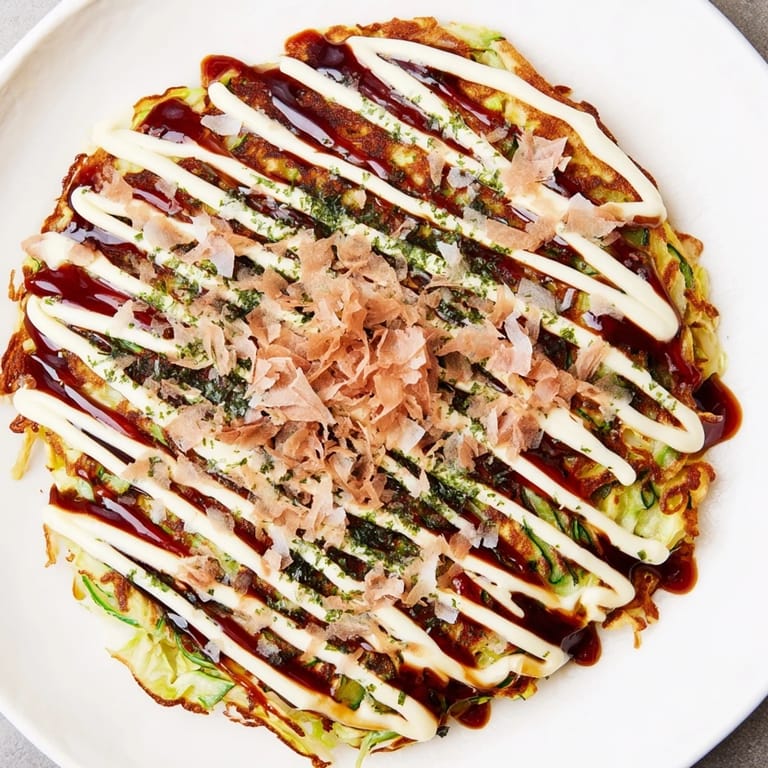
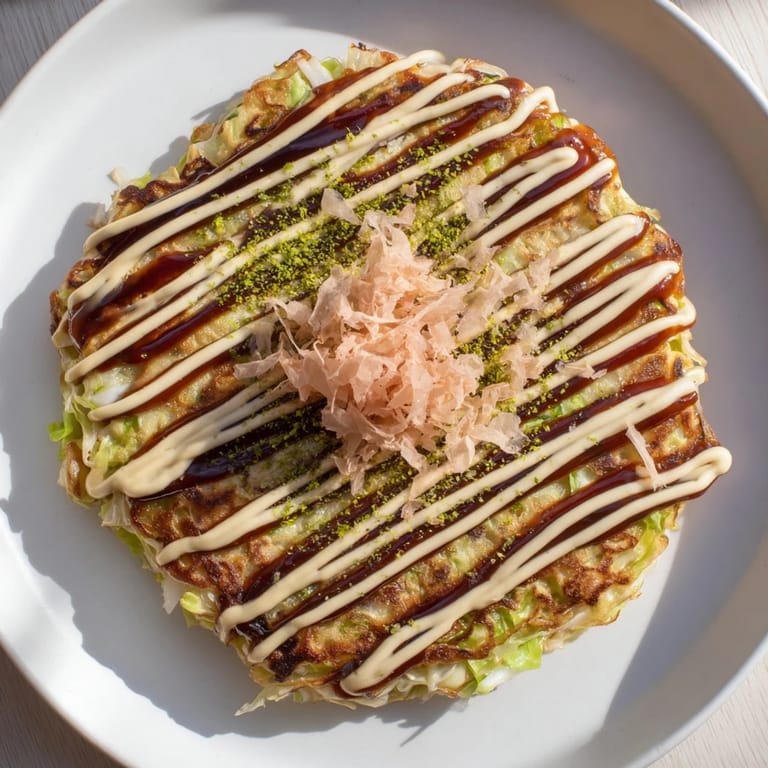
- Drizzle okonomiyaki sauce and Japanese mayonnaise across each hot pancake in a loose zigzag pattern, using a squeeze bottle or the back of a spoon. The heat will help them spread slightly.
- Finish and serve:
- Sprinkle bonito flakes, aonori, and pickled ginger over the top while the pancake is still hot. Watch the bonito flakes shimmy from the residual heat—this is part of the experience. Serve immediately.
 Save
Save My most vivid memory of okonomiyaki isn't from a restaurant or a cooking triumph—it's from a rainy afternoon when my partner and I made these together for the first time, and we laughed because we kept adding extra toppings out of pure joy, turning simple pancakes into absurd, sauce-covered towers. We ate them standing at the counter, sauce dripping everywhere, completely unselfconscious, and it felt like the best meal we'd had in months. That's when I realized this dish isn't about technique or authenticity—it's about the moment when comfort food stops being embarrassing and becomes pure happiness.
The Magic of Dashi
If you have access to instant dashi powder or even a kombu-and-bonito tea you made earlier, use it instead of water—the umami depth it adds is subtle but unmistakable, making each bite taste more intentional and developed. I started keeping a jar of instant dashi in my pantry after realizing how much it elevated not just this recipe but soups, sauces, and even marinades. It's one of those ingredients that makes you sound more confident in the kitchen even when you're just opening a packet.
Customizing Your Pancake
The beauty of okonomiyaki is that it welcomes whatever you have on hand—I've made versions with mushrooms, snow peas, corn, even leftover roasted vegetables. The ratio matters more than the specific ingredients: about three cups of finely shredded or chopped vegetables to one cup of batter keeps everything balanced and cooked through. The toppings are where personality shines; I've experimented with sriracha mayo, different hot sauces, even a drizzle of chili oil when I wanted something spicy and unexpected.
Pairing and Serving
These pancakes are good enough to eat on their own, but they truly come alive with a cold Japanese beer, crisp iced green tea, or even a sparkling yuzu drink if you can find it. I've served them as a lunch dish, a side at dinner, and as an unexpected brunch that converted skeptics instantly. They're best eaten immediately while the bonito flakes are still dancing and the sauce is warm enough to coat everything.
- If you're feeding a crowd, assemble the toppings on a small table and let people customize their own pancake—it's interactive and fun.
- Leftover pancakes can be gently reheated in a skillet the next day, though they're never quite as magical as fresh.
- Make extra sauce if you love it tangy-sweet; you'll find yourself drizzling it on everything.
 Save
Save Make these for someone you want to impress without breaking a sweat—they taste like you've spent years perfecting them, when really you've just spent forty minutes and a bit of joy in the kitchen. There's something honest about a dish this good that asks so little of you.
Recipe FAQ
- → What is the best way to cook okonomiyaki pancakes?
Cook over medium heat in a lightly oiled nonstick skillet, allowing each side to become golden brown and cooked through for about 4–5 minutes per side.
- → Can I substitute dashi stock in the batter?
Yes, water can be used instead of dashi stock, but dashi adds a distinctive umami flavor that enhances the dish.
- → What toppings complement okonomiyaki pancakes?
Traditional toppings include okonomiyaki sauce, Japanese mayonnaise, bonito flakes, aonori (seaweed flakes), and pickled ginger for added flavor and texture.
- → How can I make a vegetarian version?
Omit shrimp or bacon and bonito flakes, and increase the amount of vegetables like cabbage and carrots to maintain flavor and texture.
- → What is the ideal batter consistency?
The batter should be smooth but thick enough to hold the shredded cabbage and other ingredients, creating a cohesive pancake when cooked.