 Save
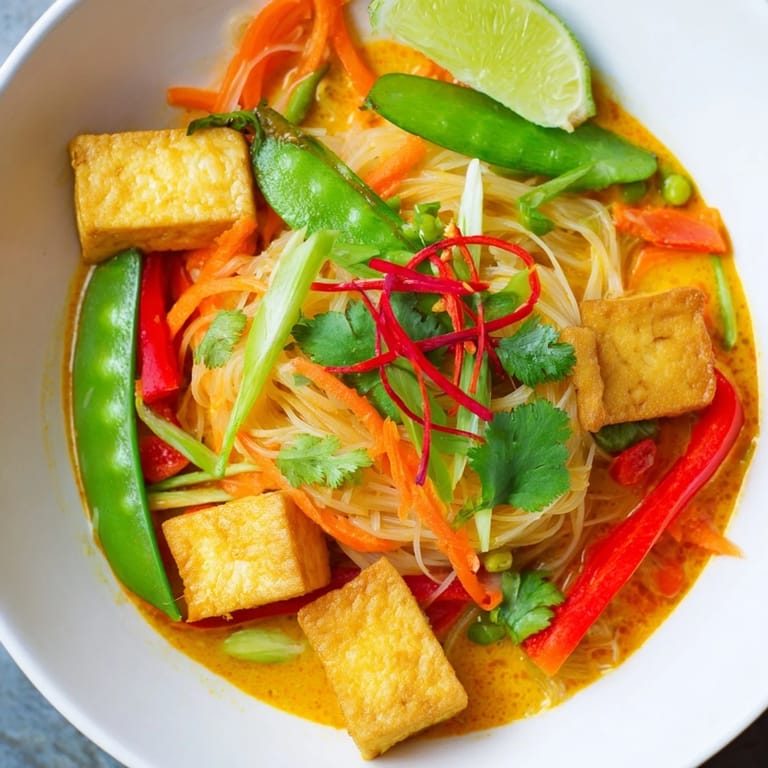
Save The first time I made laksa, my kitchen filled with such an intoxicating cloud of steam and spice that my roommate wandered in from the other room asking what smelled like a Southeast Asian street market. I'd picked up a can of laksa paste on a whim at an Asian grocery store, curious about what all the fuss was about, and decided to turn it into something warm and nourishing on a chilly evening. What emerged from that pot was so vibrant and alive—creamy coconut balanced against bright citrus and heat—that I've made it countless times since, each batch a little different depending on what vegetables I find at the market.
I remember cooking this for a group of friends who'd just returned from a backpacking trip through Kuala Lumpur, and watching their faces light up when they tasted it was worth every minute of prep work. One of them closed their eyes and said it tasted exactly like the street food they'd eaten near the night market, and I felt this small surge of pride knowing I'd nailed something so personal to their recent adventure.
Ingredients
- Vegetable oil: A neutral oil that won't compete with the laksa paste; I use this to coax out the aromatics from the onion, garlic, and ginger without burning them.
- Onion, garlic, ginger, and lemongrass: These four are the flavor foundation—when they hit the hot oil, the scent that rises is unmistakable and tells you you're on the right track.
- Laksa paste: The soul of this dish; store-bought works beautifully if you're short on time, though homemade is worth exploring once you've made this a few times.
- Coconut milk: Adds creamy richness and mellows the spice without making it heavy; I always shake the can first to blend in the thicker cream.
- Vegetable broth: Use good-quality broth here since it's the liquid foundation; I've learned that skimping on this makes the whole dish taste a bit thin.
- Soy sauce and sugar: Soy adds depth and umami, while a pinch of sugar balances the heat and brings all the flavors into focus.
- Rice noodles: Thick or vermicelli both work; I soak them in hot water just before serving so they're tender but still have a tiny bit of resistance.
- Firm tofu: When fried until golden, it becomes crispy outside and creamy inside—a textural contrast that makes the dish more interesting.
- Bean sprouts, carrot, bell pepper, snow peas: These vegetables stay bright and provide crunch; add them to the broth near the end so they don't lose their snap.
- Spring onions, cilantro, and lime: These fresh finishes are essential; they cut through the richness and add a lightness that keeps the dish from feeling heavy.
Tired of Takeout? 🥡
Get 10 meals you can make faster than delivery arrives. Seriously.
One email. No spam. Unsubscribe anytime.
Instructions
- Toast the aromatics:
- Heat oil in your pot and add the onion, garlic, ginger, and lemongrass. The kitchen will fill with an incredible fragrance as these soften and release their oils—this is your signal you're building flavor right.
- Bloom the laksa paste:
- Stir in the paste and let it cook for a minute or two until it becomes even more aromatic and darkens slightly; this coaxes out all its complex spice notes.
- Build the broth:
- Pour in coconut milk and vegetable broth, stirring well so the paste disperses evenly and no clumps hide at the bottom. Bring everything to a gentle simmer.
- Season and rest:
- Add soy sauce, sugar, and a pinch of salt, then let the broth bubble away uncovered for about ten minutes—this allows the flavors to get to know each other and deepen.
- Prepare the noodles and tofu:
- While the broth simmers, soak your rice noodles in hot water until tender, then drain them well so they don't make the final dish watery. In a separate skillet, fry your tofu cubes until golden and crispy on the edges.
- Add the vegetables:
- About five minutes before you plan to serve, toss the carrot, bell pepper, and snow peas into the simmering broth so they stay crisp-tender rather than mushy.
- Assemble and serve:
- Divide noodles among bowls, ladle the hot broth and vegetables over them, then top with fried tofu, bean sprouts, spring onions, cilantro, and chili slices if you like heat. Serve with lime wedges on the side so people can add brightness to taste.
 Save
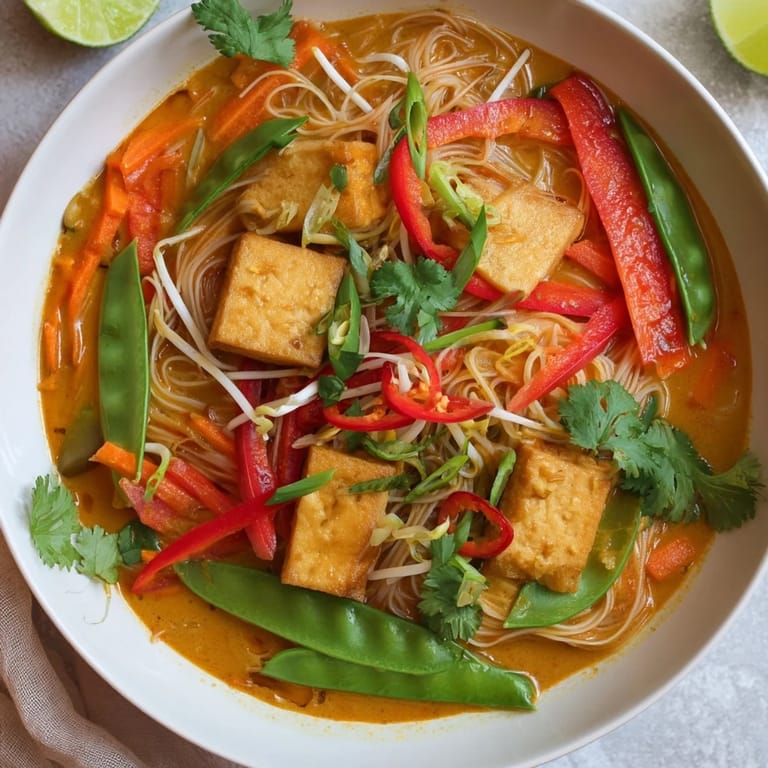
Save There's something almost meditative about assembling laksa bowls family-style, where everyone adds their own toppings and adjusts the heat and brightness to their liking. It transforms the meal from something you're eating into something you're creating together, which somehow makes it taste even better.
Why Laksa Works as Comfort Food
Laksa hits that sweet spot where it feels indulgent—creamy and aromatic—but also surprisingly light because of the fresh vegetables and bright citrus finish. The warmth of the broth and the complexity of the spices create this cozy, almost meditative eating experience that makes you slow down and actually pay attention to what you're tasting. I've served it to people who said they don't usually like spicy food, and they end up going back for seconds because the heat is more about flavor than burn.
Building Flavor Layers in the Broth
The reason laksa tastes so sophisticated is that it takes time for all those flavors to come together—you can't rush the simmering step. When I first made it, I thought ten minutes was excessive, but I learned that this resting time allows the coconut milk to fully embrace the laksa paste, the lemongrass to release its floral notes, and everything to become cohesive rather than just a jumble of flavors. The longer it simmers, the more the spices soften and blend, which is why day-old laksa sometimes tastes even better than the first bowl.
Making It Your Own
One of my favorite things about laksa is how forgiving and flexible it is once you understand the basic structure. I've made it with mushrooms when I was low on other vegetables, added a splash of lime juice directly to the broth instead of serving it on the side, and even stirred in a spoonful of tahini once when I wanted something creamier. The framework stays strong no matter what—the aromatics, the paste, the coconut and broth—so you can really play with the details.
- Try adding baby bok choy, mushrooms, or even thin slices of sweet potato for different textures and flavors.
- If you want more protein, add a soft-boiled egg to each bowl or crumbled tofu that's been pan-fried until crispy.
- For a less spicy version, reduce the laksa paste slightly and let the other aromatics shine instead of the heat.
 Save
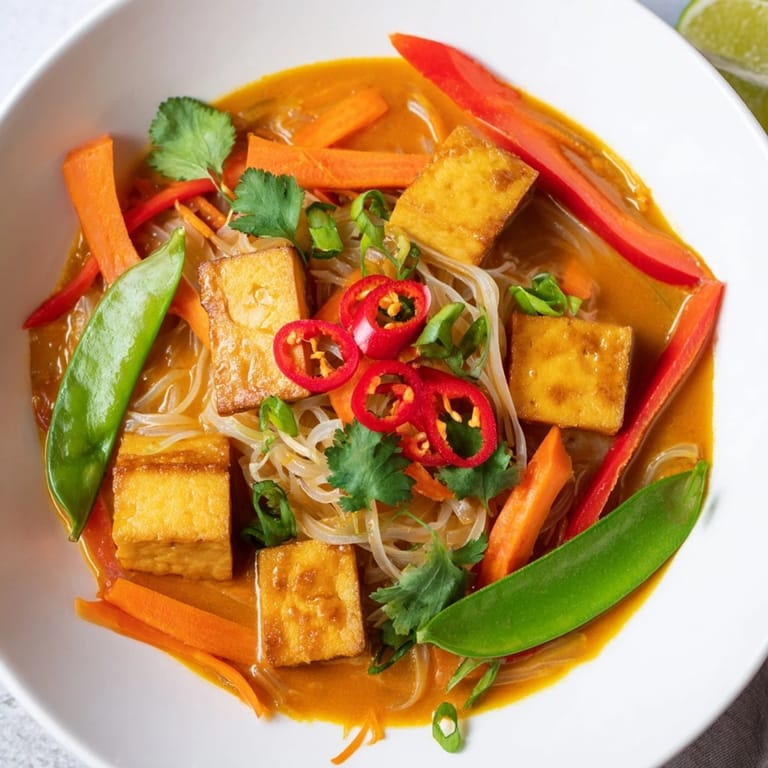
Save Laksa has become the dish I make when I want to feel like I've traveled somewhere warm and aromatic without leaving my kitchen. There's real magic in how something this vibrant and complex can feel both like a restaurant-quality meal and completely approachable to make at home.
Recipe FAQ
- → What type of noodles work best with this dish?
Rice noodles, either thick or vermicelli, soaked or cooked per package instructions, pair perfectly by absorbing the curry broth.
- → Can tofu be substituted with other proteins?
Yes, firm tofu is ideal, but you can substitute with tempeh or cooked chicken for different textures and flavors.
- → How can I adjust the spiciness?
Add or reduce red chili slices according to your heat preference, or choose a milder laksa paste.
- → What fresh herbs complement the flavors?
Fresh cilantro and spring onions add bright, fresh notes that enhance the aromatic coconut curry.
- → Is there a vegan version of this dish?
Ensure the laksa paste contains no shrimp paste or fish sauce, and use plant-based broth to keep it vegan-friendly.