 Save
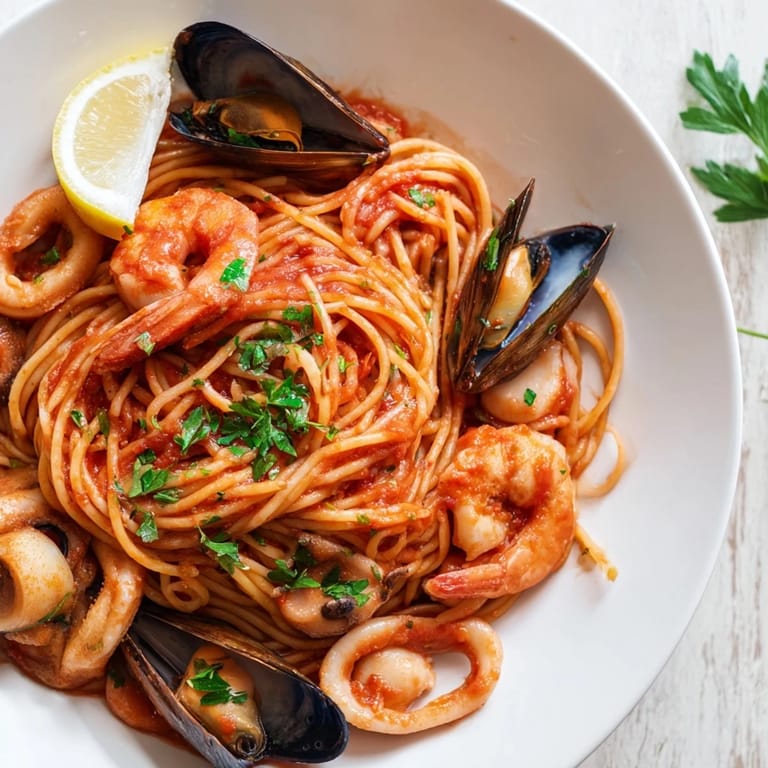
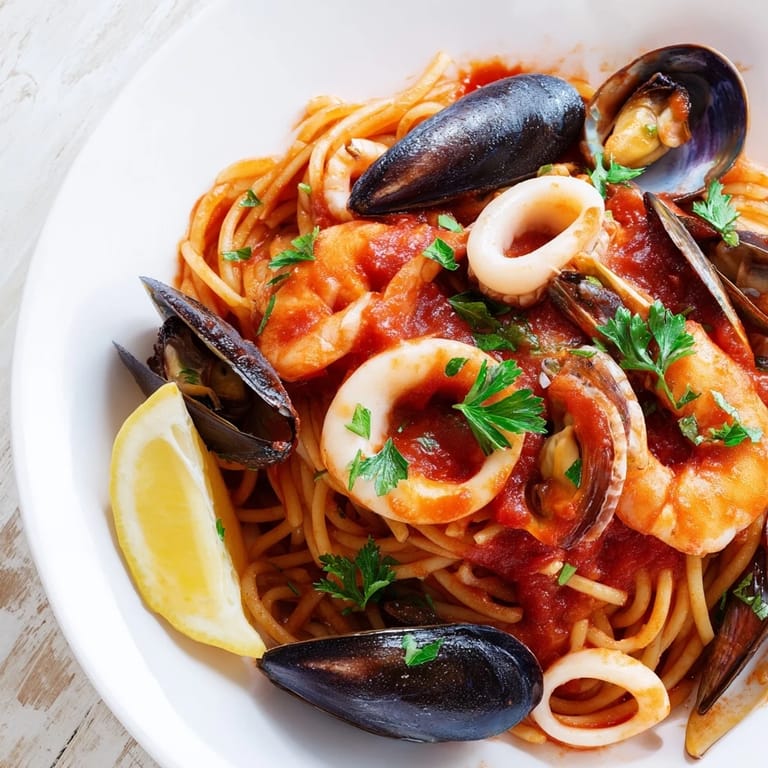
Save There's a particular evening that stays with me—the kind where everything clicks into place without trying. I was standing in my kitchen with a bag of impossibly fresh seafood from the market, the kind where the fishmonger actually made eye contact and nodded knowingly. The tomatoes were at their peak, the garlic was fragrant without being harsh, and somehow I decided to throw caution to the wind and make seafood marinara pasta for guests who'd invited me over the week before. What came out of that skillet felt less like cooking and more like a conversation between ingredients, each one knowing exactly when to arrive.
I still remember my friend Sarah's expression when she took that first bite—the kind of quiet pause that happens when someone realizes they're eating something real. She chased a shrimp around her bowl and said, "This tastes like you went to Italy this morning," which made me laugh because honestly, the closest I'd been to Italy was the Italian market three blocks away. But that's the thing about this pasta: it has a way of making you feel transported, and more importantly, it makes the people you feed feel cared for in a language that doesn't need words.
Ingredients
- Large shrimp (200g): Buy them the day you cook if possible; they should smell like the ocean, not like old basement water. Peel and devein yourself—it takes five minutes and tastes noticeably better than pre-prepared.
- Mussels (200g): Choose ones that are tightly closed and feel heavy for their size. Rinse them under cold water and pull off the hairy beard just before cooking; they can sit in ice water for an hour if needed.
- Squid rings (150g): Buy them already cut if your fishmonger offers it, or slice fresh squid yourself—frozen works beautifully and often costs less. They cook in seconds, so don't walk away once they hit the sauce.
- Sea scallops (150g): Dry them on paper towels before cooking; any moisture on the surface will steam them instead of searing them. They should be creamy and sweet, never rubbery.
- Spaghetti or linguine (350g): Fresh or dried both work, but dried holds the sauce better. Cook it until it gives a gentle resistance when you bite it—that's al dente.
- Olive oil (2 tbsp): Use something you actually enjoy tasting; this is not the time for the mystery bottle in the back of the cabinet.
- Onion (1 small): Finely chop it so it melts into the sauce and disappears like it was never there, adding sweetness without texture.
- Garlic (3 cloves): Mince it small enough that it cooks quickly; burnt garlic tastes bitter, and there's no way to come back from that.
- Red pepper flakes (1/2 tsp): This is optional and entirely about how you feel that day—add more if you like heat, less if you prefer whisper-quiet spice.
- Canned crushed tomatoes (800g): San Marzano if your budget allows; they're sweeter and less acidic, but honestly, good crushed tomatoes matter more than the brand name.
- Tomato paste (2 tbsp): A small spoon of this adds depth that fresh tomatoes alone can't reach; it's like the secret handshake of marinara sauce.
- Dry white wine (100ml): Pinot Grigio or Sauvignon Blanc works beautifully; it cuts through the richness of the seafood and brightens everything it touches.
- Dried oregano and basil (1 tsp each): Dried herbs are your friend here—they're more concentrated and handle the longer simmer better than fresh herbs would.
- Sugar (1/2 tsp): This quiets any harsh acidity in the tomatoes without making the sauce sweet; it's a whisper, not a shout.
- Sea salt and black pepper: Taste as you go and adjust at the end; seafood seasons itself somewhat, so go gentle early and be bolder at the finish.
- Fresh parsley (2 tbsp): Chop it just before serving so it stays bright green and peppery; wilted parsley is just sadness on a plate.
- Lemon wedges: A squeeze of bright citrus at the table is non-negotiable—it wakes everything up.
Tired of Takeout? 🥡
Get 10 meals you can make faster than delivery arrives. Seriously.
One email. No spam. Unsubscribe anytime.
Instructions
- Start the pasta in salted water:
- Bring a large pot of water to a rolling boil and salt it generously—it should taste like the sea. Drop in the pasta and cook according to the package timing, stirring occasionally so nothing sticks. You're aiming for that moment where it still has just a tiny bit of resistance when you bite it.
- Build the sauce foundation:
- While the pasta cooks, heat olive oil in a large, deep skillet over medium heat. The oil should shimmer but not smoke. Add the finely chopped onion and let it cook for 2-3 minutes, stirring now and then, until it turns translucent and softens.
- Wake up the garlic and spice:
- Stir in the minced garlic and red pepper flakes (if using), and cook for exactly one more minute—any longer and the garlic will turn bitter and ruin the whole thing. You should smell it immediately, that sharp, clean garlic aroma that means it's ready to move forward.
- Deglaze with wine:
- Pour in the white wine and let it bubble and reduce for about 2 minutes. This is where the sharp alcohol cooks off and leaves behind its subtle fruit and acidity, which lifts the entire sauce.
- Build the tomato base:
- Add the crushed tomatoes, tomato paste, oregano, basil, sugar, salt, and pepper. Stir everything together until the tomato paste is fully incorporated and there are no streaks of red and orange. Simmer uncovered for 10 minutes, stirring occasionally, while the flavors marry and deepen.
- Add seafood in stages:
- Start by adding the squid rings and scallops to the simmering sauce and let them cook for 2 minutes. Then add the shrimp and mussels, cover the skillet, and cook for 3-4 minutes until the shrimp turn bright pink and the mussels crack open. Discard any mussels that stubbornly refuse to open; they're not worth the risk.
- Combine pasta and sauce:
- Drain the pasta, reserving about 1/2 cup of that starchy cooking water. Add the drained pasta to the seafood sauce and toss everything together gently, using tongs to distribute the seafood evenly. If the sauce seems too thick, add pasta water a splash at a time until it coats the pasta without being soupy.
- Taste, adjust, and serve:
- Taste a forkful and adjust the salt and pepper to your preference. Serve immediately into warm bowls, garnished with fresh parsley and surrounded by lemon wedges so everyone can brighten their own portion to taste.
 Save
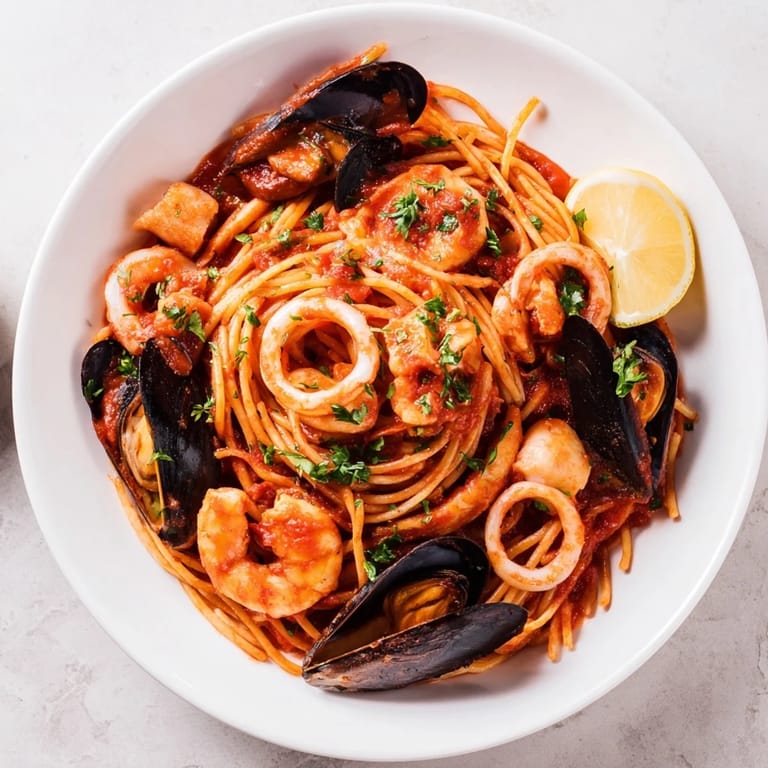
Save There was a moment about halfway through that dinner when everyone stopped talking and just ate, which is the highest compliment a cook can receive. The sauce had that glossy, clinging quality, each piece of seafood was exactly the texture it should be, and the lemon was hitting at just the right moment to brighten everything without making it sour. That's when I knew this wasn't just a recipe I'd followed—it was something that had become mine.
Why Seafood Marinara Matters
This dish exists in that rare space where it's both approachable and impressive, which means you can make it on a regular Thursday night for yourself or pull it out when you want to feed someone something that tastes like you actually care. There's no fancy technique hiding in here, just good ingredients treated with respect and timed well. What makes it special is the presence of four different seafood textures and tastes—the sweetness of scallops, the brininess of mussels, the tender chew of squid, and the firm snap of shrimp—all coming together in one sauce that somehow makes each one taste more like itself.
The Wine Question
I learned this the hard way by using a wine I wouldn't actually drink: the wine you cook with matters as much as the wine you serve, because the heat doesn't erase bad taste, it concentrates it. Choose something crisp and clean—a Pinot Grigio, a Sauvignon Blanc, even an Albariño if you're feeling fancy—something that makes you happy when you taste it straight from the glass. The wine you use becomes part of the sauce's personality, so choose accordingly. And yes, you should pour yourself a glass while you cook; the whole process is more pleasant that way.
Customizing Without Losing the Soul
This recipe is flexible in all the right ways and stubborn about the parts that matter. You can absolutely swap the seafood based on what's good that day—clams instead of mussels, white fish in place of scallops, larger shrimp if that's what's available—but the ratio of seafood to sauce and the cooking times should stay roughly the same. You can add a splash of seafood stock if you want deeper ocean flavor, or a pinch more red pepper flakes if you like heat, and these changes will only improve things. What you shouldn't do is skip the pasta water or the final lemon, because those are what transform this from good into unforgettable.
- If you can't find squid, use more of whichever seafood you do have, staying around 600g total.
- A handful of fresh spinach stirred in at the end adds color and a green note that plays beautifully with seafood.
- Some people add a splash of fish sauce or soy sauce for extra umami depth; try it if you're feeling adventurous.
 Save
Save This recipe has become my answer to a hundred different moments—when someone needs comfort food, when I want to impress without stress, when the seafood at the market is so beautiful I have to do something worthy of it. It's honest cooking that tastes like care.
Recipe FAQ
- → What types of seafood are used?
This dish features shrimp, mussels, squid rings, and sea scallops for a diverse seafood blend.
- → Can I use a different pasta?
Spaghetti or linguine work best, but other long pasta like fettuccine can be substituted.
- → How to adjust the sauce consistency?
Reserved pasta water can be added to loosen the marinara sauce to desired thickness.
- → What herbs flavor the sauce?
Dried oregano and basil provide the classic Italian herbal notes to the tomato base.
- → Is white wine necessary in the sauce?
White wine adds depth and acidity, but can be omitted or replaced with seafood stock if preferred.
- → How long does the seafood take to cook?
Squid and scallops simmer for about 2 minutes; shrimp and mussels cook covered for 3-4 minutes until shrimp turn pink and mussels open.