 Save
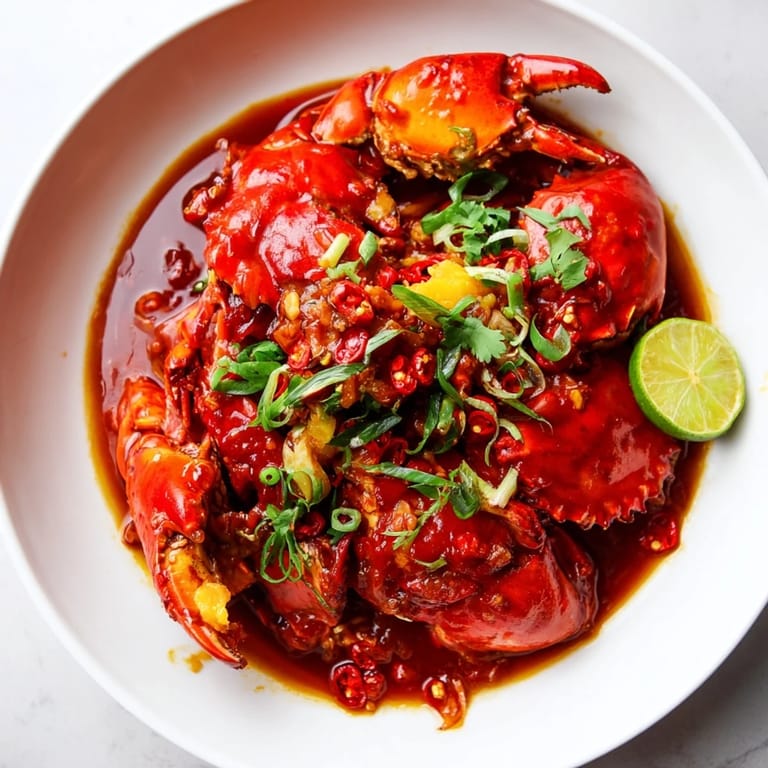
Save The first time I bit into chili crab at a hawker stall in Singapore, I understood why locals camp out for hours waiting for their turn. The sauce clung to every crack of the shell, balancing heat with sweetness in a way that made me reach for another piece before swallowing. What struck me most wasn't just the flavor—it was the chaos of it all, the way everyone around me ate with their hands, sauce dripping onto napkins, laughing between bites. That memory stayed with me, and eventually I decided to recreate it in my own kitchen, learning that this dish is less about precision and more about courage and a good sense of humor.
I made this for a dinner party once, and my friend Sarah—who claims she doesn't like seafood—ate four pieces before admitting she'd been wrong her whole life. She was so intent on cracking into the shells and fishing out the meat that she barely looked up from her plate. By the end of the meal, we were all sticky-fingered and happy, and she asked for the recipe before even trying dessert. That's when I knew this dish had real power.
Ingredients
- Mud crabs (2 whole, about 1.5 kg total): These are the heart of the dish—their sweet, delicate meat absorbs the sauce beautifully, though blue swimmer or Dungeness crab work in a pinch.
- Vegetable oil (3 tbsp): Use something neutral that won't compete with the other flavors.
- Onion (1 medium, finely chopped): This builds the flavor base and mellows as it cooks.
- Garlic (5 cloves, minced): Don't skimp—garlic is the backbone of this sauce.
- Red chilies (3, deseeded and chopped): These give heat and a fruity undertone that balances the acidity.
- Bird's eye chilies (2, chopped): Tiny but mighty; adjust according to how much heat you actually enjoy.
- Fresh ginger (2 cm piece, minced): This adds a subtle warmth that ties everything together.
- Tomato ketchup (250 ml): It seems simple, but it's the secret to that glossy, unified sauce.
- Chili sauce (2 tbsp, Sriracha or sambal oelek): Choose one you genuinely like eating on its own.
- Sugar (1 tbsp): Just enough to round out the heat and acidity.
- Soy sauce (1 tbsp): A touch of umami that deepens everything.
- Fish sauce (1 tsp): Trust this; it's what makes people say 'what is that flavor?' in the best way.
- Chicken or seafood stock (250 ml): Seafood stock is ideal, but chicken won't let you down.
- Cornstarch slurry (1 tsp cornstarch mixed with 1 tbsp water): This thickens the sauce to a glossy cling rather than a runny pool.
- Eggs (2 large, lightly beaten): These create those silky ribbons that catch in every crevice of sauce.
- Spring onions (2, sliced): A bright finish that cuts through richness.
- Fresh cilantro (chopped): Optional, but it adds a fresh note that makes you want another bite.
- Lime wedges (to serve): A squeeze of acid at the end is non-negotiable.
Tired of Takeout? 🥡
Get 10 meals you can make faster than delivery arrives. Seriously.
One email. No spam. Unsubscribe anytime.
Instructions
- Build the flavor base:
- Heat the oil in your wok or deep pan until it shimmers slightly. Add the onion and let it soften for a couple of minutes—you want it translucent and mellow, not brown. This is your canvas.
- Toast the aromatics:
- Now add the garlic, ginger, and both types of chilies. The kitchen will fill with a scent that's herbaceous and spicy all at once. Stir constantly for 2 to 3 minutes until the raw edge is gone and everything smells toasted and alive.
- Introduce the crabs:
- Add the crab pieces and toss them around in the oil and aromatics for 3 to 4 minutes. You'll see the shells begin to turn from brown to red—that's your signal they're warming through and starting to cook. Don't rush this; let the crab's natural sweetness mingle with what's already in the pan.
- Bring in the sauce:
- Pour in the ketchup, chili sauce, sugar, soy sauce, fish sauce, and stock all at once. Stir well, making sure nothing sticks to the bottom. The sauce should smell complex—sweet, spicy, and salty all dancing together.
- Simmer and cook the crab:
- Bring everything to a boil, then lower the heat and let it bubble gently uncovered for 10 to 12 minutes. Turn the crab pieces occasionally so they cook evenly and absorb the sauce. The liquid will reduce slightly and deepen in color.
- Thicken the sauce:
- Stir in your cornstarch slurry—just a little, enough to make the sauce cling rather than pool. This takes maybe a minute.
- Create the egg ribbons:
- Slowly drizzle the beaten eggs into the bubbling sauce while stirring gently with a spoon or chopsticks. They'll cook in delicate strands almost instantly, catching pockets of sauce and adding a silky richness.
- Plate and serve:
- Remove from heat, scatter the spring onions and cilantro over top, and serve immediately with lime wedges, napkins (so many napkins), and steamed buns or rice to soak up every drop.
 Save
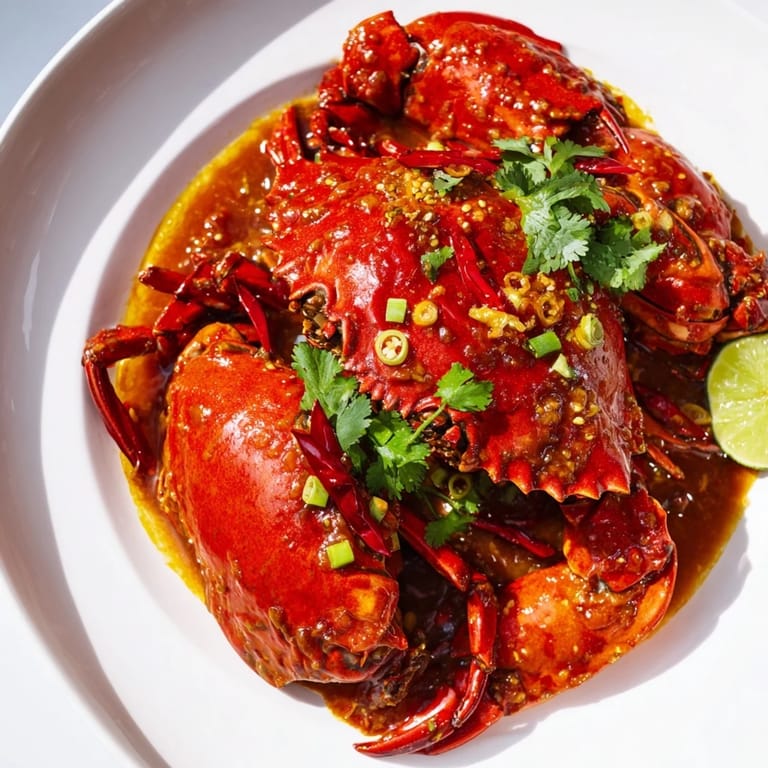
Save What I love most about this dish is that it's as much about the experience as it is about the food. There's something about eating with your hands, cracking shells, and getting covered in sauce that breaks down walls and makes everyone at the table feel like family. Once you've made this, you'll understand why Singaporeans fight over it.
The Sauce Philosophy
The genius of chili crab sauce is that it balances four distinct tastes in perfect tension. The ketchup brings sweetness and body, the chilies provide heat and brightness, the fish sauce adds umami depth, and the lime (added at the table) brings acidity that wakes everything up. Don't think of it as complicated; think of it as four simple elements that were made to be together. Once you grasp this balance, you can adjust it to your preference—more sugar if you want it sweeter, more chili if you want more heat, more lime if you want brightness.
Crab Handling and Selection
Live mud crabs are ideal because their meat is sweeter and more delicate than frozen ones. When you buy them, ask the fishmonger to clean and cut them for you if you're squeamish—there's no shame in that, and it saves you time. If you must do it yourself, place the crab in the freezer for 15 minutes to make it less active, then work quickly with a sharp knife. The pieces should be substantial enough to have meat inside but small enough to maneuver with chopsticks.
Serving and Storage
This dish is best eaten the moment it's finished, when the sauce is glossy and the crab is warm. The sauce can be made a day ahead and refrigerated, then reheated gently with the crab pieces, but the eggs should always be added fresh. Leftovers keep for two days in the fridge and taste wonderful over rice the next day, though the texture won't be quite as pristine.
- Pair this with cold beer or a crisp white wine to cut through the richness.
- Steamed mantou (Chinese buns) are traditional, but jasmine rice works beautifully too.
- Eat this with people you trust—it's not a neat dish, and that's part of its charm.
 Save
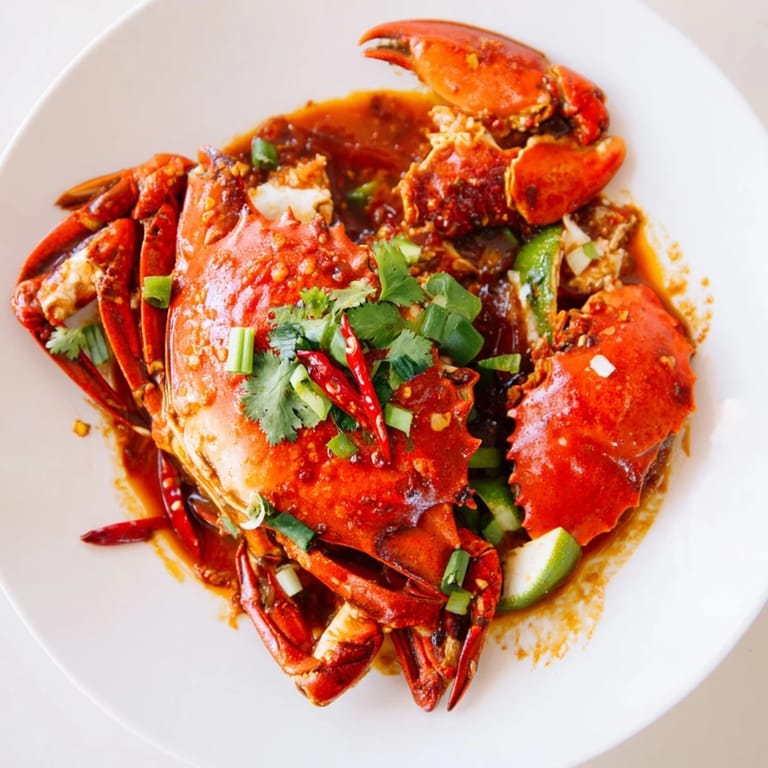
Save Make this when you want dinner to feel like celebration, because that's what chili crab is. It's messy, loud, and utterly worth it.
Recipe FAQ
- → What type of crab is best for this dish?
Live mud crabs work best, but blue swimmer or Dungeness crabs are great alternatives if mud crab isn't available.
- → How can I adjust the heat level?
Modify the number of birds eye chilies to increase or reduce spiciness according to your preference.
- → What are ideal side accompaniments?
Steamed buns (mantou) or plain rice complement the rich, tangy sauce perfectly.
- → How is the sauce thickened?
A cornstarch slurry is added to slightly thicken the sauce, and beaten eggs are stirred in to form silky ribbons.
- → Are there any common allergens to note?
This dish contains shellfish, eggs, soy, and fish elements, so check for allergies before serving.