 Save
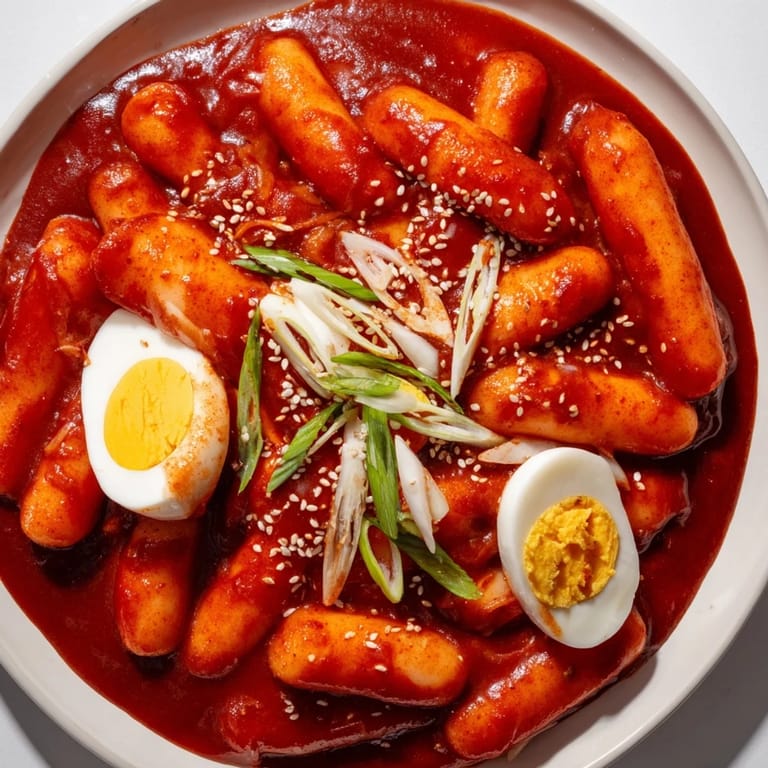
Save The first time I watched tteokbokki being made at a vendor's stall in Seoul, I was mesmerized by the way the rice cakes softened and danced in that deep red sauce, glistening with heat. A friend handed me a stick with a single cake on it, and the combination of chewy, spicy, and slightly sweet was so immediate and honest that I understood right then why this humble street food had such loyal devotees. I spent the next year trying to recreate that exact moment in my own kitchen, tweaking the sauce ratio and learning when to stop stirring so the cakes wouldn't fall apart. Now it's become my go-to when I want something comforting that also feels a little daring.
I made this for my roommate on a cold Tuesday night when she was stressed about work, and watching her face light up after the first bite reminded me that food doesn't need to be complicated to feel like someone truly cared. She kept going back for more, dunking the rice cakes in the remaining sauce, and we ended up talking for hours. That's when I realized tteokbokki isn't just dinner—it's a small act of showing up for someone.
Ingredients
- Rice Cakes (Tteok): The 500 grams of cylindrical rice cakes are the foundation—if they're cold or stiff, a quick warm soak transforms them into something tender without making them mushy, which is the delicate balance you're after.
- Gochujang and Gochugaru: These two aren't interchangeable; gochujang is the fermented paste that gives the sauce depth and slight sweetness, while gochugaru adds texture and heat, so don't skip either one.
- Soy Sauce: Two tablespoons brings umami without making the sauce salty, though you should taste as you go if you're using low-sodium.
- Sugar and Honey: Together they balance the heat and saltiness, but the honey also helps the sauce cling to the rice cakes in a way plain sugar can't quite manage.
- Garlic: Minced fresh garlic is non-negotiable—it should be fragrant but not burnt, so add it to the broth before everything else.
- Sesame Oil: The toasted kind adds a nutty finish that makes people ask if there's something else you put in there.
- Broth Base: The kombu and anchovies create a clear, delicate stock that tastes like the ocean in the best possible way; if you want vegetarian, skip the anchovies and let the kombu do the work.
- Boiled Eggs: Four large eggs give you texture and richness; they're almost creamy once they've been soaking in the sauce.
- Onion and Green Onion: The raw onion adds a sharp bite that cuts through the sauce richness, while the green onion scattered on top brings freshness and color.
Tired of Takeout? 🥡
Get 10 meals you can make faster than delivery arrives. Seriously.
One email. No spam. Unsubscribe anytime.
Instructions
- Wake up your rice cakes:
- If they've been in the fridge or freezer, soak them in warm water for ten minutes so they're pliable and ready to drink in the sauce. Cold rice cakes will seize up and turn gummy instead of chewy.
- Build your broth:
- Drop the kombu and anchovies into cold water and bring it gently to a boil, letting them simmer for ten minutes so their flavors fully surrender to the liquid. Then fish out the solids—you want a clear, clean broth, not a cloudy one.
- Get your eggs ready:
- While the broth is happening, boil four eggs for eight to nine minutes depending on how runny you want the yolk, then shock them in cold water right away so the cooking stops. The moment you peel one and see that soft, jammy center, you'll understand why they belong in this dish.
- Make the red magic:
- Stir the gochujang, gochugaru, soy sauce, sugar, honey, garlic, and sesame oil directly into your hot broth, making sure everything dissolves completely so there are no lumps of paste hiding at the bottom. This is when the sauce starts looking and smelling like the real thing.
- Bring it all together:
- Add the drained rice cakes, sliced onion, and fish cake if you're using it, then keep the heat at medium and stir occasionally for ten to twelve minutes until the sauce thickens and coats everything. The rice cakes will soften and start to stick together a little, which is exactly what you want.
- Finish with the eggs:
- Add those peeled eggs back in for the last two to three minutes just to heat them through—they don't need to cook, just warm up and soak in all that spicy, sweet, savory goodness.
- Garnish and serve:
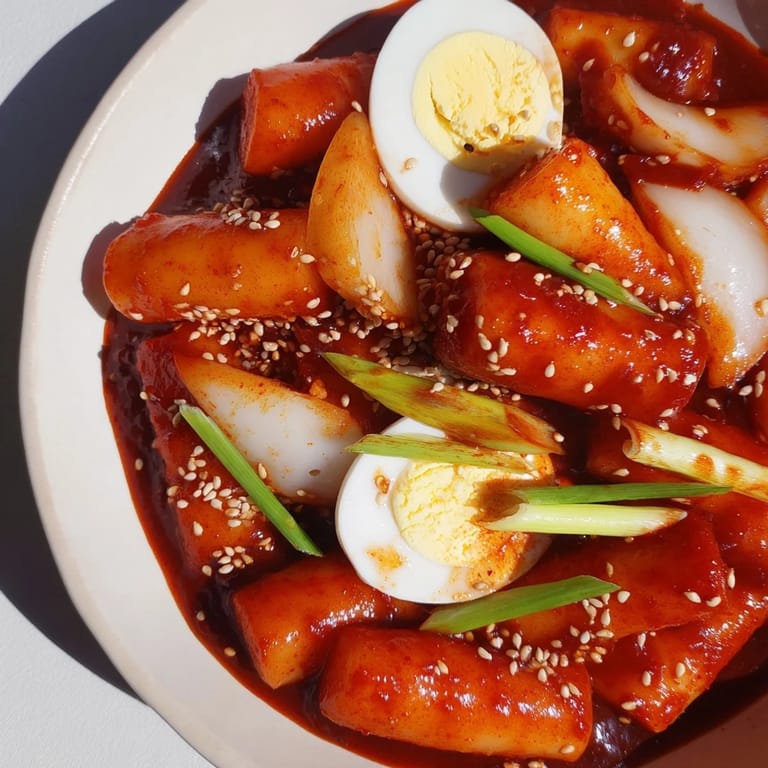
- A handful of sliced green onion and a sprinkle of toasted sesame seeds on top makes it look intentional and homemade, the kind of touch that makes people think you spent hours on this.
 Save
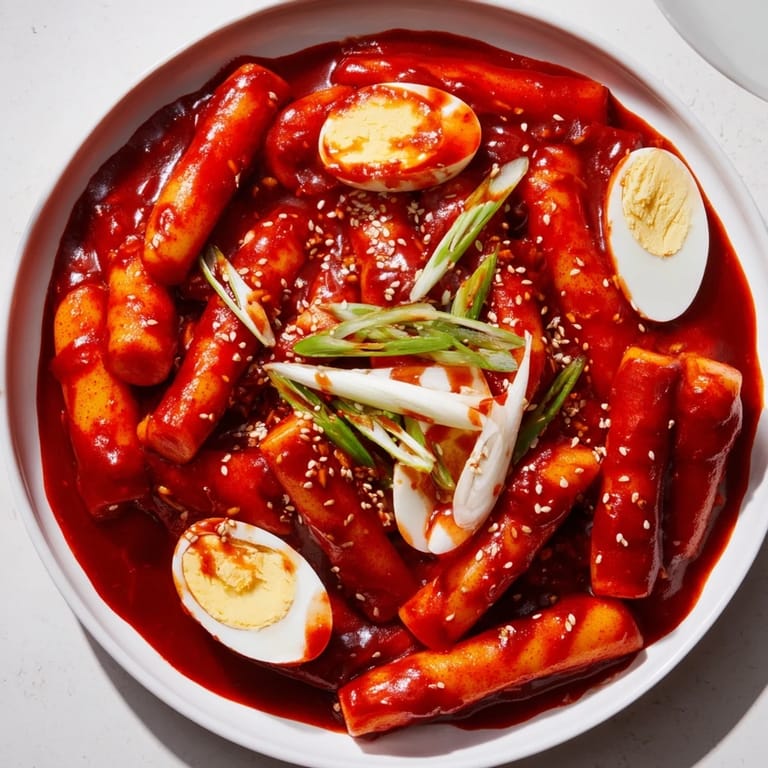
Save There's a particular kind of warmth that comes from eating something spicy when the weather outside is cold—your nose clears, your hands feel alive around the warm bowl, and suddenly the world feels smaller and more manageable. Tteokbokki does that to me every single time.
The Secret of Perfect Sauce Balance
The sauce is where tteokbokki lives or dies, and the secret isn't actually a secret at all—it's the combination of gochujang's fermented funk, gochugaru's texture, and the honey's subtle sweetness all working together. I learned this by tasting sauce at different stages instead of just following ratios, and now I can tell by color and smell whether mine is getting close. The sauce should smell almost aggressive when you first add the gochujang, but after simmering it mellows into something complex that makes you want to dunk everything into it.
Why the Broth Matters More Than You Think
Most people want to skip the broth step and just mix sauce into water, but those few extra minutes with the kombu and anchovies create a foundation that tastes like someone who knows what they're doing made it. Even vegetarian versions benefit from kombu spending quiet time in hot water—it releases umami that your sauce will build on top of. Once you taste the difference, you won't go back to the shortcut version.
Improvisation and Serving Ideas
The beauty of tteokbokki is that it's forgiving about add-ins—some nights I throw in thinly sliced cabbage for crunch, other times ramen noodles if I'm feeling like a hybrid dish, and occasionally carrots for sweetness. You can make it lighter by using less gochugaru or richer by adding a splash of gochugaru oil at the end. Serve it hot in a shallow bowl with a spoon and maybe some rice on the side, or go full street-food mode and eat it straight from a stick while walking around your kitchen.
- Cabbage or carrots add texture and help balance the heat if you're spice-sensitive.
- A bit of gochugaru oil drizzled on top at the very end takes it from good to unforgettable.
- Leftover tteokbokki can be reheated gently with a splash of water, and it actually gets better the next day as the flavors deepen.
 Save
Save This is one of those recipes that tastes like home no matter where you're cooking it, and that's the real magic. Make it once and you'll understand why I keep coming back to it.
Recipe FAQ
- → How do I get the rice cakes soft and chewy?
Soak the rice cakes in warm water for about 10 minutes before cooking if they are hard or refrigerated, then simmer gently until tender but not mushy.
- → Can I make a vegetarian version?
Yes, omit the anchovies and fish cake, and use vegetable broth instead to keep it flavorful and vegetarian-friendly.
- → What gives the sauce its bold flavor?
The combination of gochujang, gochugaru, soy sauce, garlic, and toasted sesame oil creates a rich, spicy-sweet, and umami-packed sauce.
- → How long should I boil the eggs?
Boil the eggs for 8 to 9 minutes to achieve a firm, tender yolk perfect for simmering in the sauce.
- → What toppings work best with this dish?
Sliced green onions and toasted sesame seeds add fresh aroma and a nutty crunch that complement the richness of the sauce.