 Save
Save The first time I tasted mango sticky rice was at a tiny stall in Bangkok during a sweltering afternoon, and I watched the vendor's hands move with such practiced ease—like they'd made this thousands of times without thinking. That moment of sweetness melting on my tongue, the coconut rice warm and yielding, changed how I thought about dessert entirely. It took me years to recreate that magic in my own kitchen, but when I finally nailed it, I understood why this dish has captured hearts across Thailand for generations.
I made this for friends who'd never tried it before, and watching their faces light up when they took that first bite reminded me why food matters so much—it's a silent conversation between someone's effort and someone else's joy. One friend asked if it was complicated, and I loved telling her no, just patient. That's when I realized this recipe is really about trust: trusting the rice to absorb the coconut, trusting the mango to be sweet, trusting that simplicity done right is always enough.
Ingredients
- Glutinous (sweet) rice, 1 cup: This isn't regular rice—the starch composition makes it sticky and creamy when cooked, not mushy. Soak it generously; this step hydrates the grains so they cook evenly and turn silky rather than dense.
- Coconut milk (full fat), 1 cup: Don't reach for lite versions; the fat is what gives the sauce its luxurious coating and that signature richness. Shake the can well before opening, as the cream separates.
- Granulated sugar, 1/4 cup: This dissolves quickly into the warm coconut milk and sweetens without overpowering the mango's natural brightness.
- Salt, 1/4 tsp: A small pinch that seems insignificant until you taste the difference—it balances sweetness and makes every flavor pop.
- Ripe mangoes, 2 large: The mango is the star, so choose ones that yield slightly to gentle pressure and smell floral and honeyed. Unripe mangoes will disappoint you; there's no fixing that.
- Coconut cream and toasted sesame seeds or mung beans (optional): These garnishes add visual beauty and textural surprise, turning a simple plate into something you want to photograph.
Tired of Takeout? 🥡
Get 10 meals you can make faster than delivery arrives. Seriously.
One email. No spam. Unsubscribe anytime.
Instructions
- Rinse and soak the rice:
- Run cold water over the glutinous rice, stirring it with your fingers until the water runs clear—this removes excess starch that would make the rice gluey rather than creamy. Soak it in fresh water for at least 4 hours, or overnight if you're planning ahead; patient soaking is what separates mediocre sticky rice from the kind that melts on your tongue.
- Steam the rice until tender:
- Drain the soaked rice and line your steamer basket with cheesecloth, spreading the rice in an even layer. Steam for 25–30 minutes until the grains are completely translucent and soft enough to squish between your fingers, which means they're ready to absorb the coconut sauce without falling apart.
- Warm the coconut sauce gently:
- Pour coconut milk, sugar, and salt into a small saucepan and stir over medium heat until the sugar dissolves completely—you're looking for a silky, glossy texture. Never let it boil, as heat can cause the coconut to separate and lose its smooth quality.
- Coat the rice with sauce:
- Transfer your steamed rice to a bowl and pour in three-quarters of the warm coconut sauce, folding gently to coat every grain without crushing them. Cover the bowl and let it sit for 10–15 minutes, allowing the rice to drink in the coconut flavor and become even more luxurious.
- Prepare the mango:
- Peel your ripe mangoes with a sharp knife or vegetable peeler, then slice lengthwise around the flat pit, creating two large cheeks. Slice each cheek into thin strips that fan beautifully when arranged.
- Plate and drizzle:
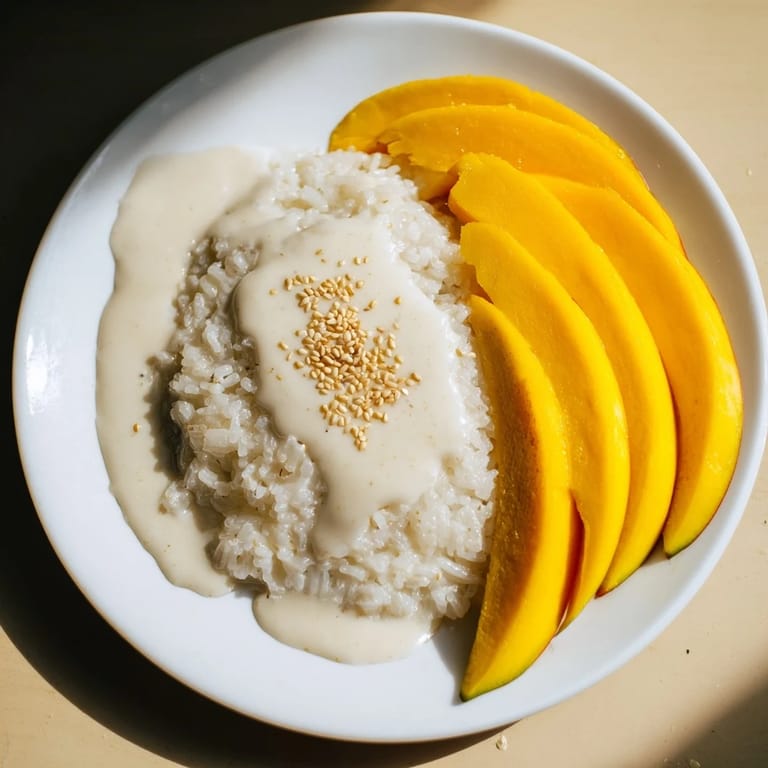
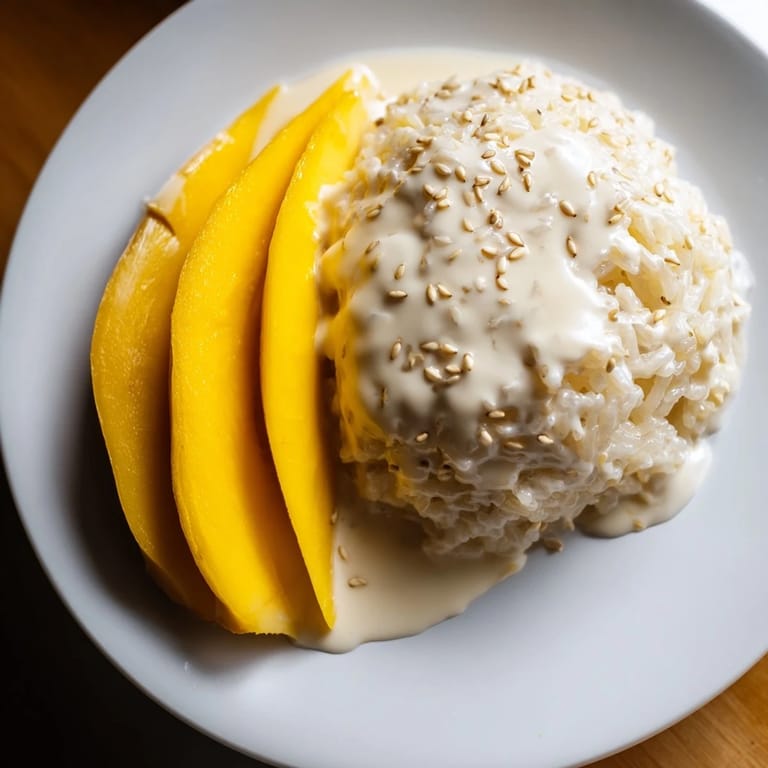
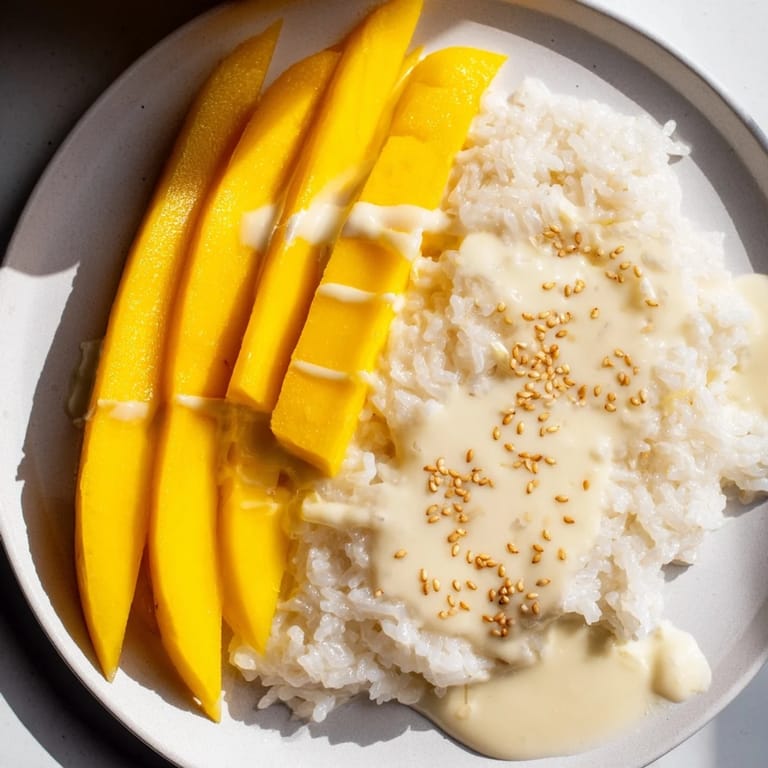
- Mound the warm sticky rice onto a plate, arrange mango slices alongside in overlapping lines, and drizzle the remaining coconut sauce over everything. Top with a spoonful of coconut cream and a scatter of toasted sesame seeds or mung beans if you're using them, which adds a subtle crunch that plays against the softness below.
 Save
Save There's a moment, a few minutes after eating this, where the sweetness lingers and you feel completely satisfied—not heavy, just content. That feeling is why I keep making it, and why I think everyone should experience it at least once.
The Secret to Perfect Sticky Rice
The soaking step feels like it takes forever, but it's what separates restaurant-quality sticky rice from the kind that's gummy in the center and dry at the edges. When I first started making this at home, I tried skipping the soak to save time, and the rice came out dense and unforgiving. Since then, I've learned to plan ahead—soak it overnight while I sleep, and the morning feels less rushed. The rice grains should look almost translucent after soaking, not opaque like they started; that's your signal they're ready to steam.
Choosing and Ripening Mangoes
A ripe mango is soft enough to give way under gentle thumb pressure, but not so soft it bruises easily. If you're buying mangoes that aren't quite ripe, place them in a paper bag at room temperature for a day or two—ethylene gas they release naturally will speed ripening. The smell test is reliable: a truly ripe mango has a honeyed, floral aroma that fills your kitchen. If it smells like a green plant, wait longer. I've learned to buy mangoes a few days early and let them sit on my counter, checking them like I'm caring for a delicate plant, because the payoff in flavor is absolutely worth it.
Variations and Personal Touches
Once you master the basic version, this dessert becomes a canvas for creativity. Some cooks add a whisper of pandan extract to the rice for a subtle, fragrant twist that tastes almost like a secret ingredient. Others swap palm sugar for regular sugar, which deepens the flavor and gives the sauce a caramel-like warmth that's different but equally beautiful. I've even seen friends make savory versions with shallots and fish sauce, though that ventures into territory more like sticky rice with mango on the side than the traditional sweet pairing. Experiment, taste as you go, and trust that sticky rice is forgiving enough to welcome your adjustments.
- Try a drop of rose water or cardamom in the coconut sauce for unexpected fragrance.
- Toast your own sesame seeds fresh, as pre-toasted seeds lose their nuttiness after sitting in the pantry.
- Drizzle a tiny bit of extra virgin coconut oil over the top for glossy visual appeal and deeper coconut flavor.
 Save
Save This dessert has a way of slowing people down—there's no rushing through mango sticky rice because it demands to be savored. I hope it becomes something you make again and again, each time a little more confident, until it feels as natural in your kitchen as it is in Bangkok.
Recipe FAQ
- → How is the sticky rice prepared for this dish?
The sticky rice is thoroughly rinsed and soaked for several hours before steaming until tender, ensuring the right texture and softness.
- → What gives the rice its creamy texture and flavor?
The rice is coated with a warm coconut sauce made from full-fat coconut milk, sugar, and a pinch of salt, which it absorbs for a rich and creamy finish.
- → Can any other ingredients be used to enhance the aroma?
Pandan leaves can be added during steaming to impart a fragrant, aromatic note that complements the coconut and mango flavors.
- → What are some optional garnishes for this dish?
Coconut cream drizzle and toasted sesame seeds or mung beans can be added as garnishes for extra richness and crunch.
- → How should this dish be served for best taste?
Serve fresh with ripe mango slices arranged beside the coconut-infused sticky rice, drizzled with remaining coconut sauce to enjoy the full harmony of flavors.
- → Is this dish suitable for specific dietary needs?
Yes, it is vegetarian and gluten-free, making it accessible for various dietary preferences.