 Save
Save I still remember the first time I encountered an umami bomb board at a trendy Asian fusion restaurant in Seattle. I was captivated by how the chef had transformed simple ingredients into this stunning visual landscape, each component carefully fanned and arranged like edible art. The moment I tasted that combination of salty, savory, and deeply rich flavors, I knew I had to recreate this magic at home. Now, whenever I assemble this board for friends, I watch their faces light up the same way mine did that first time.
I made this board for my sister's birthday dinner last spring, and what started as an appetizer became the entire conversation. Everyone was so engaged in mixing and matching flavors, dipping and tasting, that the main course almost felt unnecessary. That's when I realized this dish isn't just about the food, it's about creating a moment where people slow down and really taste.
Ingredients
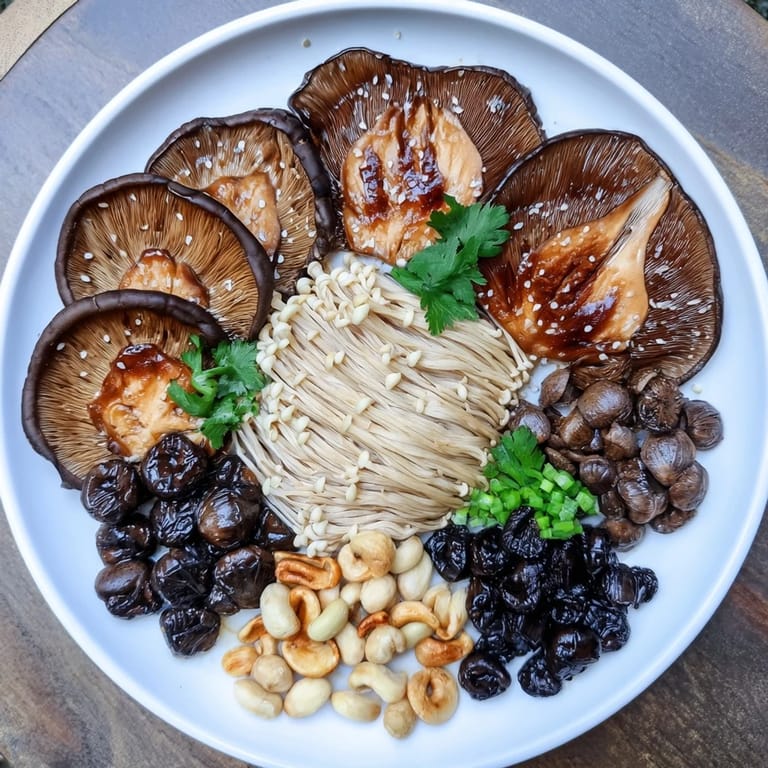
- Shiitake mushrooms: These are your umami backbone, packed with glutamates that make everything taste richer. Slice them consistently so they cook evenly and develop that beautiful golden color.
- King oyster mushrooms: They have a meatier texture that holds up beautifully when sautéed and creates satisfying bites alongside the more delicate varieties.
- Enoki mushrooms: Keep these separate and barely blanched to preserve their delicate, almost noodle-like texture and subtle flavor.
- Sesame oil: Just a tablespoon brings warmth and nuttiness that ties the whole board together. Don't skip this or use regular oil instead.
- Soy sauce or tamari: This is your seasoning secret, adding that deep savory note that defines the entire dish.
- Mirin: A touch of sweetness that balances the saltiness and brings complexity to the mushrooms.
- Roasted seaweed snacks: These provide crunch and oceanic umami that you can't get anywhere else. They're the first thing people reach for.
- Nori strips: Cut fresh just before serving to keep them crispy and prevent them from absorbing moisture from the board.
- Pickled daikon radish: The bright acidity cuts through the richness and cleanses your palate between bites.
- Pickled ginger: Adds a gentle heat and zingy freshness that wakes up your taste buds.
- Edamame: Steam them until just tender, then shell them for easy snacking. They add protein and a pop of green color.
- Black garlic: These sweet, umami-packed cloves are worth seeking out. They add sophistication and a jammy depth.
- Fermented black beans: Rinse them well to control the saltiness, then use them as pockets of intense umami throughout the board.
- Roasted cashews or peanuts: Choose whichever you prefer, they add that crucial crunch and richness that makes this board feel abundant.
- Fried shallots: These golden bits stay crispy and add an oniony sweetness that elevates the whole presentation.
- Fresh coriander and chives: Don't underestimate these green herbs, they add brightness and prevent the board from feeling too heavy.
- Ponzu and spicy sesame dressing: These are your flavor amplifiers, meant for dipping and customizing each bite to your preference.
Tired of Takeout? 🥡
Get 10 meals you can make faster than delivery arrives. Seriously.
One email. No spam. Unsubscribe anytime.
Instructions
- Heat your oil and get cooking:
- Pour that sesame oil into your skillet over medium-high heat and let it shimmer. You'll smell that toasted, nutty aroma that signals you're ready. Add your sliced shiitake and king oyster mushrooms in a single layer. Don't stir them right away, let them sit for a minute or two until they develop that beautiful golden crust.
- Build the flavor:
- Toss the mushrooms around and let them sauté for about four to five minutes total. They'll darken and soften, releasing their natural juices. When they look caramelized at the edges, that's when you add your soy sauce and mirin. Give everything a good toss, cook for just one more minute, then remove from heat. The residual heat will finish the cooking while you prep everything else.
- Handle the delicate ones:
- Bring a pot of water to a boil and gently drop in those enoki mushrooms for just thirty seconds. This blanches them slightly while keeping them tender and bright. Drain them immediately and spread them on a clean kitchen towel to cool. You want them to stay somewhat separated so they dry out a bit.
- Begin your masterpiece:
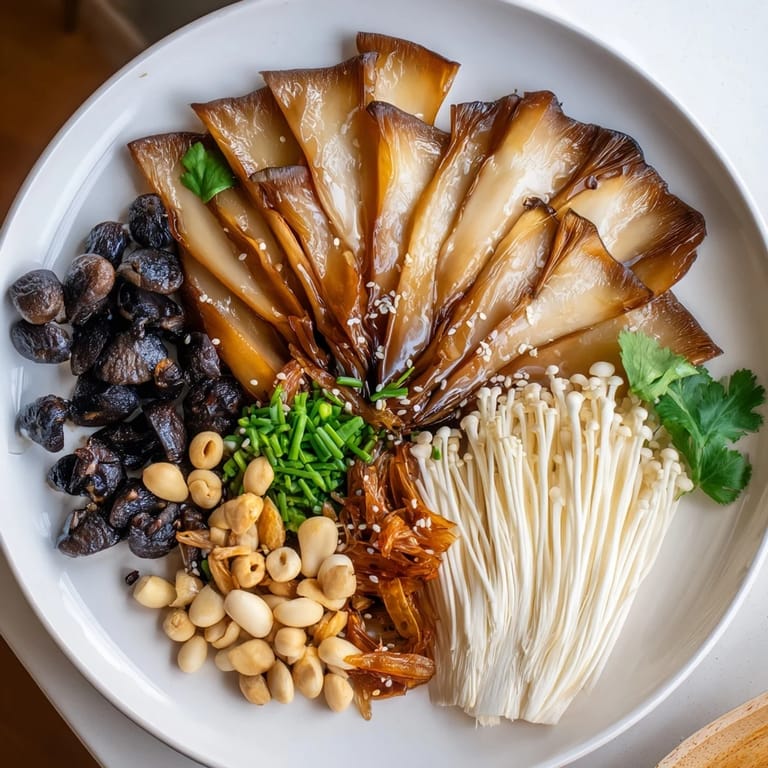
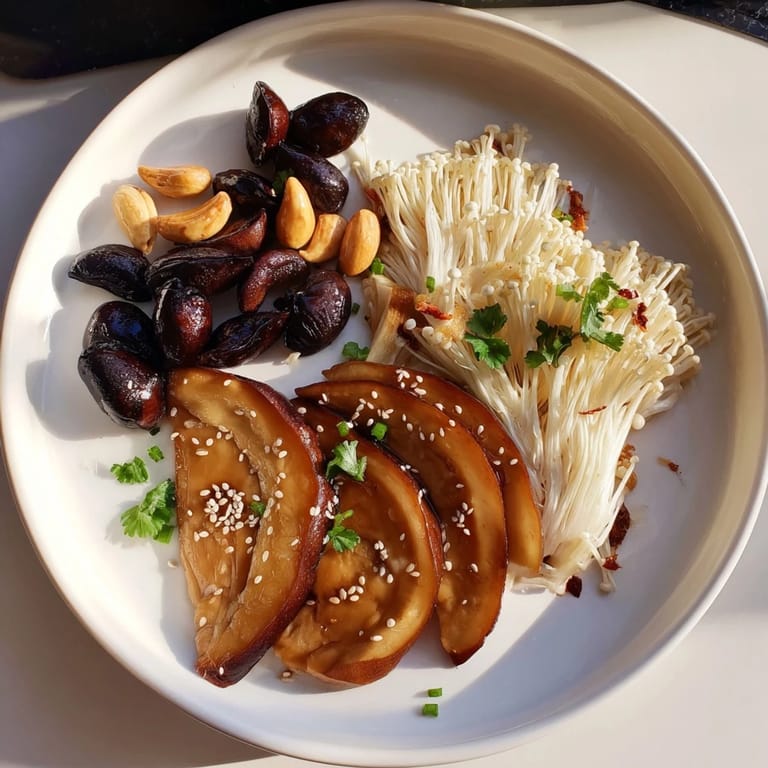
- Find your largest board or platter, this is your canvas. Start arranging your cooled mushrooms in overlapping fan shapes. Picture how roof tiles overlap, that's the effect you're going for. The visual drama comes from these geometric arrangements, so take your time and arrange them tightly so they lean slightly against each other.
- Add your seaweed element:
- Create additional fans using your roasted seaweed snacks and nori strips, positioning them between and around the mushroom fans. The seaweed salad can fill in smaller gaps. Think of this like you're painting with different textures and colors across your board.
- Fill the empty spaces:
- Now comes the fun part of tucking in all those little umami treasures. Create small piles of pickled daikon, pickled ginger, edamame, black garlic cloves, and fermented black beans in the spaces between the fans. Arrange them so the colors and shapes contrast beautifully.
- Add the final touches:
- Scatter your roasted nuts across the board, followed by a generous sprinkle of fried shallots. Toss in those fresh coriander leaves and chopped chives for pops of green. If you're using red chili, slice it thinly and place the slices strategically for color contrast.
- Set up your sauces:
- Pour your ponzu sauce and spicy sesame dressing into small bowls and nestle them into spaces on the board or place them nearby. These are the keys to customization, so make sure they're easily accessible.
- The grand finale:
- Step back and look at your creation. Does it feel abundant and inviting? Does your eye travel around the whole board? Serve immediately while everything is at its best texture and temperature. Encourage your guests to combine flavors, dip as desired, and create their own flavor combinations.
 Save
Save What moved me most was when my elderly neighbor tasted this board and told me it reminded her of street food she ate in Tokyo fifty years ago. In that moment, this simple arrangement of vegetables and mushrooms became a bridge between her memories and the present. That's when I understood that feeding people isn't just about nourishment, it's about connection.
The Art of Arrangement
The way you arrange this board is just as important as the ingredients themselves. I learned this the hard way at my first dinner party when I just piled everything randomly. This time, think of it as creating visual rhythm and balance. Start with your largest components like the mushroom fans, then work down to smaller elements. Leave some white space on the board, it helps the arrangement breathe and makes each component feel more special. The fans should feel intentional, not accidental. When people see the care you put into the presentation, they taste it differently.
Building Your Umami Layers
Umami is often called the fifth taste, and this board is basically a lesson in layering it. The soy sauce brings one type of umami, the mushrooms bring another, the seaweed adds oceanic notes, and the fermented black beans contribute their own savory depth. When you taste everything together, these flavors don't compete, they harmonize. It's like a good friend group where everyone brings something different but somehow it all works perfectly.
Customizing for Your Guests
One of my favorite things about this board is how adaptable it is. If someone is vegan, you just make sure your sauces and pickles check out, which they usually do. If someone loves heat, they load up on the chili slices and spicy dressing. If someone prefers lighter flavors, they can focus on the fresh herbs and seaweed. This is a board that celebrates individuality while keeping everyone eating together. You can swap mushroom varieties, use different nuts, add marinated tofu or tempeh for protein, or even throw in some fresh fruits like apple slices for unexpected brightness.
- Always double-check your pickles and sauces for hidden animal products if you're serving vegans.
- Fresh herbs can be prepped ahead, but add them only at the very last minute so they stay vibrant.
- Consider offering both a mild and spicy sauce option so everyone finds their perfect dip.
 Save
Save This board has become my answer to the question, 'What do I bring to a potluck?' It's elegant without being fussy, substantial enough to be satisfying, and it always sparks conversation. More importantly, it reminds me why I love cooking in the first place.
Recipe FAQ
- → What mushrooms work best for the umami board?
Shiitake, king oyster, and enoki mushrooms provide a balance of texture and earthy flavors, ideal for sautéing and raw presentation.
- → Can this board be adapted for a vegan diet?
Yes, just ensure all sauces and pickles are plant-based and consider adding grilled tofu or marinated tempeh for extra protein.
- → How do the dipping sauces complement the flavors?
Ponzu adds citrusy brightness, while spicy sesame dressing contributes nutty heat, both enhancing the mushrooms and pickled elements.
- → What is the purpose of arranging ingredients in overlapping fans?
It creates an artistic, inviting presentation that showcases each ingredient’s texture and color, encouraging exploration.
- → Are there suggested pairings for this dish?
Chilled sake or green tea are suggested to balance the rich umami and refreshing pickled components.