 Save
Save I'll never forget the first time I assembled a platter like this for a potluck at my friend Maya's apartment. I'd just started exploring plant-based eating and wanted to bring something that felt celebratory rather than apologetic. As I arranged those vivid rainbow carrots next to jewel-toned berries, something clicked—this wasn't just food, it was edible art that happened to be entirely vegan. Maya's guests circled that platter all evening, and I realized that the most beautiful meals are often the simplest ones, built on the premise that fresh, whole ingredients speak for themselves.
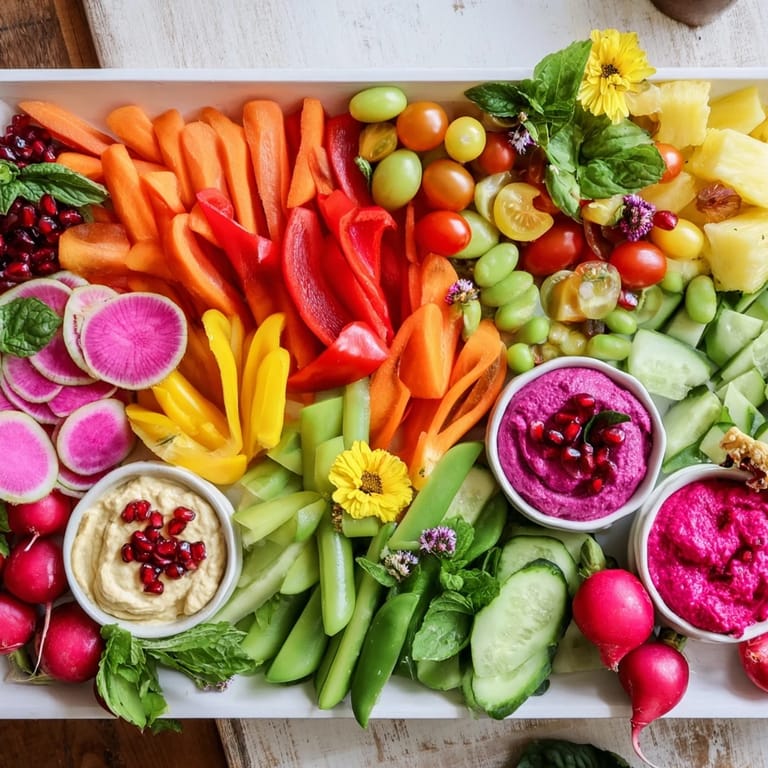
I learned the true power of this platter when my sister surprised me with it at my birthday dinner. She'd arranged it with such care, clustering the purples together, then the oranges, then the greens—it was almost too pretty to disturb. But that's when I understood: this isn't fancy food trying to impress you. It's generous food, the kind that says 'I want you to have choices, I want you to enjoy yourself, I want this to feel abundant.' That's when a platter becomes a moment.
Ingredients
- Rainbow carrots, 1 cup sliced: The deeper the color, the more phytonutrients you're getting. I've learned to slice them on a slight bias—it catches the light differently and makes them seem even more vibrant on the platter.
- Baby cucumbers, 1 cup sliced or quartered: Their delicate skin is edible and holds flavor better than larger cucumbers. They stay crisp longer because of their smaller size.
- Cherry tomatoes, 1 cup assorted colors: Buy them still on the vine if you can find them—they taste sweeter and you can arrange the vines decoratively on the platter for height and visual interest.
- Radishes, 1 cup thinly sliced: They add a gentle peppery snap that surprises people. The thinner you slice them, the less aggressively sharp they taste.
- Baby bell peppers, 1 cup sliced: These are sweeter than full-size peppers and require no de-seeding before serving, which is why they're perfect for a platter.
- Snap peas, 1 cup whole: Leave them whole—they're one of the few vegetables people will eat with their hands directly, which makes them irresistible.
- Seedless grapes, 1 cup mixed colors: Freeze them for 30 minutes before serving if your kitchen is warm; they stay crisp and add a cooling element to the experience.
- Strawberries, 1 cup halved: Hull them just before serving to preserve their fresh smell, which is half the sensory experience of eating them.
- Pineapple chunks, 1 cup: Fresh pineapple contains bromelain, an enzyme that aids digestion—another reason this platter feels nourishing rather than heavy.
- Kiwi, 1 cup peeled and sliced: The bright green color is almost electric next to deeper hues. Slice it just before serving so the color doesn't dull.
- Classic hummus, 1 cup: This is your earthy anchor. The sesame in tahini grounds the entire platter.
- Beetroot hummus, 1 cup: It's visually stunning and adds an earthy sweetness that bridges the gap between vegetables and fruits on your platter.
- Guacamole, 1 cup: Make it or buy it, but use it as your richest dip—place it where people's eyes will land first, usually the center or a power position.
- Cashew tzatziki, 1 cup: Cashews blended with lemon and herbs create something creamy without dairy. It's become my secret weapon for converting skeptics.
- Pomegranate seeds, 1/4 cup: These are pure jewels—expensive but used sparingly, they fill gaps and catch light like nothing else can.
- Fresh herbs, 1/4 cup mixed mint, basil, parsley: Scatter these throughout at the very end. They add fragrance and signal freshness before anyone even tastes anything.
- Edible flowers, optional: Use them only if you know their source. Nasturtiums, pansies, and borage flowers are safe and stunning, but one or two per section is enough.
- Gluten-free crackers or pita chips, 1 cup: These are the bridge for people who want to feel like they're dipping into something, not just grabbing vegetables.
Tired of Takeout? 🥡
Get 10 meals you can make faster than delivery arrives. Seriously.
One email. No spam. Unsubscribe anytime.
Instructions
- Wash and dry with intention:
- Rinse every vegetable and fruit under cool water, then lay them on a clean kitchen towel. Pat them dry thoroughly—wet vegetables slide around on the platter and your arrangement will look chaotic. As you dry each piece, you'll start seeing the colors more clearly, and you'll instinctively know where each item belongs. This step takes maybe ten minutes but it's meditative, not tedious.
- Choose your canvas:
- Select a platter or board that's large enough to feel generous but not so enormous that gaps make it look sparse. White, natural wood, or slate all make the colors pop differently. I prefer something with low edges so people can reach in comfortably from any angle.
- Position your dips like anchors:
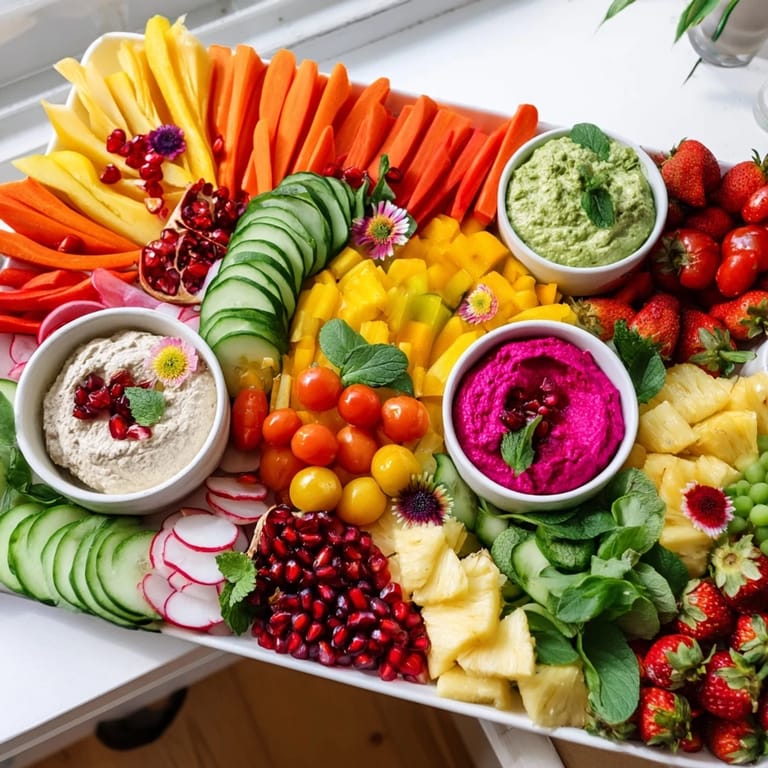
- Place small bowls of dips at cardinal points—imagine a clock face and put dips at 12, 3, 6, and 9 o'clock. This ensures everyone has access without reaching across others. The beetroot hummus should probably be visible immediately; it's your showstopper color.
- Build in color blocks:
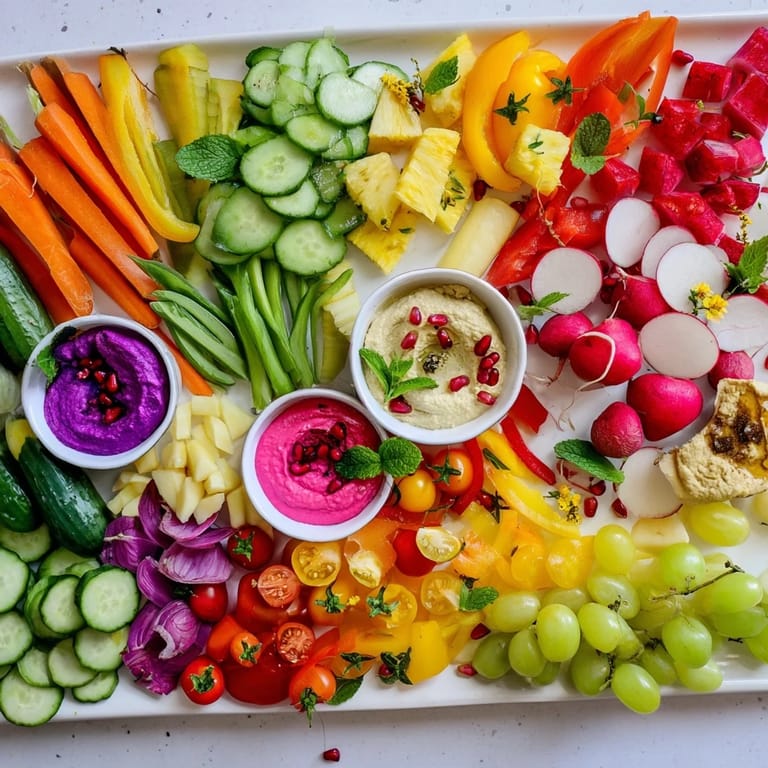
- Start with one dip as your centerpoint. Around it, create sections of color—all the orange items together, then the greens, then the purples. Think of it like a painter's palette where each color gets its own space but they're all part of one composition. Leave small gaps intentionally; these will be filled with special touches.
- Fill the gaps with generosity:
- Now sprinkle pomegranate seeds where colors meet to add shine and catch light. Tuck fresh herb sprigs throughout. If using edible flowers, place one or two in the quietest color section so they become a pleasant surprise, not a distraction. This is where your platter stops being organized and starts being beautiful.
- Time your reveal:
- Serve immediately if you want maximum crispness, or cover loosely with plastic wrap and refrigerate for up to 4 hours. The vegetables will stay firm, but the herbs will stay greener if you add them no more than 30 minutes before serving. Either way, remove from the fridge 15 minutes before guests arrive so everything is at room temperature—that's when flavors taste brightest.
 Save
Save What moved me most was watching my young niece arrange her own tiny version of this platter for a school project, asking me which colors go together and why. She was learning composition and nutrition without realizing it. That's when I truly understood that this recipe isn't just about feeding people—it's about showing them that eating well can be beautiful, that nourishment and joy aren't mutually exclusive.
The Art of Arrangement
The secret to a platter that stops people mid-conversation is contrast. Not just color contrast, but texture and temperature contrast too. Crisp snap peas next to creamy guacamole. Smooth hummus beside crunchy radishes. Room-temperature grapes beside everything else. Your eye should travel the platter in a satisfying way—there shouldn't be a moment where you're looking at an empty space or a place where two similar textures sit side by side. Think of it the way a florist thinks about a bouquet: every element is chosen for how it makes its neighbors look better.
Why This Works for Every Occasion
I've learned that this platter is the perfect answer to 'what should I bring?' because it works everywhere. Bringing it to a potluck where half the guests are vegan and half aren't? Perfect—everyone finds something. Feeding a group with various dietary restrictions? It's naturally gluten-free and dairy-free. Want to impress without spending all day cooking? This is your recipe. It's also the rare dish that looks more impressive the less time you spent on it, which feels like magic but is really just the power of beautiful whole foods arranged thoughtfully.
Storage, Timing, and the Refresh
If you're making this ahead of party time, the vegetables can be prepped in advance—slice them, store them in airtight containers with barely damp paper towels, and they'll stay crisp for a day. But assemble the final platter no more than 4 hours before serving, and ideally just 1-2 hours before. The fruits, especially, will start to release juice once they're cut and exposed to air. If your platter sits for more than a couple hours, you can refresh it by gently patting the cut fruit with a clean paper towel to remove excess moisture. And here's a trick I learned the hard way: keep a small spray bottle of water nearby while you're arranging so you can mist the herbs and edible flowers—they perk right back up if they start to look tired.
- Prep vegetables a day ahead, but assemble the platter within a few hours of serving for maximum freshness and crispness.
- Always taste your dips before the party and adjust seasonings—a pinch of salt or squeeze of lemon can transform a good dip into one people remember.
- If you have picky eaters coming, add an extra bowl of something simple like plain yogurt (or cashew yogurt for fully vegan) because sometimes people need a neutral dip before they're brave enough to try the bolder flavors.
 Save
Save Every time I make this platter, I'm reminded that the best meals are often the ones that celebrate ingredients rather than hide them. This is food at its most honest and most beautiful.
Recipe FAQ
- → What vegetables are featured in the platter?
The platter includes rainbow carrots, baby cucumbers, cherry tomatoes, radishes, baby bell peppers, and snap peas, all sliced or quartered for easy eating.
- → Which fruits complement this arrangement?
Seedless grapes in mixed colors, halved strawberries, pineapple chunks, and peeled kiwi add sweet and tangy highlights to the assortment.
- → What dips are paired with the vegetables and fruits?
Four plant-based dips are included: classic hummus, beetroot hummus, guacamole, and cashew tzatziki, offering varied flavors and colors.
- → How can I add extra texture and color to the platter?
Garnishing with pomegranate seeds, fresh herbs like mint and basil, edible flowers, and gluten-free crackers or pita chips enhances both appearance and taste.
- → Are there any allergen concerns to consider?
This platter contains nuts in the cashew tzatziki and sesame in the hummus. Gluten-free crackers should be verified for allergens. Substitute or omit ingredients as needed.
- → Can seasonal produce be substituted in this arrangement?
Yes, feel free to swap in seasonal vegetables or fruits to customize the platter based on availability and preference.