 Save
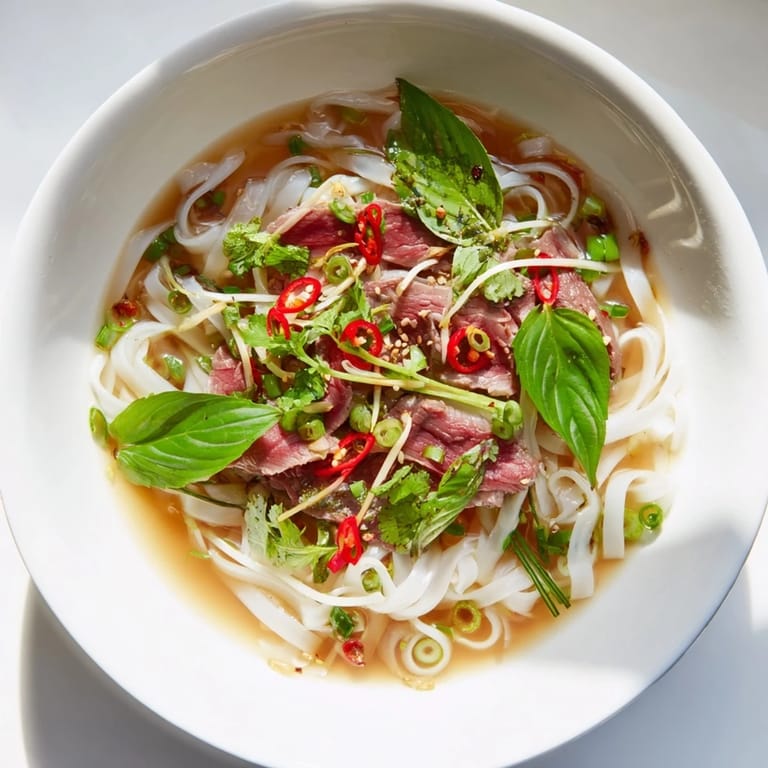
Save The first time I made pho at home, I was chasing a memory of sitting in a cramped Saigon restaurant, steam rising from a bowl that seemed to hold an entire universe of flavor in a single spoon. I realized that afternoon that pho wasn't something you rush through—until the day I had twenty minutes and a craving that wouldn't wait. That's when I learned you could capture the soul of the dish in half an hour, and honestly, sometimes the quickest version is the one you actually make on a Tuesday night when life gets busy.
My neighbor came over one evening and caught the smell of simmering star anise and cinnamon drifting through our shared wall. By the time I'd finished cooking, she was standing at my door with chopsticks in hand and a hopeful expression. We ended up making four bowls that night, and she kept saying how surprised she was that something this good could come together so quickly—I've been making it ever since.
Ingredients
- Low-sodium beef or chicken broth (8 cups): The foundation of everything—I learned to use low-sodium because you control the saltiness this way, and it lets the spices actually shine instead of getting buried.
- Fresh ginger and onion: Charring these first takes maybe two extra minutes but deepens the broth's flavor in a way that feels almost like cheating.
- Star anise, cinnamon stick, and cloves: These three are the holy trinity of pho spice—they're what make people pause mid-bite and ask what that warm, slightly sweet note is.
- Fish sauce and soy sauce: Fish sauce is the ingredient people fear, but trust it—just one tablespoon adds an umami depth that makes everything taste more like itself.
- Flat rice noodles (bánh phở): The texture matters here; flat noodles soak up broth better than round ones, and they feel more authentic when they slide into your spoon.
- Beef sirloin or eye round, thinly sliced: Thin slices are key because they cook the moment the hot broth hits them—no extra cooking required, no risk of toughness.
- Fresh herbs and garnishes: Thai basil has a different anise note than Italian basil, cilantro adds brightness, and the lime brings everything into focus at the end.
Tired of Takeout? 🥡
Get 10 meals you can make faster than delivery arrives. Seriously.
One email. No spam. Unsubscribe anytime.
Instructions
- Build the aromatic broth:
- Halve your onion and ginger (lightly char them in a dry pan first if you have two extra minutes—it deepens everything). Toss them into boiling broth with the star anise, cinnamon, and cloves, then let it bubble away uncovered for 20 minutes while your kitchen fills with that unmistakable pho smell that makes you feel like you're cooking something serious.
- Season and strain:
- Add fish sauce, soy sauce, sugar, and a pinch of salt—taste as you go, because this is where you take ownership of the flavor. Strain out all the solids through a fine-mesh strainer, and you'll be left with a clear, fragrant broth that looks restaurant-quality.
- Cook your noodles:
- While the broth simmers, follow the package directions for your rice noodles—they only take a few minutes and you want them tender but still with a tiny bit of texture. Drain them and divide among your bowls; they'll wait happily for the hot broth to arrive.
- Arrange the raw beef:
- Lay your thinly sliced beef directly over the noodles in each bowl—this is the moment where everything gets real. The meat looks raw, which feels slightly daring, but that's exactly the point.
- Pour and watch the transformation:
- Ladle the hot broth directly over the beef and noodles, and you'll see the meat's color change from deep red to cooked in seconds. It's one of those small kitchen magic tricks that never gets old.
- Finish with fresh toppings:
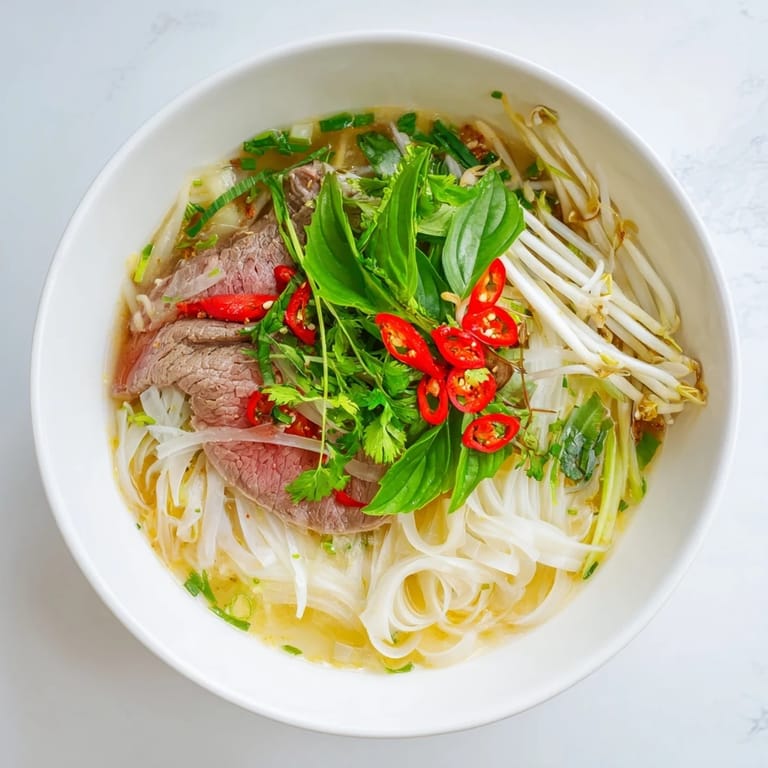
- Top each bowl with bean sprouts, basil, cilantro, scallions, and a few slices of chili if you like heat. Serve everything alongside—lime wedges, hoisin, and sriracha—so people can adjust their own bowls to their taste.
 Save
Save There's something almost spiritual about the moment when everyone at the table picks up their chopsticks at the same time, their bowls steaming in front of them. That's when pho stops being just dinner and becomes a shared experience—a quiet ritual where everyone slows down for a little while.
The Art of the Sliced Beef
Getting your beef sliced thin enough is the difference between a good bowl and an exceptional one. Ask your butcher to slice it for you on the meat slicer if you're not confident with a knife—most will do it for free or a small charge, and it takes all the guesswork out of the equation. The thinner the slice, the more surface area touches the hot broth, and the more instantly tender your beef becomes.
Why Fresh Herbs Matter More Than You Think
I used to think herbs were just pretty garnish until I tasted pho with fresh basil versus without it. The basil brings a warm anise quality that makes your palate feel alive, cilantro adds a citrusy brightness, and together they're not decoration—they're essential flavor. Don't skip them or use dried; the difference is too big.
Customizing Your Bowl
One of the best parts about pho is that it's not precious—it wants to be adapted to whoever's eating it. Some people pile on the herbs, others barely touch them; some go heavy on the sriracha, some just want the lime. I've learned to set everything out and let people build their own bowl, which means nobody's disappointed.
- Fried shallots add a crispy texture that contrasts beautifully with the soft noodles.
- Mint works alongside basil if you want extra cooling freshness on a warm day.
- A squeeze of lime should be the last thing you do—it brightens everything at the end.
 Save
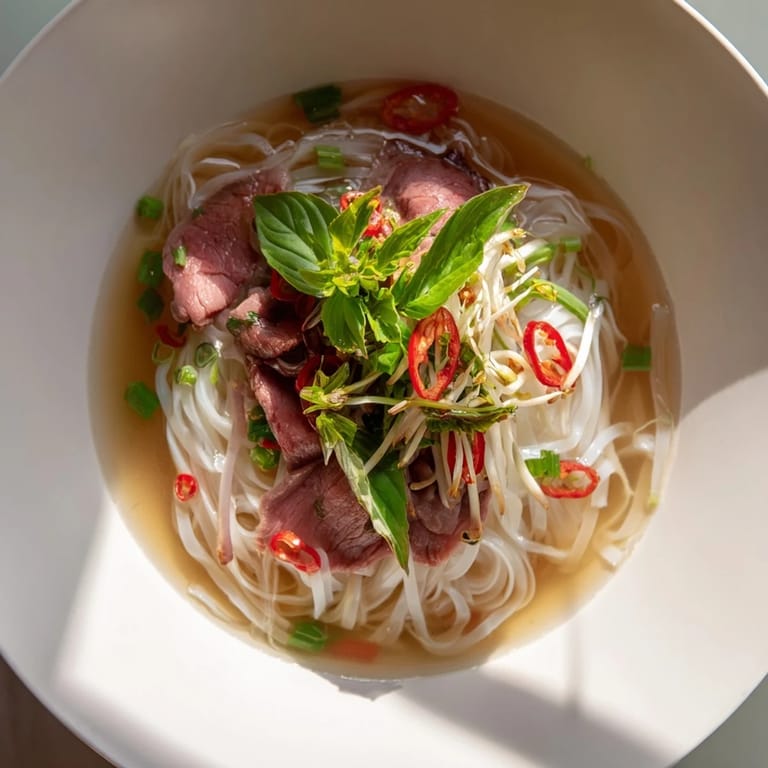
Save This quick version of pho proves that restaurant-quality food doesn't require restaurant-level time commitment. Make it once, and it'll become one of those dishes you return to again and again.
Recipe FAQ
- → What makes the broth aromatic?
The broth is infused with spices like star anise, cinnamon, cloves, and fresh ginger which create its signature fragrant aroma.
- → Can I use chicken instead of beef?
Yes, chicken breast can be substituted for beef to suit preference while maintaining a tender texture when cooked in hot broth.
- → How do I achieve tender meat slices?
Thinly slicing the meat and pouring hot broth directly over it cooks the slices quickly and keeps them tender.
- → Are rice noodles gluten-free?
The flat rice noodles used here are naturally gluten-free, but it's best to check other ingredients like broth and sauces for gluten content.
- → What garnishes enhance the dish’s flavor?
Fresh Thai basil, cilantro, scallions, bean sprouts, chili, lime wedges, and condiments like hoisin and Sriracha add vibrant flavor contrasts.
- → Can this dish be made vegetarian?
Yes, substitute vegetable broth and tofu instead of meat for a flavorful vegetarian variation.